
Harela 2026 – Kumaon's Festival of Green and New Sowing
हरेला
When is Harela in 2026?
Harela falls on Thursday, 16 July 2026, the first day of the month of Shravan (Kark Sankranti). It is a Kumaoni harvest and greenery festival: families cut the pale-green shoots grown from seven sown seeds and place them on the heads of relatives as a blessing for a good harvest and prosperity.
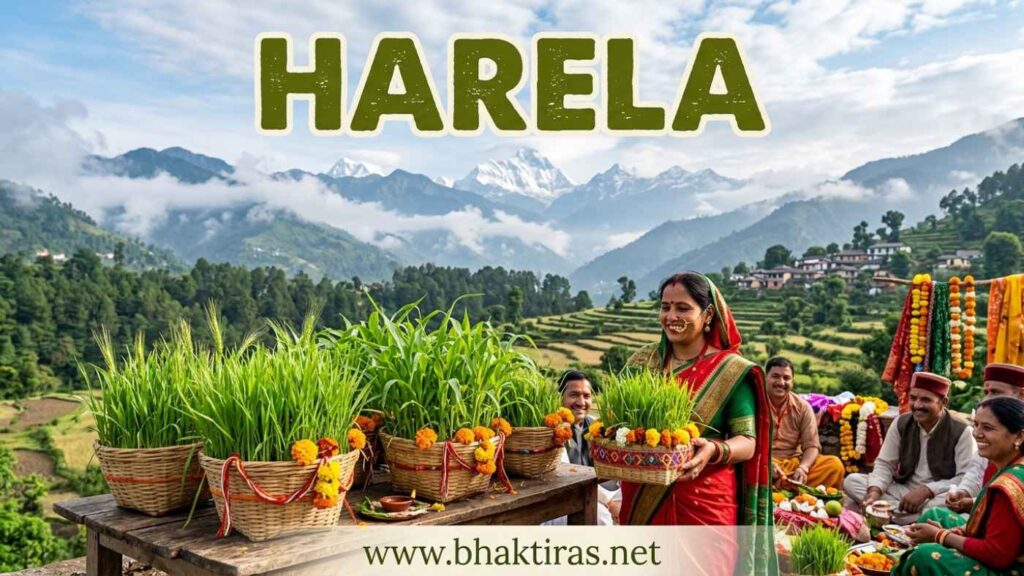
Harela is a Kumaoni festival of greenery that welcomes the monsoon and opens the new farming year in Uttarakhand’s hills. The word means ‘day of green’. About ten days before, families sow seven kinds of grain in small baskets of soil, keep them in dim light and water them daily; by the festival the shoots have grown into soft yellow-green blades. On Harela these are cut and pressed onto the heads of family members with a spoken blessing for health, prosperity and a full harvest. The main Harela marks the start of Shravan at Kark Sankranti in mid-July, and in 2026 it falls on 16 July.
Harela 2026-2028: Dates & Calendar
The main Harela is tied to Kark Sankranti, the day the Sun enters Cancer and the month of Shravan begins, so it stays near mid-July each year. In 2026 it falls on 16 July.
| Year | Date | Day | Notes |
|---|---|---|---|
| 2026 | 16 July | Thursday | Next occurrence – start of Shravan |
| 2027 | 17 July | Saturday | Kark Sankranti |
| 2028 | 16 July | Sunday | Kark Sankranti |
Kumaon also observes a Harela at the start of Chaitra (spring, around March-April) and a smaller one around Dussehra in autumn, but the Shravan Harela is the largest and the one now marked with a state holiday and tree-planting drives.
Why Harela Is Celebrated
Harela celebrates the return of the monsoon and the beginning of the new sowing season, when the hills turn green again. It joins a prayer for a good harvest with reverence for nature and for Shiva and Parvati.
A prayer for the harvest
The sprouted seeds are a living forecast of the year’s crop. Healthy, even shoots are read as a sign of a good farming season, so cutting and blessing them is a way of asking the land for abundance before the real sowing begins.
Shiva and Parvati
Because Harela opens the month of Shravan, it carries devotion to Shiva and Parvati. In Kumaon the day is also linked to their marriage, and in some homes small clay figures of the divine couple, called dikaras, are made and worshipped alongside the green shoots.
A festival of trees
Harela has become Uttarakhand’s day for planting. Schools, panchayats and forest departments organise large tree-planting drives, turning an old harvest rite into a modern celebration of the environment and the fragile Himalayan ecosystem.
Deities & Figures Worshipped
Harela honours nature and the farming cycle, together with Shiva and Parvati, whose month of Shravan the festival opens.
Shiva
Shravan is Shiva’s sacred month, and Harela marks its first day. Devotees offer prayers to Shiva for protection, rain and a fruitful season, and many begin the Shravan fasts and Monday worship from around this time.
Parvati
Parvati is worshipped alongside Shiva as the goddess of the hills and of married life. The clay dikara figures made in some Kumaoni homes often depict Shiva and Parvati together, blessing the household.
Nature and the earth
At its heart Harela is a nature festival. The soil, seeds and the first monsoon rains are treated with gratitude, and the green shoots themselves stand for the earth’s power to renew life each year.
Key Rituals, Step by Step
The Harela ritual stretches over about ten days, from sowing the seeds to blessing the family with the grown shoots.
- Sow the seeds. Roughly nine or ten days before Harela, the eldest member fills small baskets or leaf bowls with soil and sows seven kinds of seed, usually including maize, wheat, barley, mustard, gahat and other local grains.
- Tend the shoots daily. The baskets are kept indoors in soft light and watered each day. Grown away from direct sun, the blades come up a pale yellow-green rather than deep green – the colour that gives Harela its name.
- Clean and decorate the home. In the days before the festival the house and courtyard are cleaned, and in some homes clay dikara figures of Shiva, Parvati and other deities are shaped and set up for worship.
- Worship on Harela morning. On the day itself the family gathers around the green baskets, offers prayers to Shiva, Parvati and the shoots, and lights a lamp.
- Cut the harela. The grown shoots are gently cut. These sprigs are the harela that will be given to each family member.
- Bless the family. Elders place the cut shoots on the heads, and sometimes behind the ears, of younger members while reciting a traditional blessing wishing them long life, prosperity and good harvests.
- Plant a tree. Reflecting the modern spirit of the festival, many families and communities plant saplings on Harela as an offering to nature.
Special Foods of Harela
Harela food is simple Kumaoni hill fare, made from local grains and eaten with the family after the blessing.
Bada / Urad pakodas
Fritters of ground urad dal are a common Harela treat, fried fresh and shared through the day. They are among the dishes traditionally prepared to mark the festival.
Puri and sweet dishes
Deep-fried puris with seasonal vegetables and a simple sweet such as halwa or kheer are prepared as a festive meal after the morning worship.
Local grain dishes
Being a harvest festival, Harela meals lean on the hill grains that the season celebrates, cooked into everyday Kumaoni preparations rather than elaborate feasts.
Harela Do's and Don'ts
A few simple customs help keep the spirit of Harela.
Do
- Sow the seven seeds about ten days ahead and water them daily.
- Keep the baskets in soft, indirect light so the shoots stay pale green.
- Accept the harela blessing from elders with respect.
- Plant a sapling to honour the festival’s link with nature.
- Share fresh food with family and neighbours.
Avoid
- Do not let the shoots dry out or place them in harsh direct sun.
- Avoid treating it only as a holiday and skipping the sowing ritual.
- Do not waste or throw away the cut harela carelessly.
- Avoid buying saplings only for show without planting or caring for them.
- Do not overlook the elders’ blessing, which is the heart of the day.
Frequently Asked Questions
When is Harela in 2026?
Harela is on Thursday, 16 July 2026. This is the main Shravan Harela, marking Kark Sankranti and the first day of the month of Shravan, celebrated mostly in Uttarakhand’s Kumaon region.
When is Harela in 2027 and 2028?
Harela falls on 17 July 2027 and on 16 July 2028. Because it is tied to Kark Sankranti, the solar entry of the Sun into Cancer, the date stays close to mid-July each year and shifts by only a day.
What does Harela mean?
Harela means ‘day of green’ in Kumaoni. It refers to the pale yellow-green shoots grown from seven sown seeds, which are cut and placed on the heads of family members as a blessing for prosperity and a good harvest.
Why is Harela celebrated?
Harela is celebrated to welcome the monsoon and mark the start of the new sowing season in the hills. It is a prayer for a good harvest and, opening the month of Shravan, it also carries devotion to Shiva and Parvati. Today it is widely observed as a tree-planting festival.
Which god is worshipped on Harela?
Harela honours nature and the farming cycle, along with Shiva and Parvati. As the day begins the sacred month of Shravan, Shiva is worshipped for rain and protection, and in Kumaon the day is also linked to the marriage of Shiva and Parvati.
How are the Harela seeds grown?
About nine or ten days before the festival, the eldest family member sows seven kinds of grain in baskets of soil, keeps them indoors in soft light, and waters them daily. Grown away from direct sun, the shoots turn a pale yellow-green and are cut on Harela day.
Where is Harela celebrated?
Harela is celebrated mainly in the Kumaon region of Uttarakhand, with observance in parts of the Garhwal region and neighbouring Himachal Pradesh. In Uttarakhand it is a recognised state holiday and a major day for tree planting.
Is Harela linked to planting trees?
Yes. Alongside the traditional sowing ritual, Harela has become Uttarakhand’s day for planting trees. Government departments, schools and communities run large sapling-planting drives, tying the harvest festival to environmental care in the Himalayas.
May the green of Harela bring health, good rain and a full harvest to your home.