
Buddha Purnima 2026 – Birth, Enlightenment & Nirvana of the Buddha
बुद्ध पूर्णिमा
When is Buddha Purnima (Vesak) in 2027?
Buddha Purnima (Vesak) falls on Thursday, 20 May 2027. It is observed on the full-moon day of the Hindu month of Vaishakha and marks three events said to have happened on this same tithi – the Buddha’s birth, his enlightenment and his passing into Nirvana.
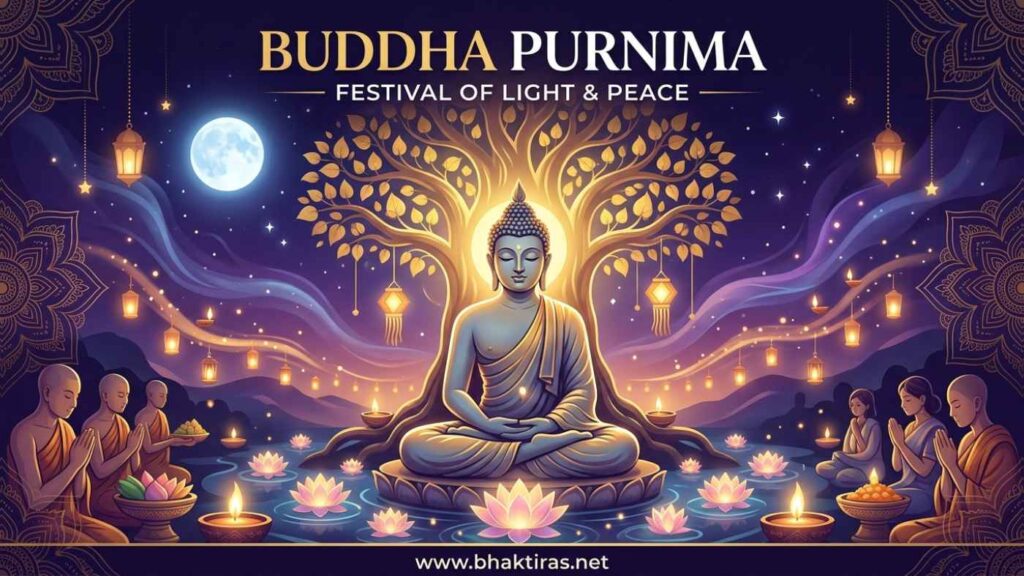
Buddha Purnima, also known as Vesak, is the most sacred day in the Buddhist calendar and is honoured by many Hindus too, who revere the Buddha as an avatar of Vishnu. Falling on the full-moon day of Vaishakha, it commemorates three defining moments believed to have occurred on this single tithi: the birth of Siddhartha Gautama at Lumbini, his awakening at Bodh Gaya, and his passing at Kushinagar. The day is given to quiet devotion, charity and reflection on his teachings of compassion and non-violence.
Buddha Purnima 2026-2028: Dates & Calendar
The next Buddha Purnima falls on Thursday, 20 May 2027. Because it is fixed to the full moon of Vaishakha in the lunar calendar, the date shifts each year against the Gregorian calendar.
| Year | Date | Day | Notes |
|---|---|---|---|
| 2026 | 1 May | Friday | Vaishakha full moon |
| 2027 | 20 May | Thursday | Next occurrence |
| 2028 | 8 May | Monday | Vaishakha full moon |
Why Buddha Purnima Is Celebrated
Buddha Purnima celebrates the life and awakening of Gautama Buddha, marking the birth, enlightenment and Nirvana that tradition places on the same Vaishakha full moon – often called the triple blessing.
The birth at Lumbini
Tradition holds that Siddhartha Gautama was born at Lumbini, in present-day Nepal, on the Vaishakha full moon. He would later renounce a princely life in search of an end to human suffering.
Enlightenment at Bodh Gaya
After years of searching, Siddhartha attained enlightenment while seated beneath the Bodhi tree at Bodh Gaya, becoming the Buddha, the awakened one. It is the moment his teaching of the middle path began.
Mahaparinirvana at Kushinagar
The Buddha is said to have passed into Nirvana at Kushinagar at the age of eighty, again on the Vaishakha full moon. The day thus holds his beginning, his awakening and his release together.
A shared reverence
For Buddhists this is the holiest day of the year. Many Hindus also honour the Buddha as an avatar of Vishnu, so temples and monasteries alike see quiet worship, charity and study of his teachings.
The Figure Honoured
Buddha Purnima centres on Gautama Buddha, the founder of Buddhism, whose life and awakening the day commemorates.
Gautama Buddha
Born Siddhartha Gautama, he attained enlightenment beneath the Bodhi tree and taught the four noble truths and the eightfold path. He is not a Hindu god, though many Hindus revere him as an avatar of Vishnu, and Buddhists across Asia honour him on this full moon.
Key Rituals, Step by Step
Observance is gentle and reflective rather than loud. Devotees wear white, keep the day simple and turn towards charity, meditation and worship at monasteries.
- Wear white and rise early. Devotees dress in white, a colour of purity and renunciation, and begin the day at dawn with a bath and clean surroundings.
- Visit a monastery or the Mahabodhi Temple. Many gather at monasteries, or make the journey to Bodh Gaya, Sarnath or Kushinagar, to pray and listen to readings of the Buddha’s teachings.
- Make offerings before the Buddha. Flowers, candles and incense are placed before the image of the Buddha, the fading flowers and burning candles serving as reminders of impermanence.
- Chant and meditate. Devotees join in chanting and quiet meditation, reflecting on compassion, non-violence and the middle path.
- Honour the Bodhi tree. The Bodhi tree is circumambulated and watered with scented water and milk, in memory of the tree under which the Buddha was enlightened.
- Perform acts of charity. Food, clothing and alms are given to monks and the needy, and many release caged birds and animals as a gesture of loving-kindness.
- Keep a simple, vegetarian day. Meat and alcohol are set aside, some observe a full day of abstinence, and the Buddhist flag is displayed at homes and viharas.
- Share kheer. Sweet rice pudding is prepared and shared, recalling the milk-rice offered to the Buddha by Sujata before his enlightenment.
Special Foods of Buddha Purnima
The food is deliberately simple and vegetarian, matching a day of restraint and reflection.
Kheer
Sweet rice pudding cooked with milk and sugar is the signature dish, recalling the bowl of milk-rice that Sujata offered the Buddha, ending his years of severe fasting.
Fresh fruits
Seasonal fruits are offered before the Buddha and shared, a light and pure food suited to a day of devotion.
Chana and simple pulses
Soaked chickpeas and plain lentil dishes are eaten in many homes, keeping the meal modest and satvik.
Vegetarian fare
Households prepare simple vegetarian food, setting aside meat and alcohol; many keep a partial or full fast until the evening.
Where It Is Celebrated
Known internationally as Vesak, the day is marked across India and much of Asia, wherever the Buddha’s teaching took root.
Bodh Gaya & Bihar
The Mahabodhi Temple at Bodh Gaya, the site of the enlightenment, draws pilgrims from around the world for prayers, chanting and processions.
Sarnath & Kushinagar
Sarnath, where the Buddha gave his first sermon, and Kushinagar, the site of his Nirvana, hold special gatherings and readings on this day.
Sikkim, Ladakh & the North East
Buddhist communities in Sikkim, Ladakh, Arunachal Pradesh and the hill regions hold monastery services, prayer-flag displays and processions.
Worldwide as Vesak
Recognised by the United Nations, Vesak is observed across Sri Lanka, Nepal, Thailand, Myanmar and the wider Buddhist world with lanterns, alms and public celebrations.
Buddha Purnima Do's and Don'ts
A few simple customs help keep the spirit of the day.
Do
- Wear white and keep the day calm and clean
- Visit a monastery or vihara to pray and meditate
- Offer flowers, candles and incense before the Buddha
- Give food, alms or clothing in charity
- Prepare and share kheer with family and neighbours
Avoid
- Avoid eating meat, fish or eggs on the day
- Do not consume alcohol or intoxicants
- Avoid harming any living creature, however small
- Do not turn the day into loud, extravagant display
- Avoid anger and harsh speech; keep to calm conduct
Frequently Asked Questions
When is Buddha Purnima (Vesak) in 2027?
Buddha Purnima, or Vesak, falls on Thursday, 20 May 2027. It is observed on the full-moon day of the Hindu month of Vaishakha, which shifts each year against the Gregorian calendar.
When is Buddha Purnima in 2026 and 2028?
Buddha Purnima falls on 1 May 2026 and on 8 May 2028. Both dates land on the Vaishakha full moon, which is why they move from year to year.
Why is Buddha Purnima celebrated?
Buddha Purnima is celebrated to honour Gautama Buddha’s birth, enlightenment and passing into Nirvana, which tradition holds all took place on the same Vaishakha full moon. It is a day for compassion, non-violence and reflection on his teachings.
What are the three events marked on Buddha Purnima?
Buddha Purnima marks three events on one full-moon day – the birth of Siddhartha Gautama at Lumbini, his enlightenment at Bodh Gaya, and his passing at Kushinagar. Together these are often called the triple blessing.
Is Buddha Purnima a Hindu or Buddhist festival?
Buddha Purnima is primarily a Buddhist festival and the holiest day of the Buddhist year. Many Hindus also observe it, revering the Buddha as an avatar of Vishnu, so it is honoured across both traditions.
How is Buddha Purnima celebrated?
Devotees wear white, visit monasteries and the Mahabodhi Temple, and offer flowers, candles and incense before the Buddha. The day includes chanting, meditation, watering the Bodhi tree, acts of charity, releasing caged birds and eating simple vegetarian food.
What food is eaten on Buddha Purnima?
Kheer, a sweet rice pudding, is the traditional food of Buddha Purnima, recalling the milk-rice that Sujata offered the Buddha. Fruits, chana and simple vegetarian dishes are also shared, while meat and alcohol are avoided.
Why is kheer eaten on Buddha Purnima?
Kheer is eaten on Buddha Purnima to recall the bowl of milk-rice that Sujata offered to the Buddha, which ended his long fast just before he attained enlightenment. Sharing it honours that moment of nourishment and awakening.
May the Buddha’s teachings of compassion and peace light your path this Vesak. Buddha Purnima ki hardik shubhkamnayein.