
Gudi Padwa 2027 – The Marathi & Konkani New Year
गुढी पाडवा
When is Gudi Padwa in 2027?
Gudi Padwa falls on Wednesday, 7 April 2027. It is the Marathi and Konkani New Year, marking the first day of Chaitra, the opening month of the Hindu lunar calendar. Families raise a bright silk-draped gudi at the doorway to greet the year with good fortune and victory.
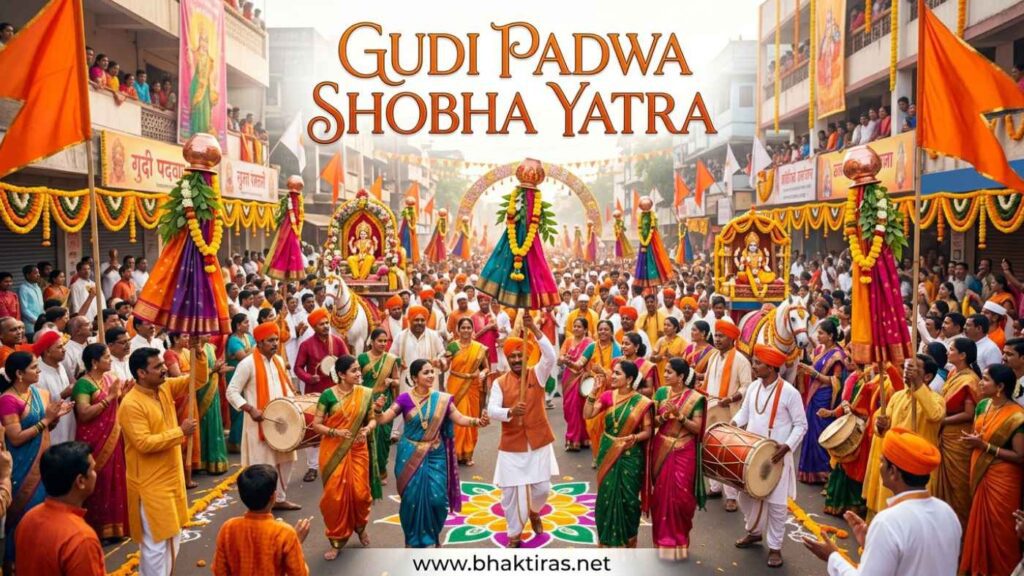
Gudi Padwa is the New Year for Marathi and Konkani Hindus, falling on the first day of Chaitra, the opening month of the traditional lunar calendar. Its signature sight is the gudi itself: a bright length of silk tied to a bamboo pole, crowned with an upturned copper or silver pot, neem and mango leaves and a sugar-crystal garland, raised above the doorway as a banner of victory and welcome. In 2027 it falls on Wednesday, 7 April, and the same lunar day is kept as Ugadi across the Deccan.
Gudi Padwa 2026-2028: Dates & Calendar
Gudi Padwa next falls on Wednesday, 7 April 2027. The date shifts each year because it tracks the moon, always landing on Chaitra Shukla Pratipada, the first day of the bright fortnight of Chaitra.
| Year | Date | Day | Notes |
|---|---|---|---|
| 2026 | 19 March | Thursday | Chaitra Shukla Pratipada |
| 2027 | 7 April | Wednesday | Next occurrence |
| 2028 | 27 March | Monday | Chaitra Shukla Pratipada |
The gudi is traditionally hoisted soon after sunrise and taken down before dusk the same day, so Gudi Padwa is observed as a single day of celebration.
Why Gudi Padwa Is Celebrated
Gudi Padwa marks the Marathi and Konkani New Year and the start of spring, tying together creation, harvest and triumph in one day.
The first day of creation
In Hindu tradition Lord Brahma is said to have created the universe on this tithi, which is why the day is treated as the true beginning of time and of the year. Raising the gudi is a way of honouring that fresh start and inviting order and prosperity into the home.
A flag of victory
The gudi is understood as a banner of triumph. Many families link it to Lord Rama’s return to Ayodhya after defeating Ravana, and to the Maratha idea of celebrating hard-won victories, so the raised pole reads as a public sign of success and confidence for the year ahead.
Spring and the rabi harvest
The festival arrives as the rabi crop is gathered and the fields are at their fullest. It doubles as a thanksgiving for a good season, which is why sweet dishes and fresh produce feature so heavily in the day’s cooking.
Taking the good with the bad
Eating a small bite of bitter neem, often with jaggery, is a quiet reminder that a new year holds both hardship and sweetness. The custom sets an honest, grounded tone for the months to come.
Deities & Figures Worshipped
Gudi Padwa honours Brahma the creator, with Vishnu and Lord Rama also remembered on the day.
Brahma
Brahma is the deity most closely tied to Gudi Padwa, since the day is held to be when he began the work of creation. Prayers acknowledge him as the source of the ordered universe that the new year renews.
Vishnu
Vishnu, the preserver, is worshipped alongside Brahma as the god who sustains creation through the year. His presence connects the day to protection and continuity for the household.
Lord Rama
In Maharashtrian custom the day recalls Rama’s return to Ayodhya after his victory over Ravana. The gudi raised at the door echoes the joyful welcome the city gave its king.
Key Rituals, Step by Step
The day moves from an early bath to the raising of the gudi and a festive family meal.
- Early ritual bath. The household rises before dawn and bathes, often after an oil massage, to begin the new year clean and refreshed.
- Rangoli and torans. Bright rangoli patterns are drawn at the threshold and fresh mango-leaf torans are strung over the doorway to welcome good fortune.
- Assembling the gudi. A length of bright silk is tied near the top of a bamboo pole, then dressed with neem and mango leaves, a garland of sugar crystals and flowers, and topped with an upturned copper or silver pot, the kalash.
- Hoisting the gudi. Soon after sunrise the gudi is raised at a window, balcony or doorway, high enough to be seen from the street, and offered flowers, incense and prayers.
- Tasting neem. Each person eats a small piece of neem, usually mixed with jaggery, tamarind or ajwain, to symbolise accepting both the bitter and the sweet in the year ahead.
- Reading the new panchang. The freshly issued almanac for the coming year is read or listened to, noting the forecasts, auspicious days and festivals to follow.
- Festive meal. The family gathers for a celebratory lunch built around puran poli and other sweets, sharing greetings with neighbours and relatives.
- Lowering the gudi. Before dusk the gudi is respectfully taken down, the pot and cloth kept aside, closing the single day of celebration.
Special Foods of Gudi Padwa
The New Year table leans sweet, led by puran poli and balanced by the ritual bitterness of neem.
Puran poli
A soft flatbread stuffed with a sweet paste of chana dal and jaggery, spiced with cardamom and nutmeg. It is the centrepiece of the festive lunch, usually served warm with a spoon of ghee.
Shrikhand with puri
Thick strained yoghurt sweetened and flavoured with saffron and cardamom, eaten with hot puris. This cool, rich pairing is a favourite New Year treat across Maharashtra.
Neem-jaggery chutney
A small preparation of tender neem leaves with jaggery, and sometimes tamarind and ajwain, eaten first thing to mark the mix of sweet and bitter the year will bring.
Sunth pak
A dry ginger sweet made with dry ginger powder, ghee and jaggery. Warming and digestive, it suits the change of season and rounds off the meal.
Regional Names & Variations
The same lunar New Year day is kept under different names across western and southern India.
Maharashtra
The heartland of Gudi Padwa, where the silk-draped gudi rises above homes across cities and villages and grand processions fill the streets in places like Girgaon in Mumbai.
Goa & Konkan
Konkani Hindus keep the day as their New Year too, calling it Sausar Padvo, with the gudi raised and similar sweets prepared at home.
Karnataka & Andhra/Telangana
The same tithi is celebrated as Ugadi, marked with the bittersweet Ugadi pachadi and the reading of the new year’s panchang.
Sindhi community
Sindhis observe Cheti Chand, their New Year and the festival of Jhulelal, on the following day, sharing the same Chaitra timing.
Gudi Padwa Do’s and Don’ts
A few simple customs keep the day auspicious and respectful.
Do
- Clean and decorate the home with rangoli and mango-leaf torans before sunrise.
- Raise the gudi in a clean, high spot where it is clearly visible.
- Eat a small piece of neem, often with jaggery, to honour the custom.
- Wear fresh or new clothes and greet family and neighbours warmly.
- Read or listen to the new panchang for the year’s forecast.
Avoid
- Do not let the gudi touch the floor or handle it carelessly while raising it.
- Do not leave the gudi up after dusk; take it down the same day.
- Do not skip the ritual bath before setting up the gudi.
- Do not reuse withered leaves or a soiled cloth for the gudi.
- Do not treat it as a purely social day; keep space for the morning prayers.
Frequently Asked Questions
When is Gudi Padwa in 2027?
Gudi Padwa falls on Wednesday, 7 April 2027. It marks the first day of the Hindu lunar month of Chaitra and opens the Marathi and Konkani New Year.
When is Gudi Padwa in 2026 and 2028?
Gudi Padwa was on Thursday, 19 March 2026, and will next fall on Monday, 27 March 2028. The date moves each year because it follows the lunar calendar, always landing on Chaitra Shukla Pratipada.
Why is Gudi Padwa celebrated?
Gudi Padwa is celebrated as the Marathi and Konkani New Year and the start of spring. Tradition holds that Lord Brahma created the universe on this day, and the raised gudi serves as a flag of victory and good fortune for the year ahead.
What is the gudi and what does it mean?
The gudi is a bright silk cloth tied to a bamboo pole, decorated with neem and mango leaves and a sugar garland, and topped with an upturned copper or silver pot. Raised at the doorway, it is a banner of victory, welcome and prosperity for the new year.
Which god is worshipped on Gudi Padwa?
Brahma the creator is the deity most associated with Gudi Padwa, since the day is said to mark the creation of the universe. Vishnu is also honoured, and in Maharashtrian tradition the day recalls Lord Rama’s return to Ayodhya.
What foods are eaten on Gudi Padwa?
The festive table centres on puran poli, a sweet stuffed flatbread, along with shrikhand and puri and sweets like sunth pak. A small bite of bitter neem with jaggery is eaten first to symbolise taking the good with the bad.
Is Gudi Padwa the same as Ugadi and Cheti Chand?
Gudi Padwa shares its date with Ugadi, which is celebrated on the same lunar day in Karnataka, Andhra Pradesh and Telangana. Sindhis observe Cheti Chand, their New Year, on the following day, so all three fall around the same Chaitra timing.
How is the gudi raised and taken down?
The gudi is assembled and hoisted soon after sunrise at a window, balcony or doorway, then offered flowers and prayers. It is respectfully lowered before dusk on the same day, as Gudi Padwa is a one-day festival.
May the gudi at your door bring a year of good health, success and quiet contentment. Gudi Padwa chya hardik shubhechha!