
ॐ
Kartikeya Chalisa
श्री कार्तिकेय चालीसा
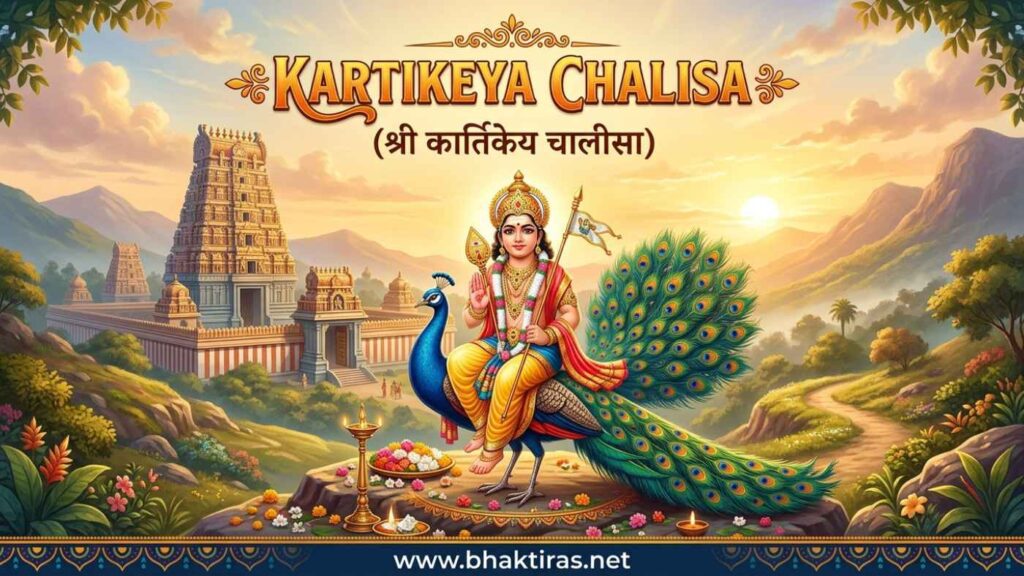
The Kartikeya Chalisa is a forty-verse devotional hymn to Lord Kartikeya, worshipped across India as Murugan, Skanda, Shanmukha and Subramanya. The son of Shiva and Parvati and younger brother of Ganesha, he leads the army of the gods and is invoked for courage, clear thinking and victory over difficulty. This page gives the full Roman-English transliteration of the Chalisa alongside a plain-English meaning for every verse, so you can read and understand each line even without Hindi.
Kartikeya Chalisa Lyrics in English (Transliteration)
Roman transliteration for easy chanting. Tap “Meaning” under any verse for the English translation.
Jai Jai Jai Kartikeya, Shankar-suvan kripal.
Shivdattam sut tehi, taat metahu sab vikaar.
Meaning
Victory to Kartikeya, the merciful son of Shankar. O son granted by Shiva, wipe away every fault and impurity within us.
Jai Jai Shri Kartikeya Swami.
Jai Shivsut, bhakt sukh-dhaami.
Meaning
Glory to Lord Kartikeya, the master of all. Glory to the son of Shiva, the resting place of joy for his devotees.
Mahima apaar aapki gaayi.
Santan ko shakti prabhu paayi.
Meaning
Your boundless glory is sung everywhere. From you, O Lord, the saints have drawn their strength.
Shiv Shivaa tanay baalak pyaare.
Kartikeya sukh-dhaam hamaare.
Meaning
You are the dear child of Shiva and Parvati. Kartikeya, you are the source of our happiness.
Dhvaja dhaaran kar durjan maaro.
Bhaktom ka dukh haran nivaaro.
Meaning
Bearing your banner, you strike down the wicked. Lift away and end the sorrows of those who worship you.
Gajmukh dait sanhaarak tum ho.
Taarakasur vidaarak tum ho.
Meaning
You are the slayer of the elephant-faced demon. You are the one who tore apart the demon Tarakasura.
Modak priya, man bhaayo bhojan.
Kumud paath priya, bhav ranjan.
Meaning
Sweet modaks delight you and the offerings please your heart. You love sacred recitation and bring gladness to the world.
Simh vaahini, dhvaja tum dhaari.
Dushtom ka dal karaho sanhaari.
Meaning
You bear a banner and command a fierce mount. You destroy the armies of the cruel and unjust.
Shiv ke sut tum, shakti ke dhaam.
Jai Kartikeya, Jai Jai Naam.
Meaning
You are Shiva's son and the seat of divine power. Victory to Kartikeya; victory, victory to your name.
Sumukh Nandan, Taarak Bhraata.
Sujaat tum sadaa sam Shiv daata.
Meaning
Fair-faced delight of your parents, brother who rescues. Nobly born, you are ever as generous as Shiva himself.
Maatu Paarvati tumhi pukaara.
Tanay mitra sabke rakhwaara.
Meaning
Mother Parvati calls out to you by name. As son and friend you stand guard over all.
Tum hi shakti ke roop Vinaayak.
Shiv-Shivaa ke kul ke rakshak.
Meaning
You are power itself, a remover of obstacles. You are the protector of the family of Shiva and Parvati.
Paarvati ke priya laal dulaare.
Taarakasur tumne sanhaare.
Meaning
You are Parvati's cherished and beloved child. It was you who put an end to Tarakasura.
Bhaktom ke sankat tum harat ho.
Jai Kartikeya japat nit rahat ho.
Meaning
You carry away the crises of your devotees. Those who keep chanting 'Victory to Kartikeya' abide in your grace.
Ganpati pyaare, Taarak putra.
Shiv-Shivaa ke priya tanay pavitra.
Meaning
Dear brother of Ganapati, saviour-son. You are the beloved and pure child of Shiva and Parvati.
Shadanan tum, teen naina.
Mor vaahan sukh-daayi mana.
Meaning
You are six-faced, gazing with three eyes. Your mount is the peacock, and your presence gladdens the mind.
Shakti dhaari tum Dev Senaapati.
Taarakasur ko kiya vipatti.
Meaning
Wielder of the sacred spear, you are commander of the gods. You brought ruin upon the demon Tarakasura.
Vishnu, Brahma, Indra dhyaaven.
Dev, Daanav, muni gun gaaven.
Meaning
Vishnu, Brahma and Indra meditate upon you. Gods, demons and sages alike sing your praises.
Tum gyaan ke dhvaja dhaari.
Chandan-sindoor ho bhaari.
Meaning
You carry the banner of true knowledge. Offerings of sandal paste and vermilion delight you.
Tumhaara naam jo sumirat Kartikeya.
Siddhi riddhi sab aavat ney.
Meaning
Whoever remembers your name, O Kartikeya, receives every accomplishment and abundance.
Rog, shok, dukh, daari-dray harat ho.
Jo jan prem se seva karat ho.
Meaning
You take away disease, grief, pain and poverty for the devotee who serves you with genuine love.
Teerth, vrat, daan phal paaven.
Tum bin aur na koi paaven.
Meaning
Through you one gains the reward of pilgrimage, fasting and charity. No one but you can bestow such grace.
Shankar tanay, vishva vikhyaata.
Jo jan sheesh navaave taata.
Meaning
Son of Shankar, famed across the world; blessed is the devotee who bows his head before you, O father.
Nirdhan ko dhan, bhookhe ko ann.
Gyaan, keerti, doshom ka hanan.
Meaning
You are wealth to the poor and food to the hungry. You give wisdom and renown and destroy every fault.
Raaj darbaar mein vijayi karo.
Ann-dhan se bharpoor karo.
Meaning
Grant success before rulers and in every assembly. Fill your devotee's home with food and prosperity.
Shodash riddhi-siddhi sadaa sohen.
Jo jan dhyaave vah sukh lohen.
Meaning
The sixteen powers and perfections forever adorn you. Whoever meditates on you gathers lasting joy.
Tumne Shadanan roop dharaayo.
Terī leela ko naa koi paayo.
Meaning
You took on the six-faced form of Shanmukha. No one can fully grasp your divine play.
Gyaan, karm, bhakti ki raahi.
Tum ho sukh-daa, sabke sukh-daayi.
Meaning
On the paths of knowledge, action and devotion you are the giver of joy to everyone.
Tumharo dhyaan jo nar dharai.
Bhav-saagar ko paar karai.
Meaning
Whoever holds you in meditation crosses safely over the ocean of worldly existence.
Nagar, nadi, van parvat dhyaaven.
Tumharo japat sadaa gun gaaven.
Meaning
Towns, rivers, forests and mountains meditate on you. Chanting your name, they forever sing your virtues.
Rogi tan ati kshan mein swasth karo.
Jo jan tumko bhakti rat varato.
Meaning
You restore an ailing body to health in a moment for the devotee who lives absorbed in devotion to you.
Brahma, Vishnu, Mahesh tumhaare.
Charano mein karte sab vandana re.
Meaning
Brahma, Vishnu and Mahesh belong to you. All of them offer their reverence at your feet.
Kartikeya naam jo jan dhyaave.
Riddhi-siddhi sukh sampati paave.
Meaning
The devotee who meditates on the name Kartikeya gains abundance, spiritual power, joy and wealth.
Krodh-hin, ati dayaal roop.
Bhaktom par karte anuroop.
Meaning
Free of anger and deeply compassionate, you pour fitting grace upon your devotees.
Tum ho swami Shadanan deva.
Jo tumko dhyaave paave meva.
Meaning
You are the master, the six-faced Lord. Whoever meditates on you receives the sweet fruit of their longing.
Rog, shok, dukh, daari-dra harte.
Kartikeya swami tum dukh sahte.
Meaning
You remove disease, grief, pain and want. Lord Kartikeya, you carry away the burdens of your devotees.
Sharan tumhaari jo koi aave.
Uske kasht pal mein mit jaave.
Meaning
Whoever comes to you for shelter finds their hardships erased in a single moment.
Satya buddhi vidya bal dete.
Kartikeya swami sukh bhar dete.
Meaning
You grant truthfulness, sharp intellect, learning and strength. Lord Kartikeya fills the heart with happiness.
Kumaar swami tum ho mahaan.
Terī leela jaane bhagwaan.
Meaning
You are the great Lord Kumara. Only the Divine itself can truly know your wondrous deeds.
Jo jan kare tumhaara poojan.
Uska hota sadaa shubh shagun.
Meaning
For the devotee who offers you worship, every sign turns auspicious and fortune follows.
Jo koi padhe Chaalisa tumhaari.
Us par kripa kare Tripuraari.
Meaning
Whoever reads this Chalisa of yours receives the grace of Tripurari, the Lord Shiva who felled the three cities.
Benefits of Reciting the Kartikeya Chalisa
Devotees turn to the Kartikeya Chalisa for the qualities the warrior-god embodies: courage, clarity and the strength to push through obstacles. Regular recitation is traditionally linked with these benefits:
- Courage and victory: As the commander of the gods, Kartikeya is invoked for boldness in effort and success in difficult undertakings.
- Protection: The hymn is chanted for a shield against enemies, disputes and hostile situations.
- Mental calm: Steady recitation helps quiet an anxious mind and cut through confusion.
- Health and relief: The verses ask the Lord to lift illness, grief and hardship from the devotee.
- Wisdom and focus: The Vel-bearer is associated with sharp intellect, learning and discernment.
- Fulfilment of sincere wishes: Devotees recite it while praying for honest goals to come to fruition.
When and How to Chant the Kartikeya Chalisa
Tuesdays and the festival of Skanda Shashti are considered especially auspicious for the Kartikeya Chalisa, and the early morning hours before sunrise are ideal. After a bath and in clean clothes, sit facing east or north before an image or idol of the Lord, light a lamp, and offer incense. Settle the mind, form a clear intention, then begin with the opening Doha before reciting the forty chaupais. Whether spoken aloud or quietly, the recitation matters most when it is done with steady attention and genuine devotion.
About the Kartikeya Chalisa
The Kartikeya Chalisa follows the classic chalisa form: an opening doha of invocation followed by forty chaupai verses, closing in praise. It is composed in devotional Hindi and here presented in Roman transliteration so non-Hindi readers can follow along. The verses recall the god’s identity as the son of Shiva and Parvati, his six-faced Shanmukha form, his peacock mount and Vel spear, and his defeat of the demon Tarakasura, while repeatedly asking him to remove the devotee’s troubles and grant courage, wisdom and prosperity.
Frequently Asked Questions
What is the Kartikeya Chalisa?
The Kartikeya Chalisa is a devotional hymn of forty chaupai verses with an opening doha, dedicated to Lord Kartikeya, also known as Murugan, Skanda and Subramanya. It praises the god of war and victory and asks for his protection and grace.
What are the benefits of reciting the Kartikeya Chalisa?
Devotees recite it for courage, victory in their efforts, protection from enemies, mental calm, better health, sharper wisdom and the fulfilment of sincere wishes.
Which day is best to recite the Kartikeya Chalisa?
Tuesday is traditionally associated with Kartikeya, and the festival of Skanda Shashti is considered especially auspicious. Early morning before sunrise is regarded as the ideal time.
How many verses are in the Kartikeya Chalisa?
It has forty main verses (chaupais) framed by an opening doha of invocation, following the standard chalisa structure.
Can the Kartikeya Chalisa be recited in English?
Yes. You can recite the Roman-English transliteration provided on this page. Devotion and focus matter more than the language, so reading the transliteration is perfectly valid for those who do not know Hindi.
॥ Kartikeya Chalisa ॥