
ॐ
Chidambaram Nataraja Temple
Thillai Nataraja · Akasha Lingam · Tamil Nadu
॥ ॐ नमः शिवाय ॥
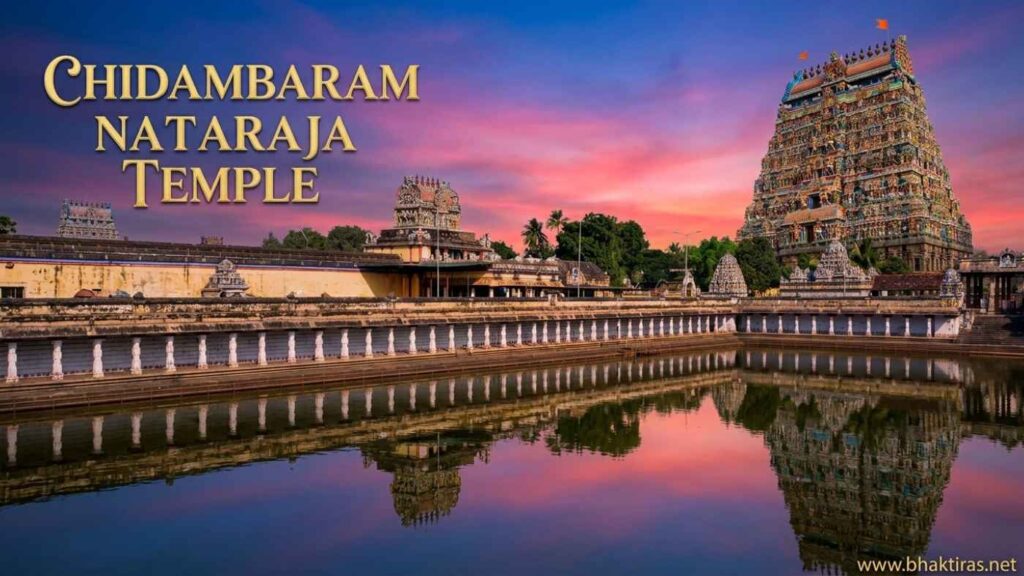
The Chidambaram Nataraja Temple in Tamil Nadu is the home of Shiva as Nataraja, the cosmic dancer, and the Pancha Bhoota Sthala of space (akasha). Its inner sanctum holds the Chidambara Rahasya — the “secret of Chidambaram” — where, behind a curtain, the formless God is worshipped as empty space. The golden-roofed hall of the dance, served by the hereditary Dikshitar priests, has been a heart of Tamil Shaiva devotion for over a thousand years.
The element of space and the Chidambara Rahasya
Of the five element-temples, Chidambaram represents akasha, space or ether. This is expressed in the Chidambara Rahasya: in a chamber beside the dancing Nataraja, a curtain is drawn back during worship to reveal — nothing. The empty space, hung with strings of golden bilva leaves, is the formless absolute, God beyond image or shape. It is among the boldest statements of the formless divine anywhere in Hindu worship.
Nataraja and the cosmic dance
The presiding image is Nataraja, Shiva performing the Ananda Tandava, the dance of bliss, within a ring of fire. Every element of the bronze is read as cosmic principle: the drum of creation, the fire of dissolution, the raised foot of liberation, the demon of ignorance underfoot. Chidambaram is the foremost temple of this form, and the dance it enshrines became one of the defining images of Indian art and thought.
The hall of gold
The sanctum is the Chit Sabha, the hall of consciousness, roofed in gold, beside the Kanaka Sabha. Unusually for a great South Indian temple, the most sacred roof is of gilded copper rather than stone, and the deity is a metal image worshipped with dance and song rather than a fixed lingam alone. The arrangement reflects the temple’s distinctive theology of the dancing, living God.
The Dikshitar priests
Chidambaram is served by the Dikshitars, a hereditary community of priests who have maintained its worship for centuries and who alone perform the rituals of the Chit Sabha. They follow distinctive customs and conduct the daily pujas to Nataraja. Their unbroken stewardship is part of what gives the temple its particular character among Tamil shrines.
The dance halls and the 108 karanas
The temple’s gopurams are carved with all 108 karanas — the fundamental units of movement set down in the Natya Shastra — making the temple a stone manual of Bharatanatyam. Within the complex stand several sabhas, or halls of dance, and a shrine to Govindaraja Perumal (Vishnu) shares the precinct, a rare case of Shiva and Vishnu worshipped under one roof. Arudra Darshan, in the month of Margazhi (December–January), is the great festival of the dance.
How to reach Chidambaram
- By road: Chidambaram is on the Chennai–Cuddalore–Thanjavur route, well served by buses; the temple is in the centre of town.
- By train: Chidambaram railway station is about 1.5 km from the temple, on the Chennai–Trichy line.
- By air: Tiruchirapalli (about 170 km) and Puducherry are the nearest airports.
Frequently Asked Questions
What is the Chidambara Rahasya?
The Chidambara Rahasya, the “secret of Chidambaram”, is the worship of the formless God as empty space. In a chamber beside Nataraja, a curtain is drawn back during worship to reveal an empty space hung with golden bilva leaves — the absolute beyond form, expressing the element of space (akasha).
Which element does Chidambaram temple represent?
Chidambaram is the Pancha Bhoota Sthala of akasha — space or ether — among the five element-temples of Shiva in South India. The element is expressed through the formless Chidambara Rahasya.
Who is the deity at Chidambaram?
The deity is Shiva as Nataraja, the cosmic dancer performing the Ananda Tandava within a ring of fire. Chidambaram is the foremost temple dedicated to this dancing form of Shiva.
Who are the Dikshitar priests of Chidambaram?
The Dikshitars are a hereditary community of priests who have maintained the temple’s worship for centuries and alone perform the rituals of the Chit Sabha, the golden hall of Nataraja. Their distinctive customs are part of the temple’s identity.
What is special about the temple’s architecture?
The sanctum, the Chit Sabha, is roofed in gold rather than stone, and the gopurams are carved with all 108 karanas of classical dance. The complex also houses a Govindaraja Perumal (Vishnu) shrine, a rare pairing of Shiva and Vishnu.
How do I reach Chidambaram Nataraja Temple?
Chidambaram is in Cuddalore district, Tamil Nadu, on the Chennai–Trichy route. The railway station is about 1.5 km from the temple, and Tiruchirapalli (about 170 km) is the nearest major airport.
॥ हर हर महादेव ॥ • Bhaktiras.net Temple Guide
| Temple Name | Chidambaram Nataraja Temple |
| Primary Deity | Shiva (Nataraja) |
| Location | Chidambaram, Cuddalore |
| State | Tamil Nadu, India |
| Significance | Pancha Bhoota Sthala (Space/Akasha) |
| Special | Chidambara Rahasya (formless worship) |
| Architecture | Dravidian (Chola), golden roof |
| Period | 10th–12th century |
| Priests | Dikshitar community |
| Key Festival | Arudra Darshan (Dec–Jan) |
| Dance | 108 karanas carved on gopurams |
| Entry | Free |
Related Temples
Explore more sacred temples connected by deity and region.
 ShivaAiravatesvara Temple, Darasuram📍 Tamil Nadu
 ShivaArunachaleswarar Temple, Thiruvannamalai📍 Tamil Nadu
 ShivaArunachaleswarar Temple, Tiruvannamalai📍 Tamil Nadu
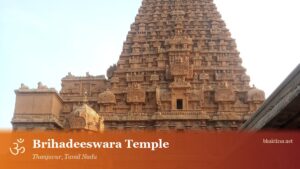 ShivaBrihadeeswara Temple, Thanjavur📍 Tamil Nadu
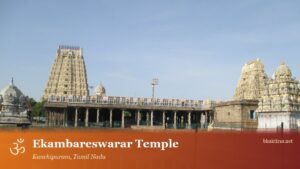 ShivaEkambareswarar Temple, Kanchipuram📍 Tamil Nadu
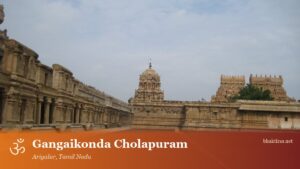 ShivaGangaikonda Cholapuram Temple📍 Tamil Nadu