ॐ
Biraja Temple, Jajpur
Maa Biraja (Durga) • Jajpur, Odisha
॥ ॐ दुं दुर्गायै नमः ॥
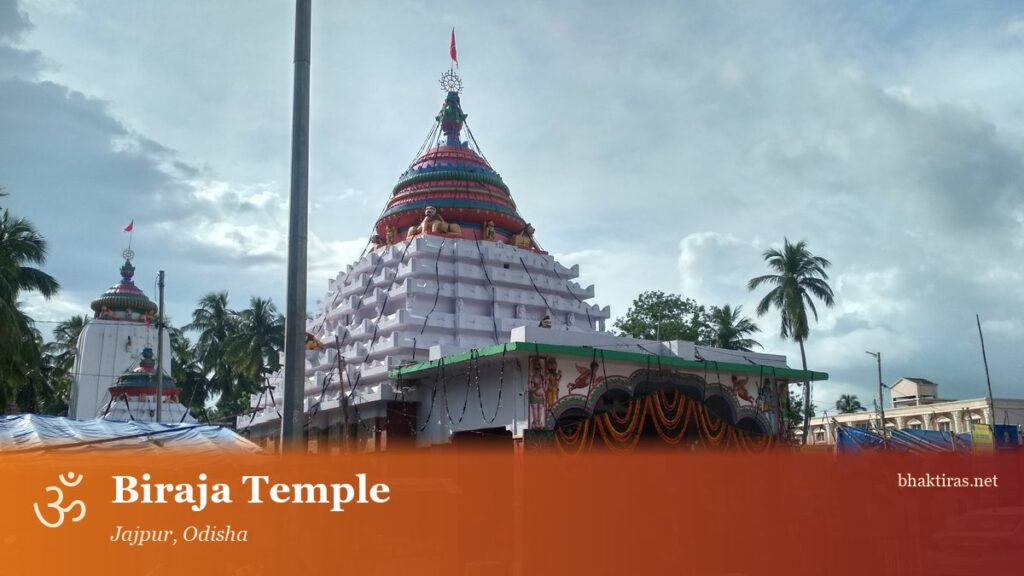
Biraja Temple at Jajpur honours Viraja Devi on the bank of the Vaitarani river in Odisha, where Sati’s navel is held by tradition to have fallen, making this one of the Shakti Peethas. Because of that legend the surrounding ground is called Nabhi Gaya and Viraja Kshetra, and pilgrims arrive both to see the goddess and to perform ancestral rites. The image is a two-armed Mahishamardini who drives her spear into the buffalo-demon, a form unusual among Durga shrines across the east.
The Shakti Peetha legend
The Shakti Peetha cycle teaches that after Sati gave up her body, Vishnu’s discus cut her form into parts that fell across the land, and each landing place became a seat of the goddess. At Jajpur the part remembered is the navel, and from that the town earns its older name of Nabhi Gaya — the navel-Gaya — set apart from the more famous Gaya in Bihar.
The body-part legend is carried as living tradition rather than as a record that can be measured, and devotees treat it as the reason the kshetra carries such weight. The goddess here is also called Viraja, a name that has given the whole sacred zone its title of Viraja Kshetra.
The deity and the image
Biraja is shown as Mahishamardini, the slayer of the buffalo-demon, but with only two arms rather than the many-armed form common elsewhere. One hand drives a spear into the demon while the other holds the tail of the buffalo, a compact and forceful composition.
The crown of the deity is marked by two further signs that pilgrims point out: a crescent moon and a small lingam set within it. These details tie the goddess to Shiva and give the Jajpur image a character of its own among Durga shrines.
Jajpur and ancestral rites
Jajpur served as a royal capital under the Kesari and later Somavamshi rulers, and the temple precinct reflects that long association with kingship and patronage. The town sits on the Vaitarani, a river that itself carries strong funerary meaning in regional belief.
As at Gaya, Jajpur is sought out for pind-daan, the offerings made on behalf of departed ancestors. Families travel here specifically to complete these rites, so the site joins the worship of the living goddess with care for the dead.
- Set on the bank of the Vaitarani river
- Known as Nabhi Gaya and Viraja Kshetra
- A recognised destination for pind-daan ancestral rites
Festivals and visiting
Sharadiya Navaratri is the great festival of the temple, when the autumn worship of Durga draws the largest gatherings of the year and the goddess receives special honours across nine nights.
Through the rest of the year the shrine keeps a steadier rhythm of daily worship, and visitors often pair their darshan with the ancestral rites for which Jajpur is known. Modest dress and patience during festival crowds make for an easier visit.
Frequently Asked Questions
Which body part of Sati is associated with Biraja Temple?
Tradition holds that the navel of Sati fell at Jajpur, which is why the site is counted among the Shakti Peethas. For this reason the area is called Nabhi Gaya, meaning the navel-Gaya. The legend is carried as devotional tradition rather than as datable history.
Why is Jajpur called Nabhi Gaya?
Jajpur is called Nabhi Gaya because the navel of Sati is said to have fallen here. The name links it to Gaya in Bihar, since both places are sought out for ancestral rites. The wider sacred zone is also known as Viraja Kshetra after the goddess.
What is special about the Biraja deity image?
Biraja is a two-armed Mahishamardini who spears the buffalo-demon, unusual among the many-armed Durga forms found elsewhere. Her crown carries a crescent moon and a small lingam, tying her to Shiva. One hand holds the spear and the other the tail of the buffalo.
Can ancestral rites be performed at Jajpur?
Yes. Like Gaya, Jajpur is an established site for pind-daan, the offerings made for departed ancestors. Families travel here specifically to complete these rites on the bank of the Vaitarani river. Many pilgrims combine the rites with darshan of the goddess.
When is the main festival at Biraja Temple?
Sharadiya Navaratri is the principal festival, when autumn worship of Durga brings the largest crowds of the year. The goddess receives special honours across the nine nights. Dates follow the lunar calendar and shift each year.
Where is Biraja Temple located?
Biraja Temple stands in Jajpur town in the Jajpur district of Odisha, on the bank of the Vaitarani river. It is a recognised Shakti Peetha and the centre of the area known as Viraja Kshetra. Jajpur is reachable by road and rail from major Odisha cities.
॥ जय माता दी ॥ • Bhaktiras.net Temple Guide
| Primary Deity | Maa Biraja (Viraja Devi, Durga) |
| Tradition | Shakti Peetha (navel of Sati) |
| Sacred Zone | Nabhi Gaya / Viraja Kshetra |
| Deity Form | Two-armed Mahishamardini |
| River | Vaitarani |
| Rite | Pind-daan for ancestors |
| Main Festival | Sharadiya Navaratri |
| Location | Jajpur, Odisha |
Related Temples
Explore more sacred temples connected by deity and region.