ॐ
Alopi Devi Temple, Prayagraj
Alopi Devi (Durga) • Prayagraj, Uttar Pradesh
॥ ॐ दुं दुर्गायै नमः ॥
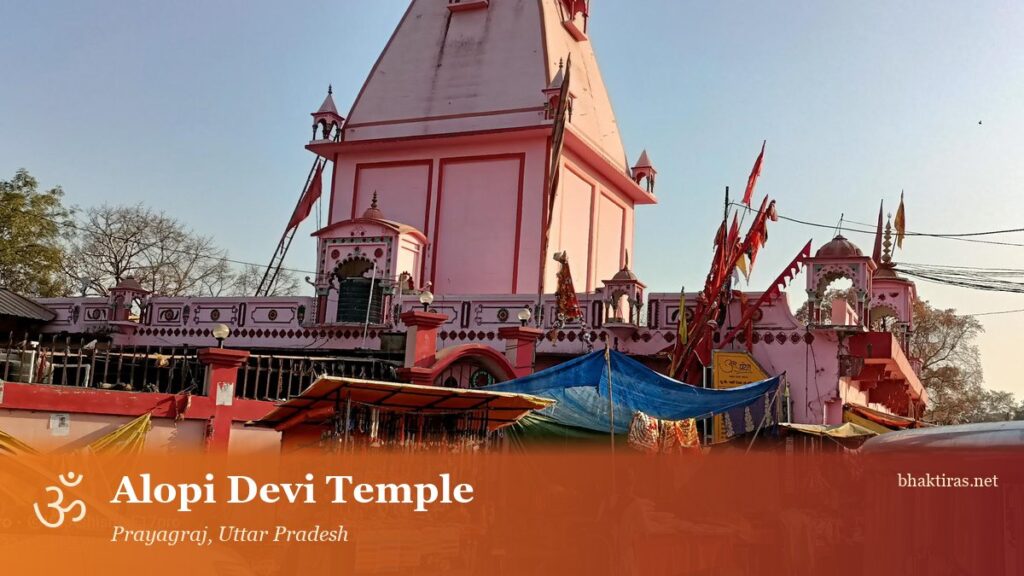
The Alopi Devi Temple in Prayagraj is unusual among the goddess shrines of India, for it holds no idol. Worship instead centres on a wooden swing or cradle, the doli, set over a platform, and the temple stands close to the Sangam, drawing great crowds during Navaratri and the Magh and Kumbh Melas.
A Shrine Without an Idol
What sets the Alopi Devi Temple apart is the absence of an image of the goddess. In place of an idol, devotion is directed to a wooden swing or cradle, the doli, suspended over a sacred platform within the sanctum.
Worshippers offer their prayers to this doli, treating it as the seat of the goddess’s presence. The form of worship is rare among Shakti shrines and gives the temple its distinctive character.
The Meaning of Alopi
The name Alopi means “the one who vanished,” and it is tied to the tradition of the Shakti sites associated with the goddess Sati. The temple is said to mark the place where the last part of Sati’s body disappeared, and by some traditions it is counted among these sacred sites.
This story of disappearance explains the absence of an idol and the focus on the unseen presence of the goddess. The vanished form is honoured at the doli rather than in a sculpted image.
Beside the Sangam
The temple lies close to the Sangam at Prayagraj, the meeting of the Ganga, Yamuna and the unseen Saraswati, one of the most sacred confluences in India. Its nearness to this great pilgrimage centre brings a constant flow of devotees.
Pilgrims who come to bathe at the Sangam often visit the Alopi Devi Temple as part of their journey. The shrine is woven into the wider sacred geography of Prayagraj.
Navaratri and the Melas
Navaratri brings large crowds to the temple, when the goddess is honoured through the nine nights and the shrine fills with worshippers. It is one of the busiest seasons in the temple’s year.
The temple is also especially crowded during the Kumbh and Magh Melas, the great gatherings held at the Sangam, when pilgrims from across the country pass through Prayagraj. At these times the Alopi Devi Temple sees some of its largest gatherings.
Frequently Asked Questions
What is unusual about the Alopi Devi Temple?
The Alopi Devi Temple has no idol of the goddess. Worship instead centres on a wooden swing or cradle, the doli, set over a platform, which is venerated as the seat of the goddess’s presence.
What does the name Alopi mean?
Alopi means “the one who vanished.” The name is linked to the tradition that the temple marks the spot where the last part of Sati’s body disappeared, which is why no idol is worshipped here.
Where is the Alopi Devi Temple located?
The temple is in Prayagraj, Uttar Pradesh, close to the Sangam — the confluence of the Ganga, Yamuna and the unseen Saraswati. Many pilgrims visit it as part of their journey to the Sangam.
Is Alopi Devi linked to the Shakti tradition?
Yes. The temple is associated with the story of Sati and is counted by some traditions among the Shakti sites. It is said to mark where the last part of Sati’s body vanished.
What is worshipped if there is no idol?
In place of an idol, devotees worship a wooden doli, a swing or cradle, suspended over a sacred platform in the sanctum. This doli is treated as the seat of the goddess and is the focus of all prayers.
When is the temple most crowded?
The temple is busiest during Navaratri and during the Kumbh and Magh Melas at the Sangam. At these times pilgrims from across the country pass through Prayagraj and visit the shrine in large numbers.
॥ जय माता दी ॥ • Bhaktiras.net Temple Guide
| Primary Deity | Alopi Devi (Durga) |
| Location | Prayagraj, Uttar Pradesh |
| Sacred Form | Wooden doli (swing/cradle) |
| Distinctive | Worshipped without an idol |
| Tradition | Linked to Sati / Shakti sites |
| Nearby | Triveni Sangam |
| Festival | Navaratri; Kumbh / Magh Mela |
| Meaning of Name | “The one who vanished” |
Related Temples
Explore more sacred temples connected by deity and region.