Home Blog

Shri Kalavati Aai

0

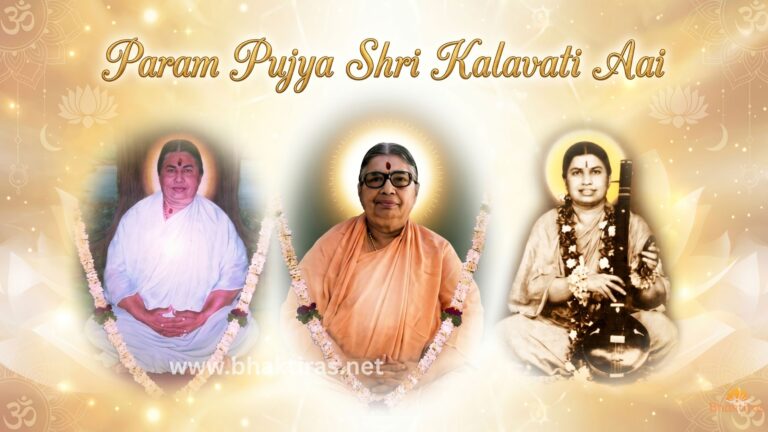
Param Pujya Shri Kalavati Aai

The Divine Incarnation of Namasmaran and Devotion

In the vast and illuminated cosmos of Indian mysticism, the lineage of saints acts as an eternal guiding light for humanity. Among these divine souls, Param Pujya Shri Kalavati Aai holds a profound and revered position. She spent her entire life awakening the dormant spiritual energy within millions through the simple yet incredibly potent practice of Namasmaran (continuous chanting of the divine name) and regular, structured devotion (Niyamit Upasana). Stripping away complex, intimidating rituals, she opened the doors of liberation to common householders, proving that worldly responsibilities and deep spiritual realization can beautifully walk hand in hand.

The Divine Timeline of Kalavati Aai
Incarnation Name Rukmabai (Affectionately called ‘Bal’)
Spiritual Name Shri Kalavati Mata / Kalavati Aai
Date of Birth Bhadrapad Shukla Panchami (Rishi Panchami) — September 2, 1908
Native Place Kalyanpur (South Kanara District) / Born at Karwar
Satguru Shri Guru Siddharudha Swami of Hubli
Core Spiritual Seat Shri Hari Mandiram, Angol, Belgaum (Belagavi)
Core Philosophy Namasmaran, Collective Worship, & Householder Devotion

The Sacred Birth & Lineage

The lineage of Kalavati Aai traces back to a highly cultured, deeply pious, and virtuous family from the coastal village of Kalyanpur. This family line was blessed by great souls, including the young ascetic Shrimat Paramahansa Shivram Swami. Within this spiritually charged ancestry lived Shri Baburao and his devoted wife, Smt. Sitabai. Though they were renowned for their truthfulness, hard work, and philanthropic nature, the couple faced a deep sorrow—they remained childless even after eight long years of marriage.

Driven by an intense desire for progeny, Baburao initiated a rigorous Sahasralingarchan ritual (worship of a thousand Shiva Lingas) during the holy month of Shravan in 1907. On the auspicious night of Durga Ashtami, at the successful culmination of his penance, Baburao experienced a vivid divine vision. The Divine Mother appeared to him and promised, “I shall take birth in your lineage.”

True to that divine prophecy, on the sacred morning of **Rishi Panchami** in 1908, during the tranquil hours of *Brahma Muhurta*, a beautiful baby girl was born in Karwar. On the twelfth day, she was formally named **Rukmabai**, though her parents lovingly addressed her simply as **’Bal’** (the child).

“A renowned astrologer named Manjunath Bhatt cast her birth chart and predicted that this was no ordinary child. He foretold that her speech would carry the absolute weight of truth, and that she would be permanently blessed by both Goddess Lakshmi and Goddess Saraswati.”

Signs of Early Divinity

From her infancy, Bal exhibited traits that set her apart from ordinary children. At just ten months old, she began walking independently, and the very first word she uttered on her first birthday was the holy name “Hari”. While other children engaged in worldly play, her playground was the altar of the deities.

Her childhood games were beautifully unconventional. She would gather idols of Lord Rama, Krishna, Datta, Ganesha, and Hanuman, placing Lord Krishna at the center as the focal point of her universe. Even by the age of five, she effortlessly sang complex bhajans in Marathi, Kannada, Hindi, and Gujarati. The sheer melodic sweetness, poise, and deep meditative stillness with which she sang left seasoned listeners spellbound.

The Awakening: Meeting Swami Purnananda & Shri Siddharudha

When she turned seven, her life took a defining spiritual turn when she met the wandering ascetic Swami Purnananda. Recognizing her vast store of spiritual merit from past lives, her razor-sharp intellect, and her unyielding devotion, the Swami grew exceptionally fond of her. Before leaving her village, he gifted her an idol of Gopalakrishna and said to her father:

“This daughter of yours is not ordinary; she has descended for the upliftment of humanity. She will stay with you only until the age of eighteen, after which she will embrace a path of total renunciation and win the world over with her nectar-like speech.”

Following the cosmic plan, at the age of fifteen, Rukmabai was wedded to Shri M. Rajagopal, a Police Inspector from Cuddalore. On their journey after the wedding, the couple visited Hubli to seek the blessings of the legendary saint Shri Siddharudha Swami. As Rukmabai laid her head upon the master’s feet, a profound spiritual transmission occurred. Recognizing her destiny, the great Master privately comforted her, promising that her Satguru would claim her completely at the right cosmic hour.

Her domestic life was brief but impactful. She bore two sons, but within a few years, destiny struck a heavy blow. Her husband passed away, and shortly after, she lost her children. Seeing the temporary nature of human life, Rukmabai gracefully severed her remaining worldly ties and fully surrendered herself at the feet of her Satguru, Shri Siddharudha Swami.

Spiritual Achievements & The Birth of ‘Kalavati Aai’

Under the direct, intense guidance of Shri Siddharudha Swami, Rukmabai dissolved her individual identity into rigorous meditation, selfless service, and scriptural study. By the year 1928, seeing her mastery over every aspect of spiritual science, her Satguru initiated her and bestowed upon her the name “Kalavati”—meaning the one who is fully accomplished in all divine arts.

On the auspicious day of Vijayadashami (Dussehra), Shri Siddharudha Swami commanded her to ascend the spiritual pulpit, perform Kirtan, and travel far and wide to spread the comforting balm of the Divine Name. For years, she traveled tirelessly across regions, wiping away the tears of the suffering, dispelling ignorance, and leading people toward the path of righteousness.

After twelve years of intense wandering and spiritual sowing, Kalavati Aai settled down in Angol, Belgaum, establishing the historic Shri Hari Mandiram. This sacred space quickly evolved into the spiritual heart of her mission, transforming her from a traveling mystic into the universally beloved ‘Aai’ (Mother) to millions of seekers.

Core Teachings: The Path of Simple Devotion

Kalavati Aai’s spiritual philosophy is incredibly practical and perfectly customized for the challenges of modern life. Her core teachings emphasize that one does not need to abandon their family or escape into the jungles to find God. Her spiritual roadmap includes:

  • Niyamit Upasana (Disciplined, Regular Worship): Aai heavily emphasized consistency. Just as our body craves food at fixed intervals and sleep at specific hours, the soul must be fed divine vibrations at fixed, unchanging times every day.
  • Namasmaran (The Power of the Name): In the chaotic age of Kali Yuga, complex rituals are difficult to sustain. Aai taught that the easiest and highest path to the Divine is the uninterrupted mental chanting of God’s name with absolute faith.
  • Samuhik Upasana (Collective Chanting): She strongly advocated for community prayers. When hundreds of minds focus on a single divine frequency together, the collective spiritual power instantly purifies the environment and elevates everyone present.
  • Spiritual Literature for Families: To plant the seeds of values in young minds, Aai wrote beautifully simple, story-based books including Gopalkala, Satvashil Raje, Santmela, Subodhbhạn, and Triveni Sangam. She also authored Shrikrishna Pratap and Katha Sumanhar to explain deep philosophical truths simply.

Frequently Asked Questions (FAQs)

When and where was Kalavati Aai born?

Param Pujya Kalavati Aai was born on the holy morning of Rishi Panchami (September 2, 1908) in Karwar, India. Her family ancestry is rooted in the village of Kalyanpur.

Who was the spiritual Guru of Kalavati Mata?

Her Satguru was the acclaimed master Shri Siddharudha Swami of Hubli, who recognized her spiritual evolution and named her ‘Kalavati’.

What is the significance of Shri Hari Mandiram?

Located in Angol, Belgaum, Shri Hari Mandiram is the main ashram and spiritual powerhouse founded by Kalavati Aai, which still guides thousands of devotees in collective devotional practices.

भगवान गणेश के 12 शक्तिशाली मंत्र और उनके अर्थ

0

भगवान गणेश के 12 शक्तिशाली मंत्र और उनके अर्थ

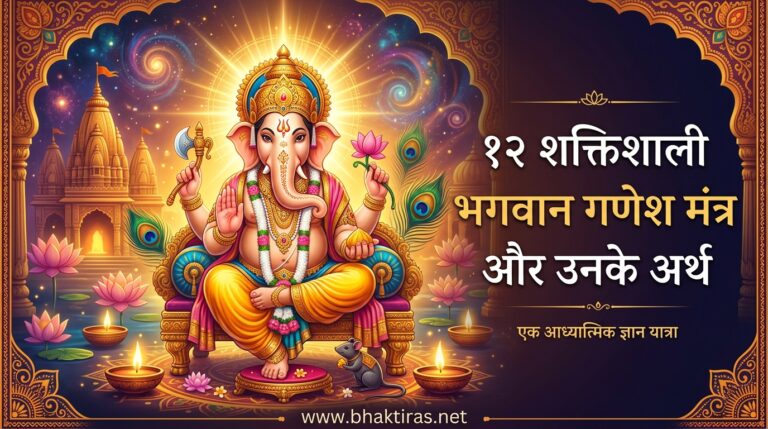
किसी भी शुभ कार्य की शुरुआत में सबसे पहले प्रथम पूज्य भगवान श्री गणेश का स्मरण किया जाता है। बप्पा के अनगिनत रूप और नाम हैं, लेकिन उनके 12 प्रमुख नाम और मंत्र विशेष रूप से फलदायी माने जाते हैं। नीचे दिए गए इंटरैक्टिव कार्ड्स पर होवर (या क्लिक) करें और जानें गणेश जी के 12 दिव्य मंत्रों के अद्भुत अर्थ।

ॐ सुमुखाय नमः

सुमुख

सुंदर मुख वाले

ॐ एकदंताय नमः

एकदंत

एक दांत वाले

ॐ कपिलाय नमः

कपिल

भूरे, सिंदूरी और बादामी रंग वाले

ॐ गजकर्णाय नमः

गजकर्ण

हाथी के जैसे कान वाले

ॐ लंबोदराय नमः

लंबोदर

बड़े पेट वाले

ॐ विकटाय नमः

विकट

विपत्तियों का नाश करने वाले

ॐ विघ्ननाशाय नमः

विघ्ननाशक

बाधाओं को दूर करने वाले

ॐ विनायकाय नमः

विनायक

श्रेष्ठ प्रतिनिधित्व करने वाले

ॐ धूम्रकेतवे नमः

धूम्रकेतु

जिनका ध्वज धुएं के जैसे रंग का है

ॐ गणाध्यक्षाय नमः

गणाध्यक्ष

सभी गणों का अध्यक्ष

ॐ भालचंद्राय नमः

भालचंद्र

जिसके मस्तक पर चंद्र विराजित है

ॐ गजाननाय नमः

गजानन

हाथी के जैसे मुख वाले

Ekadashi Dates 2026: Complete Vrat Calendar, Timings & Parana Rules

0

Observing an Ekadashi fast on the eleventh lunar day of both the waxing moon (Shukla Paksha) and the waning moon (Krishna Paksha) is one of Hinduism’s most potent spiritual disciplines. Dedicated entirely to Lord Vishnu, cleansing the digestive system on this day helps calm the mind, stabilize dynamic energy, and open pathways toward higher spiritual growth.

Note on Calibrations: All calculated windows below conform strictly to traditional Lunisolar movements. Please verify regional sunrise fluctuations before finalizing precise breaking of the fast (Parana).

Complete 2026 Ekadashi Fasting Calendar

Track all 24 vital Ekadashi events across the year, detailed with exact scriptural names, Paksha attributes, and precise boundary Tithi limits.

Shattila Ekadashi

Jan 14, Wed
Lunar Month: Magha (Krishna Paksha)
🌅 Tithi Windows:
Begins: Jan 13, 03:17 PM
Ends: Jan 14, 05:52 PM

Jaya Ekadashi

Jan 29, Thu
Lunar Month: Magha (Shukla Paksha)
🌅 Tithi Windows:
Begins: Jan 28, 04:35 PM
Ends: Jan 29, 01:55 PM

Vijaya Ekadashi

Feb 13, Fri
Lunar Month: Phalguna (Krishna Paksha)
🌅 Tithi Windows:
Begins: Feb 12, 12:22 PM
Ends: Feb 13, 02:25 PM

Amalaki Ekadashi

Feb 27, Fri
Lunar Month: Phalguna (Shukla Paksha)
🌅 Tithi Windows:
Begins: Feb 27, 12:33 AM
Ends: Feb 27, 10:32 PM

Papamochani Ekadashi

Mar 15, Sun
Lunar Month: Chaitra (Krishna Paksha)
Includes Vishnushrinkhala Yoga
🌅 Tithi Windows:
Begins: Mar 14, 08:10 AM
Ends: Mar 15, 09:16 AM

Kamada Ekadashi

Mar 29, Sun
Lunar Month: Chaitra (Shukla Paksha)
🌅 Tithi Windows:
Begins: Mar 28, 08:45 AM
Ends: Mar 29, 07:46 AM

Varuthini Ekadashi

Apr 13, Mon
Lunar Month: Vaishakha (Krishna Paksha)
🌅 Tithi Windows:
Begins: Apr 13, 01:16 AM
Ends: Apr 14, 01:08 AM

Mohini Ekadashi

Apr 27, Mon
Lunar Month: Vaishakha (Shukla Paksha)
🌅 Tithi Windows:
Begins: Apr 26, 06:06 PM
Ends: Apr 27, 06:15 PM

Apara Ekadashi

May 13, Wed
Lunar Month: Jyeshtha (Krishna Paksha)
🌅 Tithi Windows:
Begins: May 12, 02:52 PM
Ends: May 13, 01:29 PM

Padmini Ekadashi

May 27, Wed
Lunar Month: Jyeshtha (Shukla Paksha)
Unmilini Mahadwadashi Rules Apply
🌅 Tithi Windows:
Begins: May 26, 05:10 AM
Ends: May 27, 06:21 AM

Parama Ekadashi

Jun 11, Thu
Lunar Month: Jyeshtha (Krishna Paksha)
🌅 Tithi Windows:
Begins: Jun 11, 12:57 AM
Ends: Jun 11, 10:36 PM

Nirjala Ekadashi

Jun 25, Thu
Lunar Month: Jyeshtha (Shukla Paksha)
🌅 Tithi Windows:
Begins: Jun 24, 06:12 PM
Ends: Jun 25, 08:09 PM

Yogini Ekadashi

Jul 10, Fri
Lunar Month: Ashadha (Krishna Paksha)
Vaishnava split date: July 11
🌅 Tithi Windows:
Begins: Jul 10, 08:16 AM
Ends: Jul 11, 05:22 AM

Devshayani Ekadashi

Jul 25, Sat
Lunar Month: Ashadha (Shukla Paksha)
🌅 Tithi Windows:
Begins: Jul 24, 09:12 AM
Ends: Jul 25, 11:34 AM

Kamika Ekadashi

Aug 09, Sun
Lunar Month: Shravana (Krishna Paksha)
🌅 Tithi Windows:
Begins: Aug 08, 01:59 PM
Ends: Aug 09, 11:04 AM

Putrada Ekadashi

Aug 23, Sun
Lunar Month: Shravana (Shukla Paksha)
Vaishnava split date: August 24
🌅 Tithi Windows:
Begins: Aug 23, 02:00 AM
Ends: Aug 24, 04:18 AM

Aja Ekadashi

Sep 07, Mon
Lunar Month: Bhadrapada (Krishna Paksha)
🌅 Tithi Windows:
Begins: Sep 06, 07:29 PM
Ends: Sep 07, 05:03 PM

Parsva Ekadashi

Sep 22, Tue
Lunar Month: Bhadrapada (Shukla Paksha)
🌅 Tithi Windows:
Begins: Sep 21, 08:00 PM
Ends: Sep 22, 09:43 PM

Indira Ekadashi

Oct 06, Tue
Lunar Month: Ashwina (Krishna Paksha)
🌅 Tithi Windows:
Begins: Oct 06, 02:07 AM
Ends: Oct 07, 12:34 AM

Papankusha Ekadashi

Oct 22, Thu
Lunar Month: Ashwina (Shukla Paksha)
🌅 Tithi Windows:
Begins: Oct 21, 02:11 PM
Ends: Oct 22, 02:47 PM

Rama Ekadashi

Nov 05, Thu
Lunar Month: Kartika (Krishna Paksha)
🌅 Tithi Windows:
Begins: Nov 04, 11:03 AM
Ends: Nov 05, 10:35 AM

Devutthana Ekadashi

Nov 20, Fri
Lunar Month: Kartika (Shukla Paksha)
Vaishnava split date: November 21
🌅 Tithi Windows:
Begins: Nov 20, 07:15 AM
Ends: Nov 21, 06:31 AM

Utpanna Ekadashi

Dec 04, Fri
Lunar Month: Margashirsha (Krishna Paksha)
🌅 Tithi Windows:
Begins: Dec 03, 11:03 PM
Ends: Dec 04, 11:44 PM

Mokshada Ekadashi

Dec 20, Sun
Lunar Month: Margashirsha (Shukla Paksha)
Vaikuntha Ekadashi
🌅 Tithi Windows:
Begins: Dec 19, 10:09 PM
Ends: Dec 20, 08:14 PM

The Dual Classification: Smartha vs. Vaishnava Observances

A frequent point of confusion for many practitioners is why modern Hindu calendars list distinct dates for Smartha and Vaishnava groups. This variation arises from how both traditions define the exact presence of the lunar phase at dawn.

  • Smartha Guidelines (Householders): Householders observe the fast on the primary day when the Tithi is active during early morning hours. This is the timeline standard shown in our central overview cards above.
  • Vaishnava Guidelines (Ascetics & Gaudiya Devotees): Devotees following Vaishnava paths will never fast if the previous lunar phase (Dashami) overlaps into the early hours before dawn (Arunodaya). Instead, they comfortably push their fast into the following day, often concluding with a extended fast that breaks directly on Dwadashi.

Step-by-Step Ritual Execution (Vrat Vidhi)

To maximize the energetic benefits of your fast, structure your execution carefully across a complete three-day cycle:

1

Dashami (Preparation)

Consume a single, wholesome meal in the afternoon. Ensure you avoid grains and processed spices to cleanse your system well ahead of the coming fast day.

2

Ekadashi (Sadhana)

Wake during the auspicious Brahma Muhurta. Dedicate your day entirely to prayers, oil lamps, and meditation. Choose your path: a pure waterless fast (Nirjala) or a fruit-based diet (Phalahari).

3

Dwadashi (Parana)

Break your fast strictly within the specified morning window after sunrise. Prepare a simple, pure meal without heavy spices to gently reawaken your digestion.

Frequently Asked Questions & Scriptural Clarifications

Why do some Ekadashi fasts stretch over two consecutive days?
When an Ekadashi Tithi overlaps or touches dawn (Arunodaya), it creates a division between Smartha (householders) and Vaishnava (ascetics/staunch devotees) traditions. Smarthas observe the fast on the first day, while Vaishnavas and those seeking absolute liberation (Moksha) fast on the second day (Gauna/Vaishnava Ekadashi).
What is the best way to manage consecutive Ekadashi and Pradosh Vrats?
If Pradosh Vrat falls immediately on Dwadashi right after an Ekadashi fast, breaking the fast completely can disrupt the continuous spiritual discipline. The scriptures advise performing a symbolic Parana by consuming only water or Tulsi leaves after sunrise during the designated Parana window, then continuing your meditation into the Pradosh Vrat.
Can beginners consume specific foods during an Ekadashi Vrat?
While a strict waterless fast (Nirjala) yields maximum spiritual energy, beginners can easily opt for the Phalahari (fruit-based) path. You must completely avoid all grains, rice, wheat, and pulses. Instead, rely safely on fresh fruits, milk, water, and non-grain starches like Tapioca (Sabudana) or Water Chestnut flour (Singhare ka Atta).
Why is rice strictly prohibited on Ekadashi even if one is not fasting?
According to the Padma Purana, a dangerous demon named Mura took refuge inside grains of rice on this sacred day to escape Lord Vishnu. Symbolically and energetically, consuming rice on Ekadashi clouds the mind with heavy, lethargic (Tamasic) energy, making spiritual focus nearly impossible.

Sankashti Chaturthi Vrat 2026 Dates

2026 Sankashti Chaturthi: Complete Vrat Dates & Timings

Clear obstacles and invite prosperity. Your definitive guide to Sankatahara Chaturthi fasting rules, moonrise significance, and accurate 2026 dates.

Upcoming Sankashti Chaturthi

Loading…

The Meaning

Sankashti translates to “deliverance during troubled times.” Observing this fast is believed to remove life’s obstacles.

The Deity

Dedicated to Lord Ganesha, the supreme lord of intelligence and the remover of hurdles.

The Timing

Occurs every lunar month on the Chaturthi (4th day) of the Krishna Paksha (waning moon phase).

Special Occasion

When this day falls on a Tuesday, it is known as Angarki Chaturthi, considered highly auspicious.

Comprehensive 2026 Sankashti Chaturthi Calendar

Below are the accurate dates for 2026. Note: Dates are based on standard Indian Standard Time (IST). Please adjust for your local moonrise.

Date (2026) Day Name / Regional Significance
January 6 Tuesday Lambodara Sankashti (Sakat Chauth) – Angarki Chaturthi
February 5 Thursday Dwijapriya Sankashti
March 6 Friday Bhalachandra Sankashti
April 5 Sunday Vikata Sankashti
May 5 Tuesday Ekadanta Sankashti – Angarki Chaturthi
June 3 Wednesday Vibhuvana Sankashti
July 3 Friday Krishnapingala Sankashti
August 2 Sunday Gajanana Sankashti
August 31 Monday Heramba Sankashti (Bahula Chaturthi)
September 29 Tuesday Vighnaraja Sankashti – Angarki Chaturthi
October 29 Thursday Vakratunda Sankashti (Coincides with Karwa Chauth)
November 27 Friday Ganadhipa Sankashti
December 26 Saturday Akhuratha Sankashti

Vrat Vidhi: Fasting Rules & Diet

The Sankashti vrat is observed strictly from sunrise to moonrise. Here is how to observe it correctly:

  • The Vow: Begin your day early, take a bath, and take a sankalp (vow) to fast for Lord Ganesha.
  • Dietary Restrictions: This is a strict fast. Only fruits, roots (plants grown below ground like potatoes and sweet potatoes), and vegetable products are permitted.
  • Popular Meals: The staple diet for this day includes Sabudana Khichadi, roasted peanuts, and potato-based dishes.
  • Breaking the Fast: The fast is broken only at night, strictly after the sighting of the moon and offering Arghya (water) to it.

Frequently Asked Questions

What is the difference between Sankashti and Ganesha Chaturthi?
Both fall on the Chaturthi Tithi (4th day). However, Sankashti Chaturthi occurs during the Krishna Paksha (waning moon, after the full moon), while Ganesha Chaturthi occurs during the Shukla Paksha (waxing moon, after the new moon).
What is Sakat Chauth?
In North India, the Sankashti Chaturthi that falls during the Hindu month of Magha is specifically celebrated as Sakat Chauth.
Why is Angarki Chaturthi considered special?
When Sankashti Chaturthi falls on a Tuesday, it is called Angarki Chaturthi. According to Hindu mythology, observing the fast on this specific alignment yields the benefits of fasting for an entire year.
Can I drink water during the Sankashti fast?
Yes, water is permitted. While some devotees opt for a strict ‘Nirjala’ (no water) fast until moonrise, the standard observance allows for water, fruits, milk, and root vegetables.

Shubh Vivah Dates 2026 with Muhurat

0

The 2026 Hindu Vivah Muhurat calendar identifies sixty-two auspicious wedding dates between January and July. These windows are determined by aligning five Vedic Panchang elements, including lunar days and planetary positions. February, April, and June offer the highest number of favorable dates for couples planning traditional ceremonies.

Certain months face restrictions due to astronomical events like Venus combustion, solar transits, and the Adhika Maas leap month. These periods lack suitable marriage timings. While general calendars provide a framework, practitioners recommend consulting an astrologer for personalized alignment based on individual birth charts and local time zones.

Shubh Marriage Dates 2026 with Muhurat | Hindu Vivah Muhurat Calendar
🔱 Hindu Panchang 2026

Shubh Vivah Muhurat
2026

Auspicious Hindu marriage dates with nakshatra, tithi and timing — curated for joyful beginnings

62Shubh Dates
8Active Months
12Nakshatras

Choosing the Right Vivah Muhurat in 2026

In Vedic tradition, a Vivah Muhurat (auspicious wedding time) is determined by examining five key Panchang elements: Tithi (lunar day), Nakshatra (birth star), Yoga (planetary combination), Karana (half-day division), and Vara (weekday). When these align favorably, the resulting window is considered divinely blessed for beginning a lifelong union.

The year 2026 features a Adhika Maas (leap month) in May–June, which reduces the number of available wedding dates during that period. January has no shubh dates due to Shukra Tara Asta (Venus combustion), and large sections of March–April are restricted by a Kharmaas (inauspicious solar month). Plan early — the best dates in February and April fill up fast.

All dates and timings below are based on standard Hindu Panchang calculations. For a personalized Lagna Shuddhi matched to your birth chart, consult a qualified Jyotishi.

Shubh Day — Muhurat available
Ashubh Day — Not recommended
💛 Tap any date to see full details
🌙

What is Nakshatra?

The 27 lunar mansions (Nakshatras) through which the Moon travels. For marriage, nakshatras like Rohini, Uttara Phalguni, Hasta, Swati, Anuradha, Mula, and Uttara Ashadha are considered highly auspicious and are actively sought in Vivah Muhurat selection.

📅

What is Tithi?

Tithi refers to a lunar day, each lasting approximately 24 hours. For Hindu weddings, Dwitiya, Tritiya, Panchami, Saptami, Dashami, Ekadashi, and Trayodashi are preferred. Chaturdashi, Ashtami, and Amavasya are generally avoided.

Why Some Days Are Blocked

Certain dates are off-limits due to planetary conditions: Shukra Tara Asta (Venus setting), Guru Tara Asta (Jupiter setting), Kharmaas (inauspicious solar transit), Adhika Maas (leap month), or the presence of a prohibited Yoga or Karana.

🪬

Lagna Shuddhi

Beyond Panchang-based dates, the ideal practice is Lagna Shuddhi — ensuring the wedding ascendant (Lagna) is free of malefic planets, and aligns well with both the bride’s and groom’s birth charts. This gives a fully personalized and blessed muhurat.

🔯

Adhika Maas in 2026

In 2026, an extra lunar month (Adhika Maas or Mal Maas) falls in May–June. This period is traditionally considered inauspicious for new beginnings including marriages. Wedding dates are unavailable from mid-May through mid-June due to this phenomenon.

🌅

Best Months to Marry in 2026

February (11 dates), June (11 dates), and April (10 dates) offer the most auspicious wedding windows in 2026. For grand celebrations, February 9–14 and April 25–30 are particularly well-aligned. July has the fewest options — only 2 dates.

Frequently Asked Questions

What is a Shubh Vivah Muhurat?

A Shubh Vivah Muhurat is an auspicious time window calculated by Vedic astrologers for conducting a Hindu marriage ceremony. The word “muhurat” means an auspicious moment, and “vivah” means marriage. These windows are determined by analyzing the Hindu Panchang — a sacred almanac that tracks planetary positions, lunar cycles, and celestial events.

A proper muhurat ensures that the five Panchang elements — Tithi, Nakshatra, Yoga, Karana, and Vara — are all favorably aligned, creating a cosmically blessed moment to begin the journey of marriage.

Why is January 2026 completely blocked for weddings?

January 2026 has no Shubh marriage dates due to Shukra Tara Asta — a period when the planet Venus (Shukra) is obscured by the Sun’s proximity and loses its visibility in the sky. In Vedic astrology, Venus is the planet of love, relationships, and harmony. When Venus is “combust” or hidden, it is considered inauspicious to begin a marriage, as the planet governing conjugal happiness is weakened.

This condition lifts in early February 2026, after which auspicious dates become available again.

What is Kharmaas and why does it block March–April dates?

Kharmaas (also called Mala Maas or Mal Maas in this context, though technically referring to the solar transit through Pisces or Sagittarius) is a period when the Sun passes through certain zodiac signs that are considered inauspicious for auspicious ceremonies. During this approximately one-month period each year, weddings, house warmings, and other major life events are traditionally postponed.

In 2026, Kharmaas covers much of mid-March through mid-April, which is why you’ll see “Prohibited Solar Month” listed for dates in that range.

How is a muhurat time window calculated?

The muhurat window begins when the required auspicious nakshatra rises and ends when it sets or gives way to a less favorable one. The window is further trimmed by removing any portions that overlap with prohibited yogas (like Vishkambha, Vyatipata), inauspicious karanas (like Vishti/Bhadra), or the Rahu Kala (shadow-planet period).

What remains after these exclusions is the pure muhurat — the window your pandit will work within to schedule your wedding rituals. Some days offer several hours; others offer just minutes, making them effectively unavailable despite technically having some auspicious alignment.

Which nakshatras are best for Hindu marriage in 2026?

The most auspicious nakshatras for marriage are: Rohini (associated with fertility and beauty, ruled by the Moon), Mrigashira (gentle and creative), Uttara Phalguni (associated with conjugal bliss, patronized by Aryaman — the god of marriage contracts), Hasta (skilled and nurturing), Swati (independent, harmonious), Anuradha (devoted and friendly), Mula (rooted and transformative), Uttara Ashadha (victorious and ethical), Uttara Bhadrapada (wise and deeply connected), and Revati (prosperous, the last and most complete nakshatra).

All dates listed in our calendar use at least one of these approved nakshatras during the muhurat window.

Can I marry on a day not listed here?

While the dates listed here represent the commonly accepted Shubh days based on standard Panchang rules, individual circumstances vary. A skilled Jyotishi can sometimes identify smaller, workable muhurat windows even on days that appear restricted. Conversely, they may suggest avoiding some of these dates due to conflicts in your personal birth chart.

Additionally, different communities (North Indian, South Indian, Gujarati, Bengali, Tamil etc.) follow slightly different Panchang traditions and may have their own slightly different approved or restricted dates. Always consult a trusted pandit for a final recommendation tailored to your family’s tradition and horoscopes.

What are the most popular wedding months in 2026?

Based on the number of available Shubh dates and quality of muhurat windows, the top months for weddings in 2026 are:

1. February — 11 auspicious dates with strong nakshatras like Uttara Phalguni, Hasta, Anuradha, and Mula. Great for those wanting a cooler, comfortable wedding season.

2. June — 11 auspicious dates (post-Adhika Maas), especially strong in the second half with Magha, Hasta, Swati, Anuradha, and Mula nakshatras.

3. April — 10 auspicious dates, especially the last week of April with excellent muhurat windows spanning full mornings or afternoons.

November and December 2026 data is not included here — check with your pandit for year-end dates if needed.

Angaraki Sankashti Chaturthi 2026: The Most Powerful Ganesha Vrat — Date, Significance, Puja Rituals

0

Not all Chaturthis are created equal. Once or twice a year, the universe serves up a rare combination that devotees of Lord Ganesha wait for with great anticipation – a Sankashti Chaturthi that falls on a Tuesday. This extraordinary confluence is known as Angaraki Sankashti Chaturthi, and in 2026, it falls on May 5th.

This year’s observance carries extra weight. The Chaturthi in question is Ekadanta Sankashti Chaturthi – the first Chaturthi of the Hindu month of Jyeshtha – making it doubly auspicious. If you’ve been praying for a breakthrough in your career, seeking relief from debt, or hoping to dissolve long-standing obstacles, this is a day that Hindu tradition considers among the most spiritually charged of the entire year.

What Is Angaraki Sankashti Chaturthi?

To understand why this day holds such reverence, let’s break down the name itself.

  • Angarak refers to Mars, the fiery red planet known in Hindu astrology as Mangal.
  • Sankashti means the removal or alleviation of difficulties and suffering.
  • Chaturthi is the fourth day (Tithi) of the lunar fortnight.

When a Sankashti Chaturthi — already a day dedicated to the worship of Lord Ganesha — coincides with a Tuesday (the day ruled by Mars), the result is called Angaraki Chaturthi. This alignment is considered exceptionally potent because it merges the energy of Ganesha, the remover of obstacles, with that of Mars, the planet governing courage, ambition, and action.

Religious belief holds that observing the fast on this single day earns spiritual merit equivalent to fasting on all Sankashti Chaturthis across an entire year — some traditions say this equals 21 such fasts combined.

The Mythological Backstory: Sage Angarak and Lord Ganesha

The origins of this observance are rooted in the Ganesha Purana. According to the text, a sage named Angarak performed intense, unwavering penance on the planet Mars. His devotion was so profound that Lord Ganesha himself appeared before him and granted him a divine boon. As part of this blessing, the Chaturthi that falls on a Tuesday was dedicated to Angarak’s name — and it was declared that whoever worships Lord Ganesha with sincerity on this day will receive his abundant grace.

This story adds a layer of meaning to the observance: it isn’t just a calendar coincidence but a day with a direct mythological connection between planetary energy and divine blessing.

Angaraki Chaturthi 2026: Date and Puja Muhurat

Date: Tuesday, May 5, 2026

The Chaturthi Tithi of Krishna Paksha in the month of Jyeshtha begins at 5:24 AM on May 5 and extends until 7:51 AM on May 6. Since the moon will be visible on the night of May 5th, the fast and all puja rituals are to be observed on that day.

Moonrise Arghya: Devotees must wait for the moon to rise before concluding the fast, at which point they offer ritual water (Arghya) to the moon and perform Lord Ganesha’s Aarti.

Angarki Yoga in 2026: A Rare Triple Occurrence

What makes 2026 especially notable is that a unique planetary alignment will bring about the Angarki Yoga phenomenon on three separate occasions this year. Each occurrence offers devotees a renewed window for worship, prayer, and spiritual intention-setting.

How to Observe the Angaraki Chaturthi Vrat: Step-by-Step Guide

Morning Preparation

  • Rise during the Brahma Muhurat (approximately 4–5 AM) and take a ritual bath.
  • Wear clean, preferably fresh clothes.
  • Sit quietly, hold water in your palms, and mentally invoke Lord Ganesha while taking a Sankalpa — a solemn inner vow to observe the fast and complete the puja with full devotion.

Setting Up the Puja Space

  • Spread a red cloth on a raised platform (Chowki).
  • Place a Ganesha idol or image at the center.
  • If using an idol, perform Abhishek (ritual bathing) with Gangajal; if using a framed image, simply sprinkle Gangajal over it.

The Puja Offerings

Worship Lord Ganesha with the following items in sequence:

  • Akshat (unbroken rice grains)
  • Turmeric and Kumkum (vermilion)
  • Fresh flowers
  • Agarbatti (incense) and a diya (lamp)
  • Durva grass — this sacred three-bladed grass is Ganesha’s favorite offering and should never be omitted
  • Modaks or Ladoos as Bhog (food offering)

Mantra and Prayer

Chant “Om Ganapataye Namah” with focus and devotion. Read or listen to the Sankashti Chaturthi Katha (the sacred story associated with the vrat). Conclude with the Aarti and seek Ganesha’s forgiveness for any inadvertent errors in the ritual.

Breaking the Fast

The fast is broken only after moonrise. Offer Arghya (water) to the moon, complete the moonrise Aarti of Lord Ganesha, and then partake in your meal.


May Lord Ganesha remove every obstacle from your path on this auspicious Angaraki Sankashti Chaturthi. Ganpati Bappa Morya!

Nag Panchami 2025: Ancient Devotion & Rituals for a Sacred Festival

0

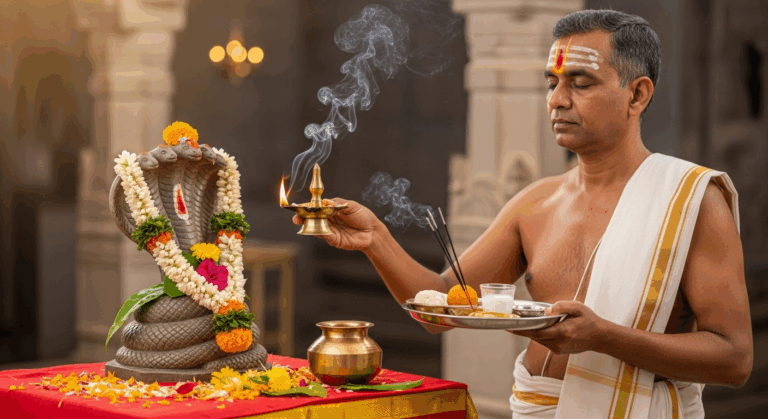
Nag Panchami, falling on Tuesday, July 29, 2025, is a vibrant and significant Hindu festival celebrated across India and in other regions where Hindu communities reside. Deeply rooted in ancient tradition, this day venerates the serpent deities—“Nagas”- who are revered as protectors and symbols of fertility, prosperity, and the recurring cycle of life and death.

The Spiritual Importance of Nag Panchami

Nag Panchami holds a special place in Hinduism for its connection to nature, mythology, and agricultural traditions. Serpents, often seen as powerful and mystical, are believed to be the guardians of water sources and the underworld. Worshipping them is thought to avert misfortune, snake bites, and calamities, while ensuring rain and agricultural well-being – The festival is also steeped in the legendary tales of Lord Shiva and Sheshnag, the serpent king. Devotees believe that offering prayers to Nagas during Nag Panchami invokes their blessings, which are believed to neutralize “Sarpa Dosha” (snake afflictions) in one’s horoscope, leading to harmony and protection from evil.a vital concern during the monsoon months.

The festival is also steeped in the legendary tales of Lord Shiva and Sheshnag, the serpent king. Devotees believe that offering prayers to Nagas during Nag Panchami invokes their blessings, which are believed to neutralize “Sarpa Dosha” (snake afflictions) in one’s horoscope, leading to harmony and protection from evil.

Puja Vidhi: Step-by-Step Rituals for Nag Panchami 2025

Observing Nag Panchami involves a set of traditional rituals, often followed by families at home, in temples, or near revered anthills and snake pits. Here’s a concise guide to performing the puja vidhi (worship process) on this auspicious day:

  1. Morning Cleansing
    Wake up early, bathe, and wear clean, preferably new, clothes. Clean your home, particularly the puja space.
  2. Sanctum Preparation
    Create a small altar with images or clay idols of Nag Devta. Some households draw intricate snake motifs at their thresholds or courtyard using rice paste or kumkum.
  3. Offerings and Prayers
    Place a vessel filled with milk and water on the altar. Decorate the snake icon with sandalwood paste, turmeric, flowers (especially jasmine), and vermillion. Light incense and lamps to consecrate the environment.
  4. Milk Abhishekam
    Perform “milk abhishekam” by pouring milk over the Nag image or idol, symbolizing fertility and devotion. Some families visit local snake pits or anthills to offer milk, though in recent times, environmentalists advise offering milk on symbolic representations to protect wildlife.
  5. Recite Sacred Hymns
    Chant the Nag Panchami mantras or read stories from scriptures such as the “Nag Mahatmya” or tales from the Mahabharata that recount the valor and wisdom of sacred serpents.
  6. Prasad Distribution
    Prepare and distribute prasad- sweet dishes like kheer, laddoo, and fruits – offering the first share to the deity. Share with family, neighbors, and the needy as part of goodwill.
  7. Observe Fasting (Optional)
    Many devotees observe a fast, consuming only fruits and milk, as an act of devotion and purification.

Unique Regional Traditions

  • In Maharashtra, women draw snake patterns with turmeric and red powder, while special folk songs and stories are narrated.
  • In South India, devotees visit temples like the famous Kukke Subramanya, offering elaborate rituals and seeking blessings for marital bliss and family wellness.
  • Rural communities organize fairs, processions, and stage plays enacting serpent legends -transforming the festival into a joyous communal celebration.

Nag Panchami: Timeless Relevance

Celebrating Nag Panchami in 2025 is both an act of tribute to ancient wisdom and a reminder to respect the delicate balance of the ecosystem. As climate change and urbanization threaten biodiversity, the festival’s message of reverence for all creatures – especially those misunderstood like snakes – is ever more vital.

By honoring the Nagas, devotees not only uphold enduring cultural values but also reaffirm a sacred relationship with nature. This year, let Nag Panchami be a day of prayer, gratitude, and compassion – enriching both home and heart.

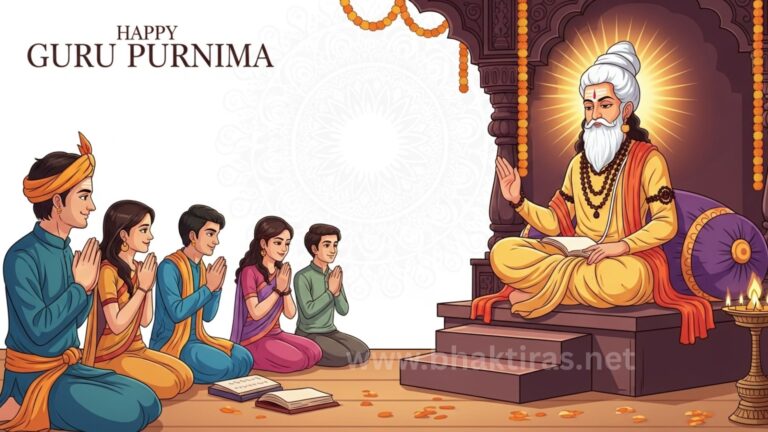
गुरु पूर्णिमा 2025: 10 जुलाई को ज्ञान, श्रद्धा और आभार का पर्व

10 जुलाई 2025 को मनाई जाने वाली गुरु पूर्णिमा न केवल एक धार्मिक पर्व है, बल्कि यह जीवन में मार्गदर्शन देने वाले उन सभी व्यक्तियों को सम्मानित करने का दिन है जिनकी वजह से हम सीखते, समझते और आगे बढ़ते हैं। यह दिन हमें याद दिलाता है कि सच्चा विकास केवल बाहरी उपलब्धियों से नहीं, बल्कि भीतर के ज्ञान, विवेक और अनुशासन से होता है – और इन मूल्यों को हमें देने वाले हैं हमारे गुरु।

गुरु पूर्णिमा के अवसर पर हम कृतज्ञता व्यक्त करते हैं – उन अध्यापकों, आध्यात्मिक मार्गदर्शकों और माता-पिता के प्रति जिनकी शिक्षा और प्रेरणा से जीवन सार्थक बनता है।

इतिहास और धार्मिक महत्व

गुरु पूर्णिमा की परंपरा हजारों वर्षों से चली आ रही है और इसका मूल कई धर्मों और महान परंपराओं में पाया जाता है:

वेदव्यास जी का योगदान:

गुरु पूर्णिमा को व्यास पूर्णिमा भी कहा जाता है क्योंकि इसी दिन महर्षि वेदव्यास का जन्म हुआ था। उन्होंने वेदों को चार भागों में विभाजित किया – ऋग्वेद, यजुर्वेद, सामवेद और अथर्ववेद – जिससे वेदों का ज्ञान सरलता से जनमानस तक पहुँच सका। साथ ही, उन्होंने महाभारत और 18 पुराणों की रचना कर मानवता को धर्म और नीति की अमूल्य शिक्षाएँ दीं।

भगवान बुद्ध और सारनाथ उपदेश:

बौद्ध परंपरा में गुरु पूर्णिमा का विशेष महत्व है क्योंकि इसी दिन भगवान बुद्ध ने अपने पाँच शिष्यों को सारनाथ में पहला उपदेश दिया था, जिसे धर्मचक्र प्रवर्तन कहा गया। यह घटना बौद्ध धर्म की स्थापना की नींव मानी जाती है और बताती है कि गुरु ज्ञान का चक्र चलाते हैं जो अज्ञान के अंधकार को मिटाता है।

जैन परंपरा में महावीर और शिष्य:

जैन धर्म में, भगवान महावीर ने अपने प्रमुख शिष्य गौतम गणधर को ज्ञान प्रदान किया था, जो बाद में उनके सबसे महत्वपूर्ण अनुयायी बने। गुरु-शिष्य परंपरा जैन धर्म में भी गहरी जड़ें रखती है, जहाँ अध्यात्मिक उन्नति का मार्ग गुरु की शिक्षा से ही खुलता है।

पूजा विधि (Puja Vidhi)

गुरु पूर्णिमा की पूजा विधि सरल, लेकिन श्रद्धा से भरपूर होती है। आप घर पर भी यह पूजा कर सकते हैं:

प्रातः स्नान करें
दिन की शुरुआत शुद्धता से करें। यदि संभव हो तो गंगाजल मिलाकर स्नान करें। इससे शरीर और मन दोनों की पवित्रता होती है।

गुरु की तस्वीर या प्रतिमा स्थापित करें
किसी साफ स्थान पर अपने गुरु, आध्यात्मिक मार्गदर्शक या संत की फोटो रखें। यह स्थान पूजन स्थल के रूप में कार्य करेगा।

दीपक जलाएं और पुष्प अर्पित करें
एक दीपक जलाएं और फूल, फल, मिठाई आदि अर्पित करें। यह सम्मान और समर्पण का प्रतीक होता है।

गुरु मंत्र का जप करें
जैसे – “ॐ गुरुभ्यो नमः” या “गुरुर्ब्रह्मा गुरुर्विष्णु गुरुर्देवो महेश्वरः” का 11 या 108 बार जाप करें। यह आध्यात्मिक ऊर्जा को जागृत करता है।

विष्णु-लक्ष्मी पूजन (वैकल्पिक)
कुछ परिवारों में इस दिन विष्णु-लक्ष्मी की भी पूजा होती है, क्योंकि गुरु ही जीवन को समृद्धि की ओर ले जाते हैं।

चंद्र दर्शन करें
पूर्णिमा के दिन चंद्रमा का दर्शन करना मानसिक शांति और संतुलन के लिए शुभ माना जाता है। इसे ध्यानपूर्वक करें।

गुरु-शिष्य परंपरा का संदेश

गुरु पूर्णिमा केवल एक धार्मिक अनुष्ठान नहीं है, यह एक जीवन दर्शन है। गुरु-शिष्य परंपरा हमें सिखाती है कि ज्ञान केवल किताबों से नहीं, बल्कि अनुभव और मार्गदर्शन से आता है। इस दिन हमें न केवल अपने गुरु को प्रणाम करना चाहिए, बल्कि यह भी संकल्प लेना चाहिए कि हम ज्ञान, अनुशासन और सेवा के मार्ग पर चलेंगे।

चाहे स्कूल का शिक्षक हो, कोई आध्यात्मिक संत हो या हमारे माता-पिता – हर व्यक्ति जिसने हमें कुछ सिखाया है, वह हमारे जीवन में गुरु तुल्य है।

गुरु पूर्णिमा न केवल एक पर्व है, बल्कि एक अवसर है – आत्ममंथन, आभार और आत्मविकास का।
आज के दिन हम यह सोचें कि हम अपने जीवन में किस प्रकार अपने गुरु की शिक्षा को जी पा रहे हैं और किस दिशा में आगे बढ़ रहे हैं।

🙏 गुरुर्ब्रह्मा गुरुर्विष्णु गुरुर्देवो महेश्वरः
🙏 गुरुः साक्षात् परब्रह्म तस्मै श्रीगुरवे नमः

From Rituals to Rewards: The Enduring Importance of Ashadi Ekadashi

Imagine a single day so powerful it unites millions in song, color, and devotion – no, it’s not a music festival, but Ashadi Ekadashi, a spiritual phenomenon that has endured for centuries. Did you know that for pilgrims in Maharashtra, this day marks the culmination of a 21-day barefoot journey, all in pursuit of blessings, community, and inner transformation? From ancient rituals echoing on temple steps to the modern rewards of personal growth and collective celebration, Ashadi Ekadashi proves that traditions aren’t just relics—they’re vibrant, living bridges connecting our past, present, and future. Let’s explore why this sacred day continues to inspire, uplift, and unite people across generations.

Significance of Ashadi Ekadashi 2025 in Hindu Traditions

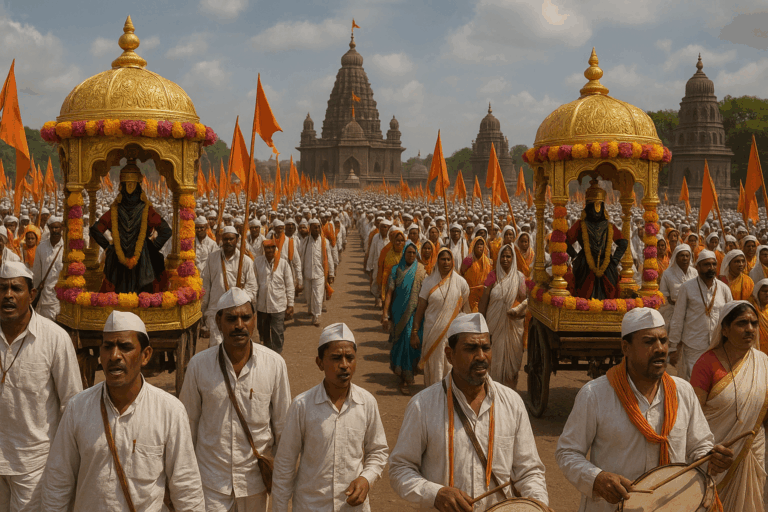
Ashadi Ekadashi 2025 stands as a deeply revered occasion for Hindus, especially those devoted to Lord Vishnu. Across India, countless devotees gather to honor this sacred day, with Maharashtra witnessing the grand culmination of the legendary Pandharpur Wari pilgrimage—a tradition that has united hearts for centuries. Observing fasts and offering heartfelt prayers are not just ritualistic acts; many believe these practices cleanse both mind and body while inviting divine blessings and spiritual merit. On this day, a vibrant spirit of unity and devotion permeates communities, weaving together people from diverse backgrounds in shared celebration. By fostering such collective faith and cultural harmony, Ashadi Ekadashi continues to strengthen the spiritual and social fabric of Hindu society.

Key Rituals Practiced During Ashadi Ekadashi 2025

During Ashadi Ekadashi 2025, devotees embrace a disciplined fast, refraining from grains and select foods as a means of spiritual cleansing and self-restraint. Special prayers and melodious bhajans fill both temples and homes, with many choosing to remain awake throughout the night, enveloped in devotion to Lord Vishnu. Pilgrims embark on journeys to holy destinations, most notably the Pandharpur Yatra in Maharashtra, where thousands traverse great distances, their hearts unified by the rhythm of devotional songs. Alongside religious practices, the day inspires acts of compassion – charity flourishes as individuals offer food, clothing, and essentials to those in need, embodying the festival’s ethos of kindness and communal harmony.

Spiritual and Cultural Rewards of Observing Ashadi Ekadashi 2025

Observing Ashadi Ekadashi 2025 offers a meaningful path to spiritual growth, as devotees immerse themselves in fasting, heartfelt prayers, and unwavering devotion to Lord Vishnu. Communities come alive with shared rituals and celebrations, strengthening cultural ties and fostering a sense of belonging among participants. Through the soulful melodies of bhajans, vibrant kirtans, and visits to beautifully adorned temples, individuals often discover a profound sense of inner peace and mental clarity. The festival’s spirit of compassion shines through charitable acts, encouraging everyone to reach out to those in need and reinforcing connections to both faith and society. By blending personal devotion with collective goodwill, Ashadi Ekadashi continues to inspire and uplift all those who participate.

How to Celebrate Ashadi Ekadashi 2025: A Step-by-Step Guide

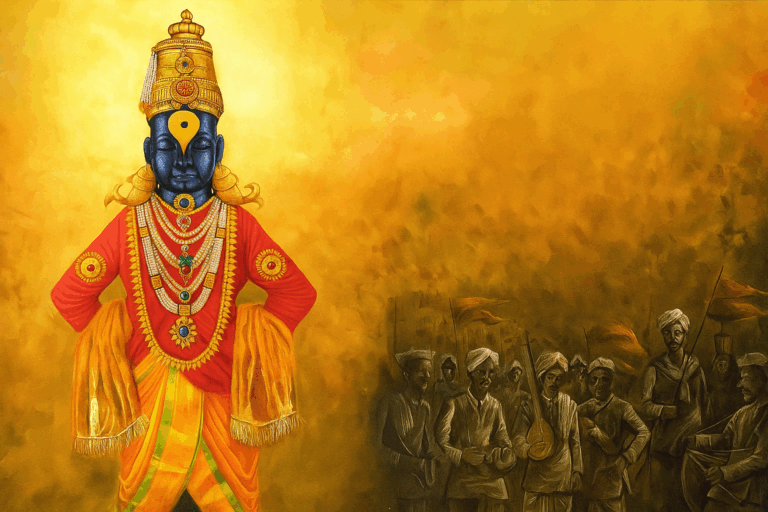
Start your Ashadi Ekadashi 2025 by taking an early morning bath and donning clean, traditional attire—a simple yet powerful gesture that reflects purity and devotion. Whether you choose to visit a nearby temple or set up a sacred corner at home, dedicating time to special prayers and soulful bhajans for Lord Vitthal and Goddess Rukmini sets a spiritual tone for the day. Fasting, sustained by only fruits and water, helps maintain focus and discipline, while immersing yourself in sacred scriptures and stories brings deeper meaning to your observance. As the day draws to a close, joining or watching the vibrant palkhi procession is a beautiful way to express gratitude and seek blessings, infusing your journey with hope for prosperity and spiritual growth.

Ashadi Ekadashi 2025: Lessons for Modern Life

Ashadi Ekadashi 2025 offers timeless lessons that resonate deeply with the demands of modern life. Embracing the discipline of fasting and mindful living on this sacred day not only nurtures physical health, but also encourages mental clarity amidst our daily hustle. Through the festival’s rituals, individuals are gently reminded to pause, practice gratitude, and foster a sense of devotion—qualities that help maintain a positive outlook in the face of life’s challenges. Community gatherings and shared acts of worship build a spirit of togetherness, reinforcing bonds that are often tested by the fast pace of the contemporary world. Taking time to reflect on the day’s spiritual significance inspires greater mindfulness and introspection, guiding us to align our actions with our highest values and purpose.

Ashadi Ekadashi 2025 stands as a shining example of how ancient rituals can offer enduring rewards for the modern soul. Beyond the sacred fasts and soul-stirring bhajans, this beloved festival weaves together threads of community, compassion, and personal transformation. Whether you find yourself joining the jubilant throngs of the Pandharpur Wari or quietly reflecting at home, Ashadi Ekadashi invites us all to hit pause, nurture gratitude, and rediscover the deeper meaning behind our daily actions. By honoring these time-tested traditions, we don’t just connect with our spiritual roots—we also draw strength to meet life’s challenges with a little more patience, kindness, and joy. So as you celebrate Ashadi Ekadashi 2025, may you find both the serenity of ritual and the richness of reward, lighting your path for the year ahead.

शोधिसी मानवा राऊळी मंदिरी | Shodhishi Manava Lyrics

शोधिसी मानवा, राऊळी मंदिरी

शोधिसी मानवा, राऊळी मंदिरी
नांदतो देव हा, आपुल्या अंतरी

मेघ हे दाटती, कोठुनी अंबरी
सूर येती कसे, वाजते बासरी
रोमरोमी फुले, तीर्थ हे भूवरी
दूर इंद्रायणी, दूर ती पंढरी

गंध का हासतो, पाकळी सारुनी
वाहते निर्झरी, प्रेमसंजीवनी
भोवताली तुला, साद घाली कुणी
खूण घे जाणुनी, रूप हे ईश्वरी

भेटतो देव का, पूजनी अर्चनी
पुण्य का लाभते, दानधर्मातुनी
शोध रे दिव्यता, आपुल्या जीवनी
आंधळा खेळ हा खेळशी कुठवरी