
ॐ
Manasa Chalisa
श्री मनसा देवी चालीसा
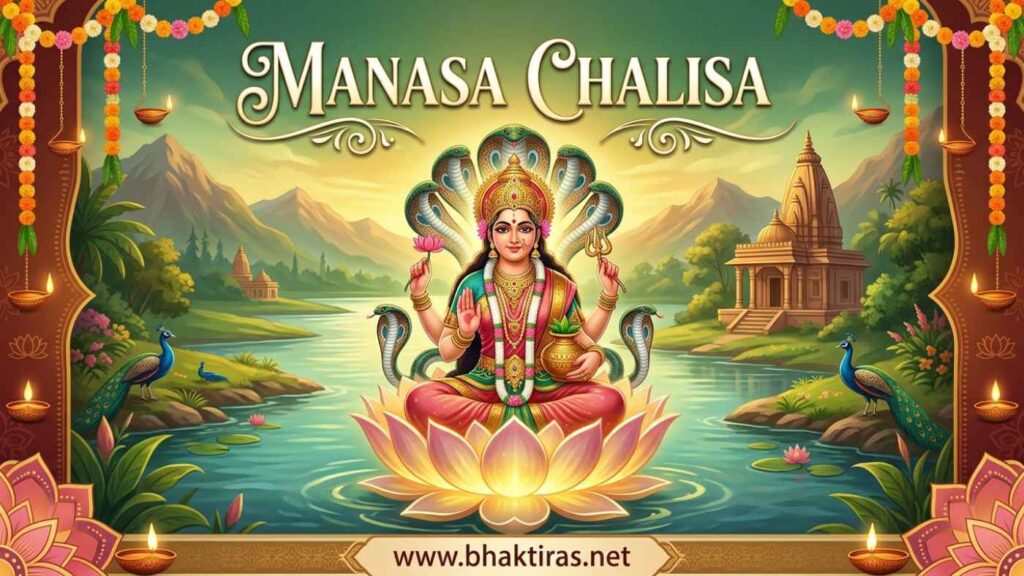
The Manasa Chalisa is a forty-verse devotional hymn to Manasa Devi, the serpent goddess worshipped as the daughter of Lord Shiva and the guardian who removes the fear of snakebite. Devotees across Bengal, Assam, Bihar and Nepal turn to her for protection, healthy children and the fulfilment of long-held wishes, especially around Nag Panchami and the month of Shravan. This page gives the full Roman-transliteration lyrics so you can read and recite along, with an original, plain-English meaning under every verse.
Manasa Chalisa Lyrics in English (Transliteration)
Roman transliteration for easy chanting. Tap “Meaning” under any verse for the English translation.
Manasa Maa Nageshwari, kasht haran sukhadham
Chintagrast har jeev ke, siddh karo sab kaam
Meaning
Mother Manasa, queen of the serpents, you carry away pain and are the home of ease. Steady every anxious soul and bring each of their tasks to completion.
Devi ghat-ghat vasini, hriday tera vishal
Nishthavan har bhakta par, rahiyo sada taiyar
Meaning
Goddess, you dwell inside every heart and your compassion has no edges. Stay ever ready to stand by each devotee who trusts in you.
Padmavati bhaya mochini Amba, sukh sanjeevani Maa Jagdamba
Meaning
Padmavati, mother who releases us from fear, you revive our happiness and are the mother of the whole world.
Mansha purak amar ananta, tumko har chintak ki chinta
Meaning
You fulfil what the mind longs for, deathless and without limit; the worry of every worried heart becomes your concern.
Kamadhenu sam kala tumhari, tumhi ho sharanagat rakhwali
Meaning
Your powers pour out like Kamadhenu, the wish-granting cow, and you alone guard those who come to you for shelter.
Nij chhaya mein jinko leti, unko rog-mukt kar deti
Meaning
Whoever you draw into your shade you set free from illness and lasting ailments.
Dhan-vaibhav sukh-shanti dena, vyavsay mein unnati dena
Meaning
Grant wealth, comfort and calm, and let our work and livelihood keep moving forward.
Tum nagon ki swamini Mata, sara jag teri mahima gata
Meaning
Mother, you are the sovereign of the serpents, and the entire world sings of your greatness.
Mahasiddha jagpal Bhavani, kasht nivarak Maa Kalyan
Meaning
Bhavani, giver of high spiritual power and keeper of the world, you clear away suffering and bring well-being.
Yachna yahi sanjh-sawere, sukh-sampada moh na fere
Meaning
This is my plea morning and evening: let comfort and wealth never turn my mind away from what is right.
Paramanand varadayani Maiya, siddhi jyot sukhdayini Maiya
Meaning
Mother, you grant the highest joy; you are the flame of spiritual success and the source of all happiness.
Divya anant ratnon ki malik, avagaman ki mahasanchalak
Meaning
You hold countless divine treasures and steer the whole cycle of coming and going, of birth and rebirth.
Bhagya ravi kar uday hamara, aastik Mata aprampara
Meaning
Let the sun of our fortune rise; boundless mother, you protect those who keep faith.
Vidyaman ho kan-kan bheetar, bas ja sadhak ke man bheetar
Meaning
You are present in every speck of creation; please make your home in the seeker's mind.
Papbhakshini shaktishala, hariyo dukh ka timir ye kala
Meaning
You consume sin and hold great strength; drive away this dark, heavy gloom of sorrow.
Path ke sab avrodh hatana, karm ke yogi hamein banana
Meaning
Lift every barrier from our road and make us disciplined masters of action in our daily work.
Aatmik shanti dijo Maiya, grah ka bhay har lijo Maiya
Meaning
Mother, give us inner peace and take away the fear of harmful planetary influences.
Divya gyan se yukt Bhavani, karo sankat se mukt Bhavani
Meaning
Bhavani, fill us with divine understanding and release us from every crisis and danger.
Vishahari Kanya, Kashyap Bala, archan chintan ki do mala
Meaning
Poison-destroying maiden, daughter of Sage Kashyap, grant us the garlands of worship and steady contemplation.
Kripa Bhagirath ka jal de do, durbal kaya ko bal de do
Meaning
Give us the cleansing waters of your grace, as Bhagirath brought down the Ganga, and put strength into our weak bodies.
Amrit kumbh hai paas tumhare, sakal devta das tumhare
Meaning
The pot of nectar rests with you, and all the gods stand as your servants.
Amar tumhari divya kalayein, vanchhit phal de kalp latayein
Meaning
Your divine arts never fade; like the wish-fulfilling creepers, you give the fruit each heart desires.
Param shreshth anukampa wali, sharnagat ki kar rakhwali
Meaning
Supremely kind one, protect those who have surrendered and taken refuge at your feet.
Bhut pishachar tona-tant, door rahe Maa kalah bhayankar
Meaning
Mother, keep ghosts, evil spirits, black magic and terrible quarrels far away from us.
Sach ke path se hum na bhatke, dharma ki drishti mein na khatke
Meaning
May we never wander from the path of truth, and never fall short in the eyes of righteousness.
Kshama Devi, tum daya ki jyoti, shubh kar man ki humein tum hoti
Meaning
Goddess of forgiveness, you are the lamp of mercy; make our minds pure and turned toward good.
Jo bheege tere bhakti ras mein, navgrah ho jaaye unke vash mein
Meaning
Those soaked in the sweetness of your devotion come to hold sway over the nine planets and their harmful effects.
Karuna teri jab ho Maharani, anpadh banate hai mahagyaani
Meaning
Great queen, when your compassion flows, even the unlettered become deeply wise.
Sukh jinhain ho tumne baante, dukh ki deemak unhe na chaante
Meaning
Those to whom you have handed happiness are never gnawed by the termites of grief.
Kalpavriksh teri shakti wala, vaibhav humko de nirala
Meaning
Your power is like the wish-granting tree; grant us prosperity unlike any other.
Deendayala Nageshwari Mata, jo tum kahati likhe Vidhata
Meaning
Kind mother of the serpents, whatever you speak, the creator writes down as destiny.
Dekhte hum jo aasha niraasha, maya tumhari ka hai tamasha
Meaning
The hope and the despair we watch in this world are only the passing play of your illusion.
Aapad vipad haro har jan ki, tumhen khabar har ek ke man ki
Meaning
Remove the misfortune and danger of every person; you know what stirs in each one's mind.
Daal ke hum par mamta aanchal, shaant kar do samay ki halchal
Meaning
Spread your mother's shawl of affection over us and quiet the turmoil of these times.
Manasa Maa jag srijanhari, sada sahayak raho humari
Meaning
Mother Manasa, maker of the world, remain our helper always.
Kasht klesh na humen sataye, vikat bala na koi bhi aave
Meaning
May no hardship or pain torment us, and may no severe calamity ever draw near.
Kripa sudha ki vrishti karna, har chintak ki chinta harna
Meaning
Rain down the nectar of your grace and lift the worry from every anxious mind.
Puri karo har man ki mansha, hamen bana do gyaan ki hansa
Meaning
Fulfil the wish in every heart and make us like the swan of wisdom, able to keep the lasting and let go of the fleeting.
Paarasmaniyan charan tumhare, ujwal kar de bhagya hamare
Meaning
Your feet are like the touchstone that turns iron to gold; brighten our fortune.
Tribhuvan poojit Manasa Mai, tera sumiran ho phaldaai
Meaning
Mother Manasa, worshipped across the three worlds, may remembering you bear rich fruit.
Is grih anugrah ras barsa de, har jeevan nirdosh bana de
Meaning
Pour the sweetness of your favour on this home and make every life within it pure and free of fault.
Bhoolenge upkaar na tere, poojenge Maa saanjh sawere
Meaning
We will not forget your kindness; mother, we will worship you each evening and each morning.
Siddh Manasa Siddheshwari, siddh manorath kar
Bhaktvatsala do humein sukh santosh ka var
Meaning
Perfected Manasa, mistress of all attainment, bring our heartfelt wishes to fruition. Loving to your devotees, grant us the gift of happiness and contentment.
Benefits of Reciting the Manasa Chalisa
Regular, sincere recitation of the Manasa Chalisa is trusted by devotees for both protection and inner steadiness. Common reasons people take it up:
- Protection from snakes: As the serpent goddess, Manasa Devi is invoked to ease the fear of snakebite and guard the household.
- Fulfilment of wishes: Devotees pray for children, marriage, and family well-being, offering the Chalisa as a heartfelt request.
- Mental calm: The steady rhythm helps settle anxiety, restlessness and troubled sleep.
- Relief from planetary strain: Several verses ask her to soften the harmful pull of grahas such as Rahu and Ketu.
- Health and recovery: She is asked to free the body from illness, including stubborn skin ailments.
- Freedom from negativity: The hymn seeks protection from evil influences, ill will and needless conflict.
When and How to Chant the Manasa Chalisa
Nag Panchami is the most cherished day for this Chalisa, and the whole month of Shravan is considered especially fruitful; Navratri and daily practice at dawn or dusk work well too. After a bath and in clean clothes, sit facing east or north, light a ghee lamp or incense before an image of Manasa Devi, and begin with her seed mantra before reciting the two Dohas and all forty verses. Read slowly and with attention to the meaning rather than rushing, since faith and steadiness matter far more than speed.
About the Manasa Chalisa
The Manasa Chalisa follows the familiar Chalisa form of two opening Dohas, forty chaupai verses, and a closing couplet, composed in simple Hindi. Its verses praise Manasa Devi as the queen of serpents, the daughter of Shiva, and a mother who removes fear, illness and misfortune while granting children, wealth and peace. The text is traditional and widely recited in the serpent-worshipping regions of Bengal, Assam, Bihar and Nepal; the transliteration and meanings here are provided to help readers follow along in English.
Frequently Asked Questions
What is the Manasa Chalisa?
The Manasa Chalisa is a forty-verse devotional hymn to Manasa Devi, the serpent goddess and daughter of Lord Shiva. It praises her as the remover of fear, illness and misfortune, and is recited for protection and the fulfilment of wishes.
What are the benefits of reciting the Manasa Chalisa?
Devotees recite it for protection from snakebite, calm of mind, relief from illness and planetary strain, and blessings for children, marriage and prosperity. Its steady rhythm also helps settle anxiety and restlessness.
Which day is best to recite the Manasa Chalisa?
Nag Panchami is the most important day, and the entire month of Shravan is highly auspicious. Many also recite it daily at dawn or dusk, or take up a forty-day practice for a specific wish.
How many verses are in the Manasa Chalisa?
It has forty chaupai verses, framed by two Dohas at the start and a closing couplet, which is the standard Chalisa structure.
Can the Manasa Chalisa be recited in English?
Yes. This page provides the full Roman-transliteration lyrics so anyone who cannot read Devanagari can recite along, with a clear English meaning under each verse.
॥ Manasa Chalisa ॥