
Maghi Purnima 2027 – The Great Bathing Day of Magha
माघी पूर्णिमा
When is Maghi Purnima in 2027?
Maghi Purnima falls on Saturday, 20 February 2027. It is the full-moon day of the Hindu month of Magha, considered one of the holiest days of the year for a dawn bath in the Ganga, Yamuna and other sacred rivers. At Prayagraj it is the closing bathing day of the month-long Magh Mela, when the Kalpavasis end their austerity.
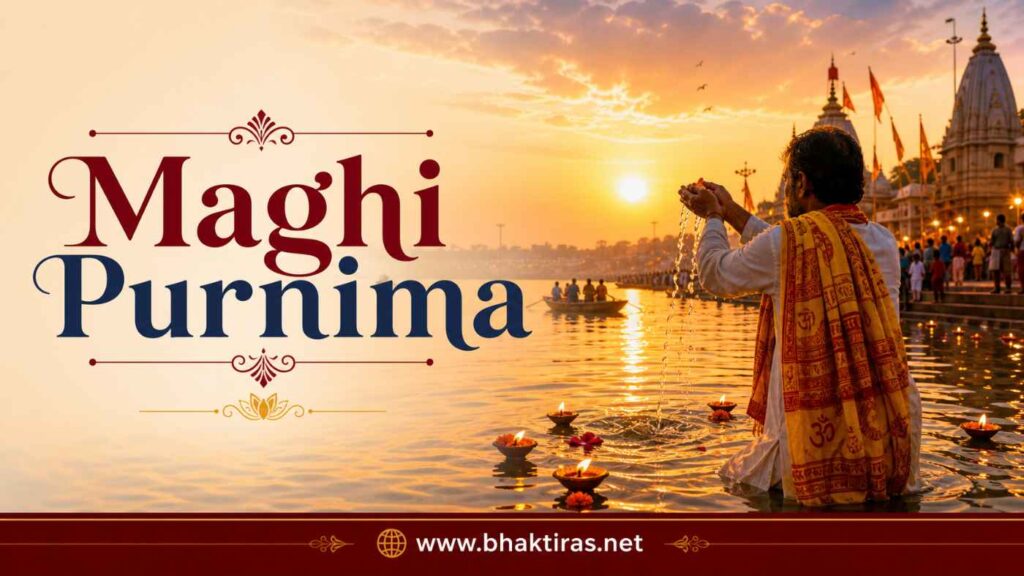
Maghi Purnima, the full-moon day of the month of Magha, is one of the year’s most sacred occasions for a holy bath. Falling in late January or February, it is the culminating bathing day of the Magh Mela at Prayagraj, where the Kalpavasis complete their month-long riverside vow. Across India, pilgrims wade into the Ganga, Yamuna, Godavari and other holy waters at first light, offer water to the Sun, worship Vishnu and give away sesame, blankets and food. Tradition holds that on this day the gods themselves come down to bathe at the Sangam.
Maghi Purnima 2026-2028: Dates & Calendar
The next Maghi Purnima is on 20 February 2027. Because it is tied to the full moon of the lunar month of Magha, the date shifts each year against the Western calendar.
| Year | Date | Day | Notes |
|---|---|---|---|
| 2026 | 1 February | Sunday | Magha full moon |
| 2027 | 20 February | Saturday | Next occurrence |
| 2028 | 10 February | Thursday | Magha full moon |
The most auspicious time for the snan is at dawn (Brahma Muhurat), before sunrise, when the Purnima tithi is in force. Pilgrims aim to bathe as the first light touches the water.
Why Maghi Purnima Is Celebrated
Maghi Purnima is celebrated as the holiest bathing day of the month of Magha, when a dip in a sacred river is believed to wash away accumulated sins and grant spiritual merit that lasts far beyond the day itself.
The month of Magha carries special weight in the Hindu tradition. The old texts praise bathing at the Sangam through this whole month, and the full moon at its close is the reward the pilgrims have been working toward. It is the day the discipline of the season comes to a head.
The gods bathe at the Sangam
An old belief says that during Magha the very gods long to bathe at the meeting of the rivers in Prayagraj, taking human form to do so at dawn. A pilgrim who bathes on this full moon is thought to share in that unseen company.
End of the Kalpavas vow
Kalpavasis – those who camp beside the river for the whole month of Magha, living simply on one meal and daily prayer – complete their vow on Maghi Purnima. The final bath marks the release from a month of austerity.
A day for giving
Charity, or daan, is held to carry extra weight on this day. Sesame seeds, blankets, warm clothes, grain and cooked food are given to the needy and to priests, an act meant to warm both the giver’s heart and the receiver’s winter.
Linked to Bhishma
The Magha season is also tied to Bhishma of the Mahabharata, who chose to leave his body during the auspicious northward course of the Sun. His memory colours the month’s emphasis on right conduct, offerings to ancestors and a good death.
Deities & Figures Worshipped
Maghi Purnima centres on the worship of Vishnu and the Sun god, honoured through the river bath, water offerings and prayer at dawn.
Vishnu
The bath and the day’s prayers are offered above all to Lord Vishnu, the preserver. Devotees fast, read his names and light lamps, seeking his grace for the family and for peace after death.
Surya (the Sun)
Standing in the river at sunrise, pilgrims offer arghya – a stream of water poured toward the rising Sun – and recite the Gayatri. The Magha Sun, climbing back north, is welcomed as a giver of health and light.
The sacred rivers
The Ganga, Yamuna and the unseen Saraswati at Prayagraj, and other holy waters such as the Godavari, are themselves revered as goddesses on this day, thanked for carrying away impurity.
Key Rituals, Step by Step
The heart of Maghi Purnima is a simple sequence built around the pre-dawn holy bath.
- Rise before dawn. Devotees wake in the dark and reach the riverbank while it is still cool, aiming to bathe in the Brahma Muhurat before the Sun appears.
- Take the holy snan. Standing in the Ganga, Yamuna, Godavari or another sacred water, they take a dip while remembering Vishnu and the rivers, often after a short sankalp (statement of intent).
- Offer arghya to the Sun. Facing east, they pour water toward the rising Sun and recite the Gayatri or Surya mantras.
- Worship Vishnu. After bathing they light a lamp, offer tulsi, flowers and fruit, and read or listen to Vishnu’s names, sometimes keeping a fast through the day.
- Give daan. Sesame, blankets, warm clothing, grain and cooked food are given to the poor and to priests, a defining act of the day.
- Honour the ancestors. Many perform tarpan, offering water to departed forebears, in keeping with the month’s mood of remembrance.
- Close the Kalpavas. At Prayagraj, the Kalpavasis take their final bath, pack their riverside camp and return home, their month-long vow fulfilled.
Special Foods of Maghi Purnima
Because many people fast or eat simply, the food of the day leans on til (sesame), jaggery and warming winter fare.
Til and jaggery sweets
Sesame is the food most closely tied to the day. Til laddus, til-gud chikki and sesame sweets are made, eaten and given away, warming the body in the last of the cold season.
Khichdi
A plain, comforting mix of rice and lentils is cooked in many homes after the bath, easy on a body that has fasted and simple enough to suit the day’s restraint.
Satvik fasting food
Those who keep the fast eat fruit, milk, and dishes made without onion or garlic, often breaking the fast only after moonrise or the evening prayer.
Kheer and prasad
Rice kheer and simple sweets are offered to Vishnu and then shared, closing the day on a note of quiet sweetness.
Where It's Marked
The full-moon bath is observed across India, but a few places carry it with special intensity.
Prayagraj (Uttar Pradesh)
At the Sangam, Maghi Purnima is the great closing bath of the Magh Mela. Lakhs of pilgrims descend to the confluence at dawn, and the Kalpavasis end their month-long stay on this day.
Ganga Sagar (West Bengal)
Where the Ganga meets the sea, pilgrims gather for a holy dip, one of the season’s important bathing points in the east.
Banks of the Godavari and other rivers
In the Deccan and the south, ghats along the Godavari and other sacred rivers draw bathers who mark the Magha full moon in the same spirit.
Ravidas Jayanti
In many regions the birth anniversary of the saint-poet Guru Ravidas is observed on this same full moon, with processions and readings from his verses.
Maghi Purnima Do's and Don'ts
A few simple points help you observe the day with the right spirit.
Do
- Bathe at or before dawn, in a river if you can, or add a little Ganga water at home
- Offer arghya to the Sun and remember Vishnu after the bath
- Give sesame, blankets, warm clothes or food to those in need
- Keep a light, satvik diet and eat simply if you are fasting
- Speak gently and spend part of the day in prayer or quiet reading
Avoid
- Do not treat the bath as a mere swim – keep it as an act of devotion
- Avoid non-vegetarian food, onion, garlic and alcohol on this day
- Do not skip charity – giving is central to the day’s merit
- Avoid quarrels, harsh words and anger, which are held to undo the day’s good
- Do not litter or pollute the river you have come to honour
Frequently Asked Questions
When is Maghi Purnima in 2027?
Maghi Purnima in 2027 falls on Saturday, 20 February. It is the full-moon day of the Hindu month of Magha and the year’s most important day for a holy river bath, marking the close of the Magh Mela at Prayagraj.
When is Maghi Purnima in 2026 and 2028?
Maghi Purnima was on Sunday, 1 February 2026, and will next fall on Thursday, 10 February 2028. The date moves each year because it follows the full moon of the lunar month of Magha rather than a fixed calendar date.
Why is Maghi Purnima celebrated?
Maghi Purnima is celebrated as the holiest bathing day of the month of Magha. A dawn dip in the Ganga, Yamuna or another sacred river is believed to wash away sins and grant lasting merit, and it is the day the Kalpavasis at Prayagraj complete their month-long vow.
Which god is worshipped on Maghi Purnima?
Maghi Purnima is dedicated chiefly to Lord Vishnu and to Surya, the Sun god. Devotees take a holy bath, offer water to the rising Sun, worship Vishnu with lamps and tulsi, and often keep a fast through the day.
What is the significance of the Magha bath at Prayagraj?
The Magha bath at Prayagraj, at the Sangam of the Ganga, Yamuna and unseen Saraswati, is held to be supremely purifying. Tradition says the gods themselves long to bathe there during Magha, and Maghi Purnima is the grand closing bath of the month-long Magh Mela.
What do people give as daan on Maghi Purnima?
On Maghi Purnima people give sesame (til), jaggery, blankets, warm clothing, grain and cooked food to the poor and to priests. Charity is considered one of the most meritorious acts of the day, warming both giver and receiver in the last of the winter.
What is Kalpavas and how does it relate to Maghi Purnima?
Kalpavas is the vow of living beside the sacred river through the whole month of Magha, on a simple diet and daily prayer. The Kalpavasis end their austerity with a final bath on Maghi Purnima, which is why the day is the emotional peak of the Magh Mela.
How should Maghi Purnima be observed at home?
If you cannot reach a river, bathe at dawn with a little Ganga water added, offer arghya to the Sun, and worship Vishnu with a lamp, tulsi and his names. Keep a light satvik diet, give food or clothing to someone in need, and pass part of the day in quiet prayer.
May the waters of Magha carry away your cares and leave your heart light. Shubh Maghi Purnima.