
Gangasagar Mela 2027 – The Great Pilgrimage at Sagar Island
गंगासागर मेला
When is Gangasagar Mela in 2027?
Gangasagar Mela 2027 peaks on Thursday, 14 January 2027, on Makar Sankranti, when pilgrims take the holy dip at the meeting point of the river Ganga and the Bay of Bengal at Sagar Island in West Bengal. The fair runs for several days around this date, with the main snan (bath) followed by darshan at the Kapil Muni temple.
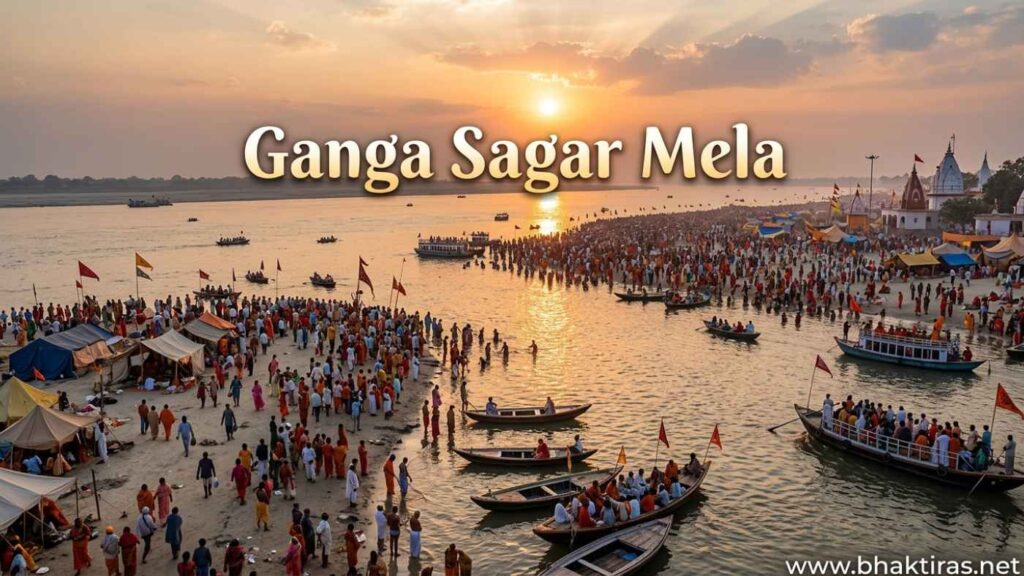
Gangasagar Mela is the enormous pilgrimage and fair held each January at Sagar Island (Sagardwip) in South 24 Parganas, West Bengal, where the river Ganga empties into the Bay of Bengal. Timed to Makar Sankranti, it draws lakhs of pilgrims who bathe at the confluence, offer tarpan for their ancestors, and take darshan at the Kapil Muni temple. Held once a year over several days, it is widely counted as the second-largest human gathering in India after the Kumbh Mela.
Gangasagar Mela 2026-2028: Dates & Calendar
The mela peaks on Makar Sankranti, which falls on 14 January in most years and shifts to 15 January in some leap years because it tracks the sun’s entry into Capricorn rather than the moon.
| Year | Makar Sankranti | Day | Notes |
|---|---|---|---|
| 2026 | 14 January | Wednesday | Main snan; mela roughly 10-17 January |
| 2027 | 14 January | Thursday | Next occurrence – main holy dip |
| 2028 | 15 January | Saturday | Shifts a day later |
The exact Punya Kaal (auspicious bathing window) is announced each year by the local administration and priests. The snan traditionally spans the whole Makar Sankranti day and the hours around the sankranti moment, so pilgrims plan their dip and ferry crossing around the published timing and the tide.
Why Gangasagar Mela Is Held
Gangasagar Mela marks the point where the Ganga completes her long journey and merges with the sea, a place tied to one of Hinduism’s oldest stories of penance and salvation. A dip here on Makar Sankranti is believed to carry rare merit, summed up in the saying that other pilgrimages are made again and again, but Gangasagar just once.
The site draws its sanctity from the tale of King Sagara and his sixty thousand sons. When the king’s Ashwamedha horse went missing, the sons dug their way across the earth and found it beside the meditating sage Kapil Muni. Mistaking him for the thief, they insulted him; roused from his penance, the sage’s gaze reduced them to ashes on the spot.
Generations later, Bhagiratha, a descendant of that line, undertook severe austerities to bring the celestial Ganga down to earth so her waters could touch the ashes and release the trapped souls. Shiva broke the river’s fall in his matted hair, and the Ganga finally reached this shore, granting the sons moksha. The confluence at Sagar Island is remembered as the very spot where that redemption took place, which is why the bath here is thought to wash away deep karmic burdens.
Where Ganga meets the sea
Sagar Island sits at the mouth of the Ganga, where fresh river water mixes with the salt of the Bay of Bengal. This sangam of river and ocean is treated as an especially powerful tirtha, and the whole festival is built around bathing at that meeting point.
Once-in-a-lifetime merit
A well-known couplet holds that most holy places must be visited repeatedly, but a single dip at Gangasagar is enough. This belief in a rare, complete merit is a major reason elderly pilgrims travel long distances to reach the island at least once.
The second-largest gathering
After the Kumbh Mela, Gangasagar draws the largest crowds of any Indian religious event, with pilgrim numbers running into the millions on the main day. The state builds a temporary township with roads, lighting, medical camps and safe-bathing zones to manage the surge.
Deities & Figures Worshipped
The pilgrimage centres on the goddess Ganga, honoured at the confluence, and the sage Kapil Muni, whose temple is the focus of darshan after the bath.
Ganga
The river goddess is the heart of the mela. Pilgrims bathe where her waters join the sea, offer flowers and prayers to her, and thank her for the descent that, in the legend, saved the sons of Sagara. The dip itself is treated as worship of Ganga.
Kapil Muni
Kapil Muni, the sage credited with the Samkhya school of thought, is said to have meditated at this spot. His temple, rebuilt several times as the sea reclaimed earlier structures, is where pilgrims take darshan, make offerings and complete the pilgrimage after bathing.
Key Rituals, Step by Step
A Gangasagar pilgrimage is as much a journey as a set of rites: reaching the island is itself part of the effort, followed by the bath, the ancestral offerings and the temple darshan.
- Travel to Sagar Island. Pilgrims reach a ferry point such as Lot No. 8 (Harwood Point) near Kakdwip or Namkhana, cross the Muriganga river by boat to the island, and then travel the roughly 30 km to the confluence and the temple.
- Reach the confluence before the snan. Devotees aim to arrive at the beach where the Ganga meets the Bay of Bengal in time for the Makar Sankranti bathing window announced for that year.
- Take the holy dip. On Makar Sankranti, pilgrims wade into the water and bathe at the sangam, the central act of the whole mela, often at first light or at the published Punya Kaal.
- Offer tarpan for ancestors. Many perform tarpan and pind rites at the shore, offering water and prayers for departed forebears, echoing the story in which the Ganga freed the ancestors of Bhagiratha.
- Make offerings to Ganga. Flowers, sindoor, coconut and small oblations are floated on the water as thanks to the river goddess.
- Take darshan at the Kapil Muni temple. After bathing, pilgrims walk to the Kapil Muni temple to offer prayers to the sage, receive prasad and complete the pilgrimage.
- Give daan and return. Charity to sadhus and the needy is common on the island; pilgrims then make the ferry crossing back, often timing the return around the tide.
Special Foods of Gangasagar Mela
Being a mid-January Bengali event, the food around the mela leans on winter harvest sweets and simple vegetarian fare served at pilgrim kitchens and stalls.
Khichuri
A warm rice-and-lentil khichuri, sometimes with a few vegetables, is the staple served at bhandaras and camps. Filling and easy to cook in bulk, it feeds huge crowds and suits the cold coastal mornings.
Pithe (pitha)
Bengal’s Makar Sankranti is inseparable from pithe, rice-flour dumplings and cakes filled with coconut and date-palm jaggery (nolen gur). Families make them at home for the festival, and versions turn up around the mela.
Makha sandesh & Bengali sweets
Soft sandesh, including the crumbly makha style, along with other milk sweets, are shared during the season. Nolen gur, the fresh winter date-palm jaggery, flavours many of the sweets sold at this time of year.
Temple prasad
Pilgrims receive prasad at the Kapil Muni temple and eat at community bhandaras run by ashrams and volunteers. This langar-style food keeps the vast crowd of pilgrims fed through the days of the fair.
Getting There & the Mela Township
Unlike a temple town you can drive straight into, Sagar Island has to be reached by ferry, and the government sets up an entire temporary township to handle the crowd.
Via Kakdwip / Lot No. 8
The most common route from Kolkata runs down Diamond Harbour Road to Kakdwip, then a short walk to the Lot No. 8 (Harwood Point) jetty, a ferry across the Muriganga to Kachuberia on the island, and a bus or car onward to the confluence.
Via Namkhana
An alternative approach is through Namkhana, from where boats cross to Benuban ghat on Sagar Island. This route can take longer on the water, and timings depend heavily on the tide.
By train from Kolkata
Local trains from Sealdah (South section) run to Kakdwip and Namkhana stations, from where pilgrims continue by ferry. Special services and extra buses are usually laid on for the mela days.
The mela township
For the fair the administration builds a full temporary town on the island with lit roads, drinking water, medical camps, lost-and-found points, fire and disaster teams, and marked safe-bathing zones. Crowd flow, ferries and the return crossing are managed tightly on the peak day.
Gangasagar Mela Do's and Don'ts
The island setting, tidal water and huge crowds make a few sensible precautions worth following.
Do
- Check the announced Punya Kaal and ferry timings before you set out.
- Bathe only within the marked safe-bathing zones, near the lifeguards.
- Keep children and elderly pilgrims within reach at all times in the crowd.
- Carry warm clothes, ID, water and any regular medicines.
- Follow the instructions of police, ferry staff and volunteers.
Avoid
- Do not swim out beyond the marked line or against a strong tide.
- Do not leave elderly or unwell family members alone on the beach.
- Do not ignore ferry crowd-control or board an overloaded boat.
- Do not litter or leave offerings that pollute the water.
- Do not attempt the last dip or crossing in fading light if warned against it.
Frequently Asked Questions
When is Gangasagar Mela in 2027?
Gangasagar Mela 2027 peaks on Thursday, 14 January 2027, the day of Makar Sankranti. The main holy dip at the Ganga-sea confluence takes place on this day, with the fair running for several days around it at Sagar Island in West Bengal.
When is Gangasagar Mela in 2026 and 2028?
In 2026 the main snan falls on 14 January (Wednesday), and in 2028 it moves to 15 January (Saturday). The date follows Makar Sankranti, which usually lands on 14 January and slips to 15 January in some years because it is a solar event.
Where is Gangasagar Mela held?
Gangasagar Mela is held at Sagar Island (Sagardwip) in the South 24 Parganas district of West Bengal, where the river Ganga meets the Bay of Bengal. Pilgrims reach the island by ferry from points such as Lot No. 8 near Kakdwip or from Namkhana.
Why is Gangasagar Mela celebrated?
Gangasagar Mela is held because the site marks where, in legend, the Ganga washed over the ashes of King Sagara’s sixty thousand sons and freed their souls after they were burnt by the sage Kapil Muni. A dip here on Makar Sankranti is believed to grant rare merit and release from sin.
Which god is worshipped at Gangasagar?
The goddess Ganga and the sage Kapil Muni are the central figures at Gangasagar. Pilgrims worship Ganga by bathing at the confluence and then take darshan at the Kapil Muni temple, where the sage is said to have meditated.
How do you reach Gangasagar and the Kapil Muni temple?
Reaching Gangasagar involves travelling from Kolkata to a ferry point like Kakdwip (Lot No. 8) or Namkhana by road or train, crossing the Muriganga river by boat to Sagar Island, and then travelling about 30 km to the confluence and the Kapil Muni temple. Ferry timings depend on the tide.
Is Gangasagar Mela the largest gathering in India?
Gangasagar Mela is widely regarded as the second-largest human congregation in India after the Kumbh Mela, drawing crowds that run into the millions on Makar Sankranti. A popular saying captures this: all other pilgrimages may be made again and again, but Gangasagar just once.
What rituals do pilgrims perform at the mela?
Pilgrims take a holy dip at the Ganga-sea confluence on Makar Sankranti, offer tarpan and prayers for their ancestors, float offerings to the goddess Ganga, and then take darshan and make offerings at the Kapil Muni temple. Many also give daan to sadhus and the needy before returning.
Whether you go for the once-in-a-lifetime dip or simply to witness one of the largest gatherings on earth, Gangasagar leaves a lasting impression. Sab tirtha baar baar, Gangasagar ek baar.