
Drukpa Teshi 2026 – The Buddha's First Sermon
འབྲུག་པ་ཚེས་བཞི
When is Drukpa Teshi in 2026?
Drukpa Teshi falls on around 28 July 2026, on the fourth day of the sixth month of the Tibetan lunar calendar. It marks the day the Buddha gave his first sermon, the turning of the wheel of Dharma, teaching the Four Noble Truths at the Deer Park in Sarnath. Because the date follows the Tibetan lunar calendar, it shifts each year and can vary slightly between monastery calendars.
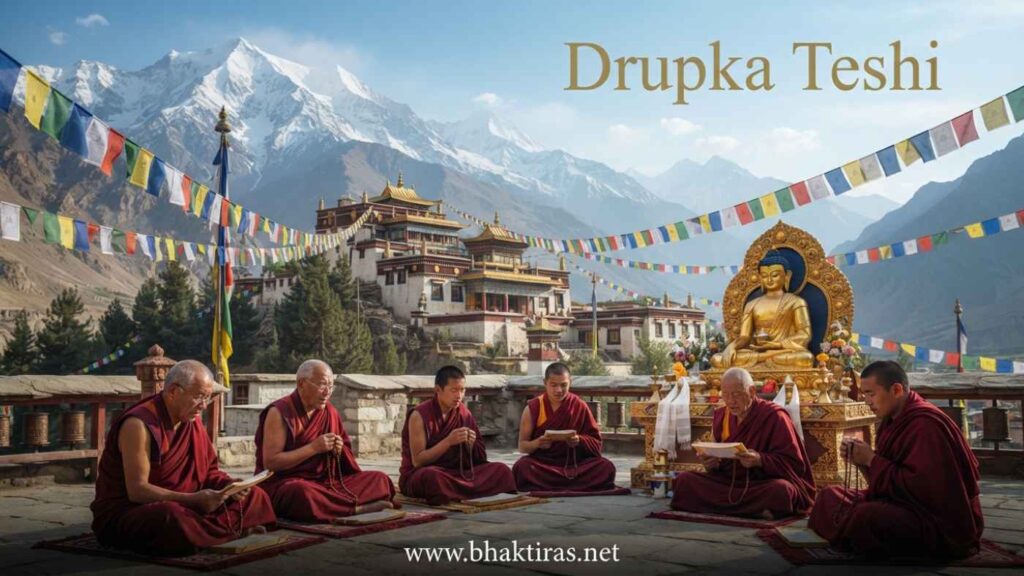
Drukpa Teshi is one of the four great Buddhist holy days of the Himalayan year. The name is Tibetan and simply describes the timing: drukpa means the sixth month and teshi the fourth day, so it lands on the fourth day of the sixth Tibetan month, usually in late July or August. The day honours the moment the Buddha delivered his very first teaching after enlightenment, setting out the Four Noble Truths to his first five disciples at the Deer Park in Sarnath. Buddhists in Ladakh, Sikkim and other Himalayan regions mark it with prayer, sermons and pilgrimage.
Drukpa Teshi 2026-2028: Dates & Calendar
The next Drukpa Teshi falls around 28 July 2026. The date is set by the Tibetan lunar calendar, so it drifts through late July and August from year to year.
| Year | Date (approx) | Tibetan reckoning | Notes |
|---|---|---|---|
| 2026 | 28 July | 6th month, 4th day | Next occurrence |
| 2027 | mid to late July | 6th month, 4th day | Confirm with local calendar |
| 2028 | early August | 6th month, 4th day | Confirm with local calendar |
Only the 2026 date is given with a specific day here because the later Gregorian dates depend on which Tibetan calendar system a monastery follows. As the day approaches, monasteries in Ladakh, Sikkim and elsewhere publish their confirmed date.
Why Drukpa Teshi Is Celebrated
Drukpa Teshi is celebrated because it marks the Buddha’s first sermon, the event Buddhists call the turning of the wheel of Dharma (Dharmachakra Pravartana). On this day the Buddha first shared the path he had discovered.
After attaining enlightenment at Bodh Gaya, the Buddha travelled to the Deer Park at Sarnath, near Varanasi. There he found the five ascetics who had once been his companions and gave them his first structured teaching. That teaching became the foundation of the entire Buddhist path.
The turning of the wheel
The first sermon is remembered as setting the wheel of Dharma in motion. It is the moment the Buddha’s private realisation became a public teaching that others could follow and pass on.
The Four Noble Truths
In that sermon the Buddha laid out the Four Noble Truths: that suffering exists, that it has a cause, that it can end, and that there is a path to end it. These truths remain the core diagnosis and remedy at the heart of Buddhist practice.
The first Sangha
The five ascetics who listened became the Buddha’s first disciples. Their ordination marks the beginning of the Sangha, the community of practitioners, so the day also honours the birth of the Buddhist community itself.
Who Is Honoured
Drukpa Teshi centres on Gautama Buddha and the teaching he gave, rather than on a deity in the worship sense. The focus is the Dharma, the body of teaching that began with the first sermon.
Gautama Buddha
The historical Buddha, Siddhartha Gautama, is remembered as the teacher who reached enlightenment and then chose to share the path. Drukpa Teshi honours his decision to teach and the compassion behind it.
The Dharma
Alongside the Buddha, the day honours the Dharma itself, the teaching first spoken at Sarnath. Reciting, hearing and reflecting on the teaching is the main way devotees mark the day.
How Drukpa Teshi Is Observed
Observance is quiet and devotional, built around prayer, teaching and pilgrimage rather than large public spectacle, though some Himalayan communities add fairs and horse races.
- Morning prayers. Devotees gather at monasteries and home shrines for prayers and offerings of butter lamps, incense and water.
- Sermons and readings. Lamas and senior monks give teachings on the first sermon and the Four Noble Truths, retelling what happened at Sarnath.
- Circumambulation (kora). Worshippers walk clockwise around stupas, temples and sacred sites, turning prayer wheels and reciting mantras.
- Merit-making. Many spend the day in acts of generosity and kindness, such as giving to the poor, releasing captive animals and avoiding harm to living beings.
- Pilgrimage. Some travel to important monasteries or sacred lakes and hills, treating the journey itself as part of the observance.
- Community gatherings. In parts of the Himalayas the day is followed by fairs and, in some areas, horse races that bring villages together.
How It Is Marked Across the Himalayas
Drukpa Teshi is observed wherever Himalayan Buddhism is practised, with local flavour varying from monastery liturgy to open-air fairs.
Ladakh
Monasteries hold special prayer sessions and teachings, and devotees make the rounds of local gompas. The high summer timing means the day often coincides with clear pilgrimage weather in the mountains.
Sikkim
Known locally as Drukpa Tshe-zi, the day is a recognised holiday. Devotees gather at monasteries and sacred sites, and in some areas the observance extends to community fairs and horse races on the meadows.
Other Himalayan regions
Across the wider Himalayan Buddhist belt, communities keep the day with prayer, sermons and circumambulation, adapting the scale of celebration to local custom.
Drukpa Teshi Do's and Don'ts
As a solemn holy day marking a teaching, the emphasis is on reflection, kindness and respectful conduct.
Do
- Visit a monastery or shrine for prayers if you can
- Reflect on the Four Noble Truths and the first sermon
- Practise generosity, such as giving to those in need
- Circumambulate stupas and temples clockwise
- Keep the day calm, mindful and respectful
Avoid
- Do not treat it as a party day of excess
- Avoid harming or killing living beings
- Do not walk anticlockwise around sacred sites
- Avoid loud, disruptive behaviour near places of worship
- Do not assume a fixed date, always confirm the local calendar
Frequently Asked Questions
When is Drukpa Teshi in 2026?
Drukpa Teshi falls on around 28 July 2026. It lands on the fourth day of the sixth month of the Tibetan lunar calendar, so the exact Gregorian date can shift by a day or two between regional calendars.
When is Drukpa Teshi in 2027 and 2028?
Drukpa Teshi is expected in mid to late July 2027 and in early August 2028. These are approximate because the day follows the Tibetan lunar calendar; confirm the exact date with a local monastery calendar closer to the time.
Why is Drukpa Teshi celebrated?
Drukpa Teshi is celebrated because it marks the Buddha’s first sermon, the turning of the wheel of Dharma. On this day the Buddha taught the Four Noble Truths to his first five disciples at the Deer Park in Sarnath after attaining enlightenment.
What does the name Drukpa Teshi mean?
The name is Tibetan and describes the date. Drukpa means the sixth month and teshi means the fourth day, so Drukpa Teshi is the fourth day of the sixth month of the Tibetan lunar calendar.
Where did the Buddha's first sermon take place?
The Buddha’s first sermon took place at the Deer Park in Sarnath, near Varanasi in present-day Uttar Pradesh. He taught the Four Noble Truths there to the five ascetics who became his first disciples.
Where is Drukpa Teshi celebrated in India?
Drukpa Teshi is celebrated in Ladakh, Sikkim and other Himalayan Buddhist regions of India. It is marked with prayers, sermons, circumambulation and pilgrimage, and in some areas with fairs and horse races.
How is Drukpa Teshi observed?
Drukpa Teshi is observed with morning prayers, teachings on the Four Noble Truths, circumambulation of stupas and temples, and acts of generosity. Many devotees make pilgrimages to monasteries and sacred sites, and some communities hold fairs and horse races.
Is Drukpa Teshi the same as Buddha Purnima?
No, they mark different events. Buddha Purnima celebrates the Buddha’s birth, enlightenment and passing, while Drukpa Teshi specifically commemorates his first sermon at Sarnath, when he first taught the Four Noble Truths.
May the wheel of Dharma keep turning for the good of all beings. A blessed Drukpa Teshi to you.