
Bhishma Ashtami 2027 – Honouring the Grandsire of the Mahabharata
भीष्म अष्टमी
When is Bhishma Ashtami in 2027?
Bhishma Ashtami falls on Sunday, 14 February 2027. It is the eighth day (Ashtami) of the bright fortnight of the Magha month, the day the Mahabharata patriarch Bhishma Pitamaha is said to have left his body after lying on a bed of arrows. Devotees offer water and sesame (Bhishma Tarpana) to honour him and pray for the peace of their ancestors.
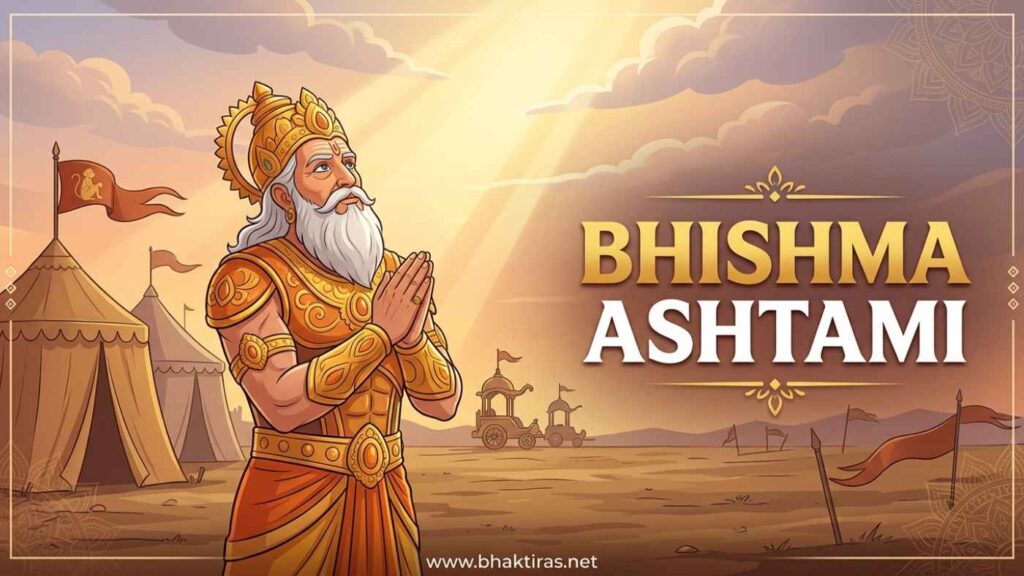
Bhishma Ashtami is the quiet, reflective day on which Hindus remember Bhishma Pitamaha, the grand-uncle and elder of the Mahabharata who chose the very hour of his own death. Falling on the eighth day of the bright half of Magha, it recalls how the mortally wounded warrior lay for weeks on a bed of arrows, waiting for the sun to turn north before he departed. Families, especially those who have lost a father, mark the day by offering water and sesame to Bhishma and to their own ancestors, and many keep a fast in his memory.
Bhishma Ashtami 2026-2028: Dates & Calendar
The next Bhishma Ashtami is on Sunday, 14 February 2027. The date shifts each year because it is fixed to the eighth lunar day of Magha’s bright fortnight, not to the Western calendar.
| Year | Date | Day | Tithi |
|---|---|---|---|
| 2026 | 26 January | Monday | Magha Shukla Ashtami |
| 2027 | 14 February | Sunday | Magha Shukla Ashtami – next occurrence |
| 2028 | 3 February | Thursday | Magha Shukla Ashtami |
The Tarpana and puja are usually performed in the Madhyahna period, the middle portion of the day around noon, when the Ashtami tithi is considered strongest. Timings vary by city, so confirm the local muhurat with a reliable panchang before you begin.
Why Bhishma Ashtami Is Celebrated
Bhishma Ashtami honours the day Bhishma Pitamaha left his body, and it is kept mainly to earn merit for one’s ancestors and to seek a righteous son.
Bhishma was the son of King Shantanu and the river-goddess Ganga. To let his father marry, he took a lifelong vow of celibacy and gave up his claim to the throne, an act so severe that the gods blessed him with Ichha Mrityu – the power to die only when he himself willed it. Because of that boon, no wound could take his life until he chose to release it.
A death chosen, not suffered
Struck down by Arjuna’s arrows on the tenth day of the Kurukshetra war, Bhishma did not die. He lay on the bed of arrows for over fifty days, holding on until the sun began its northward journey (Uttarayana), which he believed to be the auspicious gateway for the soul. He departed on Magha Shukla Ashtami.
For the ancestors
Bhishma had no children of his own, so tradition holds that offering him Tarpana on this day secures the same merit for one’s forefathers. It is especially meaningful for those who have lost their father, who perform the rite praying for the peace of the departed.
A prayer for a worthy son
Devotees also observe the day asking to be blessed with a son as upright, brave and self-controlled as Bhishma himself. His name has become a byword for an unbreakable promise, and the vrat carries that ideal of steadfastness.
Deities & Figures Worshipped
The day centres on Bhishma Pitamaha, with worship of Lord Vishnu and Krishna alongside the Tarpana offering.
Bhishma Pitamaha
The grandsire of the Kuru dynasty, revered for his vow, his wisdom and his mastery of dharma. The Tarpana is offered directly to him, and the well-known Bhishma mantra is recited while pouring water and sesame.
Lord Vishnu
Many keep the vrat with worship of Vishnu, since Bhishma spent his final days on the arrow-bed reciting the Vishnu Sahasranama, the thousand names of Vishnu, which he taught to Yudhishthira as he lay dying.
Lord Krishna
Krishna stood beside Bhishma through his last hours and received his final devotion. His presence links the day to the teachings of the Bhagavad Gita, delivered on the same battlefield.
Key Rituals, Step by Step
The observance is simple and centred on the Tarpana; here is the usual order of the day.
- Bathe early and take the sankalpa. Devotees rise before sunrise, bathe (a dip in a river or holy tank is preferred), and make a resolve to keep the fast and offer Tarpana.
- Keep the Bhishma Ashtami vrat. Many observe a fast for the day, some taking only water or fruit, others a single sattvic meal after the midday rite.
- Prepare the Tarpana offering. Water is mixed with black sesame seeds (til), kusha grass and often barley, held in the cupped hands for the offering.
- Offer Bhishma Tarpana. Facing the correct direction, the devotee pours the water and sesame while reciting the Bhishma mantra, offering it to Bhishma Pitamaha by name.
- Perform Ekodishta Shraddha. Those honouring a departed father add the Ekodishta Shraddha, a rite directed to a single ancestor, praying for the peace of the forefathers.
- Worship Vishnu or Krishna. A short puja follows, often with a reading from the Vishnu Sahasranama, lighting a lamp and offering flowers and tulsi.
- Give in charity and break the fast. Feeding Brahmins or the needy and giving sesame, grain or clothes is considered part of the day; the fast is broken after the rites are done.
Where It's Observed
Bhishma Ashtami is kept across India rather than in one region, with a few places holding it especially close.
Pan-India temples
Vishnu and Krishna temples across the country hold special recitations of the Vishnu Sahasranama on this day, and priests conduct group Tarpana for devotees.
River ghats
Sacred riverbanks such as those on the Ganga and Yamuna see the largest gatherings, since bathing and offering Tarpana in flowing water is the preferred form of the rite.
South India
In Tamil Nadu, Kerala and Andhra Pradesh the day is well observed as Bhishma Ekadashi-linked Tarpanam, with families performing the offering at home or at temple tanks.
Bhishma Ashtami Do's and Don'ts
A few simple points help keep the day sincere and correct.
Do
- Bathe early and offer Tarpana with water, black sesame and kusha grass
- Recite the Bhishma mantra clearly while making the offering
- Keep the vrat with a calm, sattvic frame of mind
- Read or listen to the Vishnu Sahasranama during the day
- Give sesame, grain or a meal in charity after the rites
Avoid
- Avoid onion, garlic, meat and alcohol on the fasting day
- Do not treat the Tarpana as a formality; offer it with genuine remembrance
- Avoid guessing the muhurat – check a reliable local panchang first
- Do not skip the sankalpa (resolve) before starting the fast
- Avoid quarrels and harsh speech on a day meant for the ancestors
Frequently Asked Questions
When is Bhishma Ashtami in 2027?
Bhishma Ashtami 2027 falls on Sunday, 14 February. It is observed on Magha Shukla Ashtami, the eighth day of the bright fortnight of the Magha month, when devotees offer Tarpana to Bhishma Pitamaha.
When is Bhishma Ashtami in 2026 and 2028?
Bhishma Ashtami was on 26 January 2026 (Monday) and will next occur on 3 February 2028 (Thursday). The date changes each year because it is tied to the lunar tithi of Magha Shukla Ashtami, not to a fixed calendar date.
Why is Bhishma Ashtami celebrated?
Bhishma Ashtami marks the day Bhishma Pitamaha left his body. Because he had the boon of choosing his own time of death, he waited on his bed of arrows for the auspicious Uttarayana period and departed on this Ashtami. The day is kept to honour him and to earn peace for one’s ancestors.
What is Bhishma Tarpana?
Bhishma Tarpana is the ritual offering of water mixed with black sesame seeds to Bhishma Pitamaha on Bhishma Ashtami. Since Bhishma had no children, offering it is believed to bring the same merit as honouring one’s own ancestors, and it is performed especially by those who have lost their father.
Who can observe the Bhishma Ashtami vrat?
Anyone may keep the Bhishma Ashtami vrat, though it is most closely observed by those praying for the peace of their forefathers or wishing to be blessed with a righteous son. The fast involves bathing early, offering Tarpana, and worshipping Vishnu or Krishna during the day.
What is the meaning of Ichha Mrityu in Bhishma's story?
Ichha Mrityu means death at one’s own will. Bhishma received this boon from his father Shantanu (or from the gods, by tradition) in return for his lifelong vow of celibacy, which is why the arrows of Kurukshetra could not kill him until he chose to release his own life on Bhishma Ashtami.
Which god is worshipped on Bhishma Ashtami?
Bhishma Pitamaha is the central figure of the day, worshipped through Tarpana. Alongside him, devotees worship Lord Vishnu and Krishna, often reciting the Vishnu Sahasranama, the thousand names of Vishnu that Bhishma himself taught while lying on the bed of arrows.
What foods are eaten on Bhishma Ashtami?
Those keeping the fast take simple sattvic food, such as fruit, milk or a single vegetarian meal without onion and garlic, after the midday rites. Black sesame and barley are used in the Tarpana offering rather than eaten as festival dishes.
May the steadfastness of Bhishma Pitamaha bless your family with dharma and peace this Bhishma Ashtami.