
ॐ
Jivdani Chalisa
श्री जीवदानी चालीसा
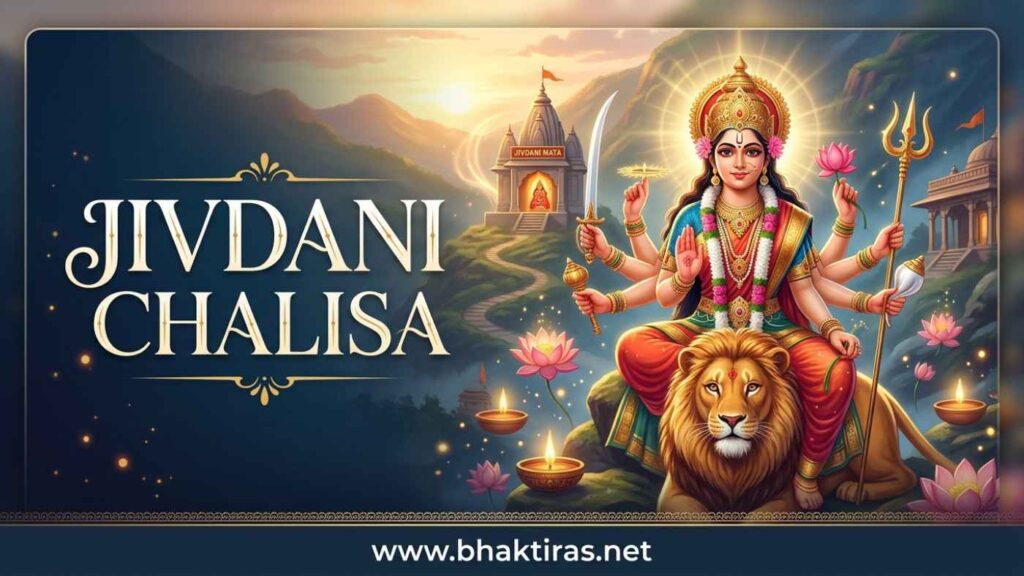
The Jivdani Chalisa is a short devotional hymn to Jivdani Devi, the hilltop goddess whose temple crowns Jivdani Hill in Virar, Maharashtra, just north of Mumbai. Her name joins jiv (life) and dani (giver), so devotees know her as the Giver of Life, a warrior form of the Mother Goddess linked in local memory to the Pandavas of the Mahabharata. This page gives the full hymn in easy English transliteration with a plain-English meaning under every verse, so you can read, understand, and recite it even without knowing Devanagari.
Jivdani Chalisa Lyrics in English (Transliteration)
Roman transliteration for easy chanting. Tap “Meaning” under any verse for the English translation.
Shri Ganesha Pahla Namaskar, Karu Guru Pahle Pay,
Jivdani Mata Charan, Jo Manvat Aave Gahe.
Meaning
I first bow to Lord Ganesha and then touch the feet of my Guru. Then I hold on to the feet of Jivdani Mata, praying that she comes into my heart and mind.
Jai Jivdani Bhawani, Jai Shri Jagdambe,
Jai Jai Jai He Ambike, Bhakta Vighna Vinashe.
Meaning
Victory to Jivdani Bhavani, victory to the Mother of the universe. Hail, hail, hail to you, Ambika, who clears away the troubles and obstacles of your devotees.
Virar Nagari Shikhar Par, Jai Shri Jivdani,
Sur Muni Sevat Nitya, Tribhuvan Ki Rani.
Meaning
You dwell on the hilltop above the town of Virar as glorious Jivdani. Gods and sages serve you day and night, O Queen of the three worlds.
Shakti Roop Karalika, Mahishasur Mardini,
Chaturbhuji Daraj Dharu, Rakshas Kula Hardini.
Meaning
You are the fierce embodiment of Shakti, the slayer of the buffalo demon Mahishasura. With four arms you carry your emblems and wipe out the whole clan of demons.
Pandava Se Nyasi Hain, Nirjhar Jal Charu,
Tumhari Mahima Aparampar, Koti Varnantu Charu.
Meaning
The Pandavas did penance here beside a lovely mountain spring. Your greatness has no limit, and even millions of words fall short of describing it.
Kirid Mukuut Mridul, Kripalu Bhari Najar,
Sada Sahit Charan Kamal, Manvat Sahaj Aadar.
Meaning
You wear a soft, shining crown and your gaze is full of mercy. At your lotus feet a devotee bows with sincere and effortless respect.
Trishul Khande Khadag, Shankh Chakra Prachand,
Dara Dara Harakara, Karu Shatru Samghand.
Meaning
You wield the trident, sword, conch, and mighty discus. With a terrible roar you strike fear into enemies and crush them in battle.
Vahan Tera Sinh Hai, Jagrata Kila Kuse,
Ati Vali Balvanti, Tumi Raxashar Ghare.
Meaning
The lion is your mount and you keep watch through the night. Immensely strong and powerful, you destroy the demons in battle.
Kamakhya Pith Hai Pavarm, Bhakta Purnahi Kama,
Jai Shri Jivdani Devi, Pranam Karu Balchar.
Meaning
You are honoured at the holy Kamakhya Peeth and you fulfil your devotees' wishes. Victory to Jivdani Devi; like a humble child I bow before you.
Andhak Shakuni Ghatka, Papanash Karu Hare,
Kasht Nivare Mata, Tumahi To Sahare.
Meaning
You destroyed the wicked, like Andhaka and Shakuni, and you burn away sin. You end suffering, Mother, for you alone are the support of the helpless.
Krodhbhuti Mahisashur, Tumi Jivanu Dharu,
Jis Ghar Tumi Vasi, Sukh Sampati Bhi Bharu.
Meaning
You subdued the furious Mahishasura and protect all living beings. The home where you reside is filled with happiness and wealth.
Tano Mahima Aparampar, Krite Krite Jag Jai,
Kali Kalgag Ko Tuma, Namaskar Shat Rati.
Meaning
Your glory is boundless and you are victorious in every age of the world. To you, who scatters the darkness of Kali Yuga, I offer a hundred salutations.
Tum Padhmavati Bhagvati, Bramha-Rupa Tu Hai,
Vishnu-Rup Tum Ho Jag, Tumh Paya Pawan Hai.
Meaning
You are Bhagavati Padmavati, the very form of Brahma. You are also the form of Vishnu who sustains the world, and your feet are utterly pure.
Yogeswar Khadag Sunu, Tumh Pujay So Hoy,
Yajna Bhuja Bhakta Hasi, Tumh Dukh Jab Jab Joy.
Meaning
Whoever worships you as the great yogis do finds their wishes come true. When a devotee is caught in sorrow, you step in at once to lift the pain.
Atmasvarup Tumhi, Antaryami Mata,
Daya Sindhu Sukhada, Jag Taran Jagata.
Meaning
You are the true nature of the soul and the inner witness of every heart, O Mother. An ocean of compassion and a giver of joy, you carry the world safely across.
Ram Janam Kar Bhuvan, Tumanhi Saha Paya,
Ravan Sahit Dal Ko, Tumhi Yuddh Kar Dhaya.
Meaning
It was by your power that Lord Rama took birth on the earth. Through you the war was carried against Ravana and his entire army.
Tumhi Hanumanth Tumhi, Tumhi Arjunahi Rana,
Tumhi Dikhit Hae Devi, Bhakta Kara Asa.
Meaning
You are Hanuman, and you are Arjuna on the battlefield too. You reveal yourself, O Devi, to fulfil the hopes your devotees place in you.
Jai Jivdani Mata, Jai Shri Jagdambe,
Jo Koi Path Karai Bhakti Se, Pave Koti Yuge Phal.
Shri Jivdani Chalisa, Jo Koi Gave,
Sankat Kat-hai Sankat Se, Sukh Sampati Pare Pave.
Meaning
Victory to Mother Jivdani, victory to the Mother of the universe. Whoever recites this with devotion earns the fruit of countless ages of good deeds. Whoever sings the Jivdani Chalisa is freed from every trouble and comes to enjoy happiness and prosperity.
Benefits of Reciting the Jivdani Chalisa
Devotees turn to the Jivdani Chalisa as a steady, simple way to call on the goddess for protection and calm. Reciting it is said to bring:
- Protection from harm: As a warrior form of the Mother Goddess, Jivdani Devi is invoked to guard the household and shield devotees from danger and ill will.
- Relief from worry: The closing lines promise freedom from trouble, and many recite the hymn during difficult stretches to steady the mind.
- Health and long life: Her name means Giver of Life, so devotees pray to her for well-being, recovery, and the safety of loved ones.
- Home and prosperity: Verse 10 speaks of happiness and wealth filling the house where she resides, a wish carried in daily recitation.
- Focus during Navratri: Chanting the hymn through the nine nights deepens the connection to the Devi and gives the fast a clear devotional rhythm.
- A short, memorable practice: With just sixteen main verses, it is easy to learn, so newcomers can build a regular habit quickly.
When and How to Chant the Jivdani Chalisa
The Jivdani Chalisa is most often recited during Navratri, when devotion to the Mother Goddess is at its peak, and on Tuesdays and Fridays, days traditionally set aside for the Devi. A simple way to begin is to bathe, sit before an image or picture of the goddess, and light a lamp or a stick of incense. Read the opening doha first, then move slowly through the sixteen verses and the closing doha, giving attention to the meaning as much as the words. What matters most is a quiet, sincere heart rather than a perfect accent, so recite at a pace you can hold with feeling.
About the Jivdani Chalisa
This is a folk devotional hymn to Jivdani Devi rather than a classical scripture, and it carries no single named author. It is built in the familiar chalisa style, opening with a doha, running through sixteen chaupai verses, and closing with a doha, and it is usually chanted in Hindi. Its verses gather the goddess’s many aspects in one place: her seat on the Virar hilltop, her Pandava connection, her form as Mahishasura Mardini, her weapons and lion mount, and her identity with the wider Shakti tradition. Because it lives mainly through oral recitation among the temple’s devotees, exact wording can vary slightly from one printed copy to another.
Frequently Asked Questions
What is the Jivdani Chalisa?
It is a short devotional hymn in praise of Jivdani Devi, the hilltop goddess of Virar in Maharashtra, near Mumbai. Written in the chalisa style with an opening doha, sixteen chaupai verses, and a closing doha, it celebrates her as a warrior form of the Mother Goddess and the Giver of Life.
What are the benefits of reciting the Jivdani Chalisa?
Devotees recite it seeking the goddess's protection, relief from worry and trouble, good health and long life, and happiness and prosperity in the home. Its short length also makes it an easy hymn to keep as a regular daily or weekly practice.
Which day is best to recite the Jivdani Chalisa?
Navratri is the most auspicious time, as it is the main festival of the Mother Goddess. Many devotees also recite it on Tuesdays and Fridays, which are traditionally dedicated to the Devi.
How many verses are in the Jivdani Chalisa?
This version has sixteen main chaupai verses, framed by an opening doha and a closing doha. Unlike some chalisas it does not run to forty verses, so it is quick to learn and recite.
Can the Jivdani Chalisa be recited in English?
Yes. This page gives the full hymn in easy Roman transliteration so you can read and chant it without knowing Devanagari, along with a plain-English meaning under each verse to help you follow the sense while you recite.
॥ Jivdani Chalisa ॥