
Chinakkathoor Pooram 2027 – Kerala's Pooram of Elephants and Shadow Puppets
ചിനക്കത്തൂർ പൂരം
When is Chinakkathoor Pooram in 2027?
Chinakkathoor Pooram falls on Sunday, 21 February 2027. It is held every year on the Makam nakshatra (star) in the Malayalam month of Kumbham at the Sree Chinakkathoor Bhagavathy temple in Palappuram, near Ottapalam in Palakkad district, Kerala. The main pooram day features a procession of caparisoned elephants, temple percussion and folk-art displays, closing a run-up of nightly Tholpavakoothu shadow-puppet performances.
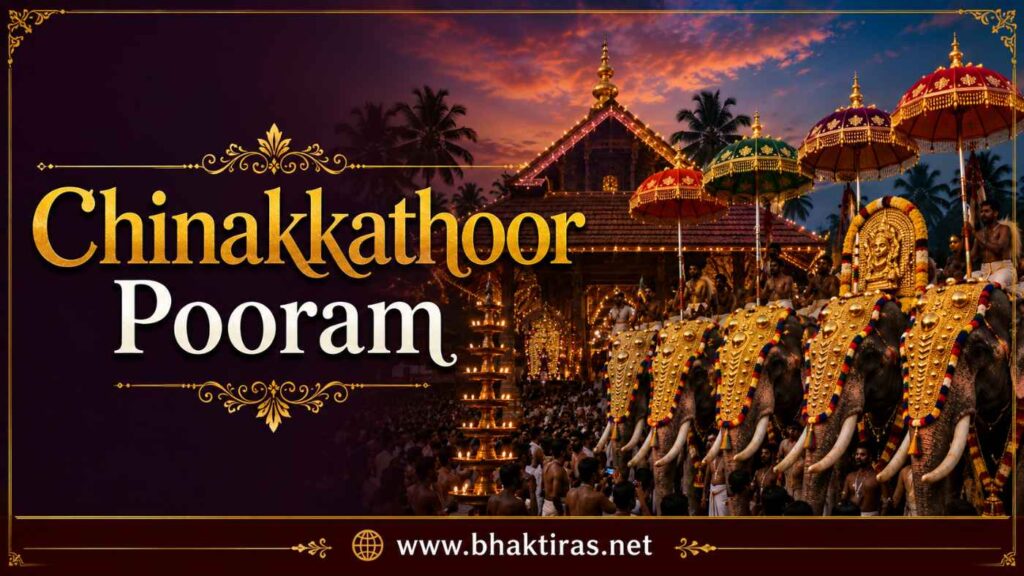
Chinakkathoor Pooram is one of Palakkad district’s best-loved temple festivals, held at the Sree Chinakkathoor Bhagavathy temple in Palappuram, close to Ottapalam in central Kerala. The pooram day is fixed by the Makam nakshatra in the Malayalam month of Kumbham, which usually places it in late February or March. Devotees know it for a long evening line of decorated elephants, layered temple percussion, and a striking spread of village art forms, including the Tholpavakoothu leather shadow-puppet plays staged over many nights before the main day.
Chinakkathoor Pooram 2026-2028: Dates & Calendar
The next Chinakkathoor Pooram is on 21 February 2027. The date moves each year because it is tied to the Makam star in the Malayalam month of Kumbham rather than a fixed Gregorian day.
| Year | Main pooram day | Weekday | Notes |
|---|---|---|---|
| 2026 | 2 March | Monday | Makam in Kumbham |
| 2027 | 21 February | Sunday | Next occurrence |
| 2028 | 11 March | Saturday | Makam in Kumbham |
The Tholpavakoothu shadow-puppet performances and other rituals begin well before the main pooram, so the temple stays active for a stretch of evenings leading up to the Makam day. Confirm the exact schedule with the temple committee, since the run-up and procession timings are set locally each year.
Why Chinakkathoor Pooram Is Celebrated
Chinakkathoor Pooram is celebrated to honour Chinakkathoor Bhagavathy, the presiding goddess of the Palappuram temple, and to bring the surrounding villages together for the year’s biggest temple event. What began as a local shrine ritual has grown into a large gathering that also keeps rare folk-art traditions alive.
The festival works on two levels. For devotees it is an act of faith and thanksgiving to the Bhagavathy, with offerings, temple percussion and processions carried out through the day and into the night. For the wider region it is a showcase of Palakkad’s living performance culture, drawing families, artists and visitors to Palappuram year after year.
A goddess festival of the Valluvanad country
The pooram centres on Chinakkathoor Bhagavathy, worshipped as a form of the Devi. The temple sits in the old Valluvanad region around Ottapalam, an area with a deep tradition of Bhagavathy shrines and their annual poorams. The Makam-day celebration is the high point of the temple’s ritual year.
Guardian of folk arts
Chinakkathoor Pooram is unusual for how many traditional art forms it hosts in one place, from shadow puppetry to effigy processions and ritual dances. Several of these performances are now rarely seen elsewhere, so the festival has become an important keeper of Kerala’s older village art.
The Tholpavakoothu connection
The temple is strongly linked with Tholpavakoothu, the leather shadow-puppet theatre that retells the Ramayana behind a lit screen. The plays are performed on the temple grounds across many nights in the run-up to the pooram, making this one of the most recognised homes of the art in Kerala.
Deity Worshipped at Chinakkathoor
The festival is dedicated to Chinakkathoor Bhagavathy, the mother goddess of the temple, worshipped in the Devi tradition of Kerala that connects her with forms such as Durga and Kali.
Chinakkathoor Bhagavathy
Bhagavathy is the goddess honoured at the Palappuram temple and the focus of the entire pooram. In Kerala’s Bhagavathy shrines the goddess is understood as the Devi, the divine mother and protector, and her worship blends devotion with strong local ritual and folk performance.
Devi as Durga and Kali
Kerala’s Bhagavathy is closely associated with Durga and Kali, the fierce and protective aspects of the goddess. Devotees approach her for strength, safety and the wellbeing of the community, and the pooram’s percussion and processions carry that protective, energising spirit.
Key Rituals, Step by Step
Chinakkathoor Pooram unfolds over a long run-up of nightly performances that build towards a single grand pooram day of processions and percussion. Here is the broad order of events.
- Tholpavakoothu nights. In the weeks before the main day, the Tholpavakoothu leather shadow-puppet plays are staged on the temple grounds evening after evening, telling episodes from the Ramayana behind a lamp-lit cloth screen.
- Folk-art performances. The build-up also features ritual and village art forms tied to Bhagavathy worship, such as Poothanum Thirayum, Vellattu and other Theyyam-linked dances, performed on temple nights.
- Kummatti and effigy displays. Colourful Kummatti performers and the making of towering effigies add to the festive atmosphere as the pooram approaches.
- Kettukazhcha of horses and bulls. Villages bring large decorated models of horses (kuthira) and bull effigies (kaala) in procession, a kettukazhcha-style offering that is a signature sight of this pooram.
- Elephant procession with melam. On the main day a long line of caparisoned elephants, often around thirty tuskers, is arranged for the pooram, accompanied by panchavadyam and melam, the powerful Kerala temple-percussion ensembles.
- Kudamattam. The elephants carry ceremonial parasols that are rhythmically changed in the kudamattam display, a coordinated show of colour timed to the percussion.
- Fireworks finale. The celebration closes with a fireworks display, a customary high point of Kerala poorams that marks the end of the day’s festivities.
Food at Chinakkathoor Pooram
Like most Kerala temple festivals, Chinakkathoor Pooram is a time for temple prasadam and shared vegetarian meals, with a full sadhya often laid out for devotees and visitors.
Kerala sadhya
A sadhya is a vegetarian banquet served on a banana leaf, with rice, sambar, avial, thoran, olan, pickles, pappadam and payasam. Temple festivals in Palakkad are strongly associated with this shared meal, eaten by families and travellers alike during the celebration.
Payasam
Payasam, a milk or jaggery based sweet pudding made with rice, semolina or lentils, is a favourite offering and dessert at Kerala festivals. It rounds off the sadhya and is also given as a sweet prasadam.
Temple prasadam
Prasadam distributed at the Bhagavathy temple is received as a blessing from the goddess. Simple sweet and rice-based offerings are shared among devotees as part of the day’s worship.
Where It Is Celebrated
Chinakkathoor Pooram is a Palakkad district festival, centred entirely on the Palappuram temple and its neighbouring villages near Ottapalam in central Kerala.
Palappuram, Ottapalam
The pooram belongs to Palappuram, a locality near the town of Ottapalam in Palakkad district. The Sree Chinakkathoor Bhagavathy temple is the sole venue, and the surrounding desams (village units) take part by bringing processions and performances.
Palakkad pooram culture
Palakkad and the wider central Kerala belt are known for their pooram tradition, where temple festivals combine elephants, percussion and folk art. Chinakkathoor sits within this culture alongside better-known poorams such as Thrissur Pooram and Uthralikkavu Pooram.
A gathering for the region
While the festival is local in origin, its scale and its famous art forms draw people from across Palakkad and beyond. Government offices and schools in the Ottapalam area are often given a holiday for the main pooram day.
Chinakkathoor Pooram Do's and Don'ts
A few simple points help you enjoy the pooram safely and respectfully in a large, crowded temple setting.
Do
- Arrive early and plan your spot, as the elephant procession and percussion draw big crowds.
- Dress modestly and follow the temple’s customs and any dress guidance.
- Keep to the barriers and marked distances around the caparisoned elephants at all times.
- Watch the Tholpavakoothu shadow-puppet performance if you can, as it is the festival’s rarest art form.
- Carry water, keep children close, and note the exits before the fireworks begin.
Avoid
- Do not crowd, startle or approach the elephants, and never use flash close to them.
- Do not push through dense sections of the crowd, especially near the procession route.
- Do not stand too close during the fireworks display; keep to safe viewing areas.
- Do not litter the temple grounds or block pathways used by performers and processions.
- Do not take photographs where the temple asks you not to, and respect ritual spaces.
Frequently Asked Questions
When is Chinakkathoor Pooram in 2027?
Chinakkathoor Pooram is on Sunday, 21 February 2027. The main pooram day is fixed by the Makam nakshatra in the Malayalam month of Kumbham, so it shifts each year rather than falling on a set Gregorian date.
When was Chinakkathoor Pooram in 2026 and when is it in 2028?
Chinakkathoor Pooram fell on 2 March 2026 and will be held on 11 March 2028. Both dates are the Makam nakshatra day in the Kumbham month of the Malayalam calendar, which is why the festival lands in late February or March.
Where is Chinakkathoor Pooram held?
Chinakkathoor Pooram is held at the Sree Chinakkathoor Bhagavathy temple in Palappuram, near Ottapalam in Palakkad district, Kerala. It is a single-temple festival that also involves the surrounding villages of the area.
Which deity is worshipped at Chinakkathoor Pooram?
The festival is dedicated to Chinakkathoor Bhagavathy, the mother goddess of the temple, worshipped in Kerala’s Devi tradition that links her with Durga and Kali. The whole pooram is an act of devotion and thanksgiving to the goddess.
What is the link between Chinakkathoor Pooram and Tholpavakoothu?
Chinakkathoor is one of the best-known homes of Tholpavakoothu, the leather shadow-puppet theatre that retells the Ramayana. The plays are performed on the temple grounds across many nights before the main pooram, making the art a defining part of this festival.
How many elephants take part in Chinakkathoor Pooram?
The pooram is famous for a large procession of caparisoned elephants, often numbering around thirty tuskers on the main day. The elephants are lined up with ceremonial parasols and move to the rhythm of panchavadyam and melam percussion.
What are the horses and bulls seen at the festival?
These are the kuthira (horse) and kaala (bull) effigies, large decorated models brought in procession by the surrounding villages as offerings to the goddess. This kettukazhcha-style display, along with Kummatti and other folk arts, is a signature part of Chinakkathoor Pooram.
Is Chinakkathoor Pooram a one-day festival?
The grand pooram is a single main day set by the Makam nakshatra, but the celebration is much longer in practice. Tholpavakoothu shadow-puppet plays and other performances run over many evenings in the run-up, so the temple is active for a stretch before the procession day.
May Chinakkathoor Bhagavathy bless you and your family. If you visit Palappuram for the pooram, take a quiet moment for the Tholpavakoothu screen before the elephants arrive.