
Uthralikkavu Pooram 2027 – Kerala's Season-Opening Elephant Pageant
ഉത്രാളിക്കാവ് പൂരം
When is Uthralikkavu Pooram in 2027?
Uthralikkavu Pooram falls on Tuesday, 2 March 2027. It is the annual festival of the Sree Ruthira Mahakalikavu (Uthralikkavu Bhagavathy) temple at Wadakkanchery in Thrissur district, Kerala, timed to the Uthram star in the Malayalam month of Kumbham. The main Pooram day brings a procession of caparisoned elephants, panchavadyam and pandi melam, and a large night fireworks display.
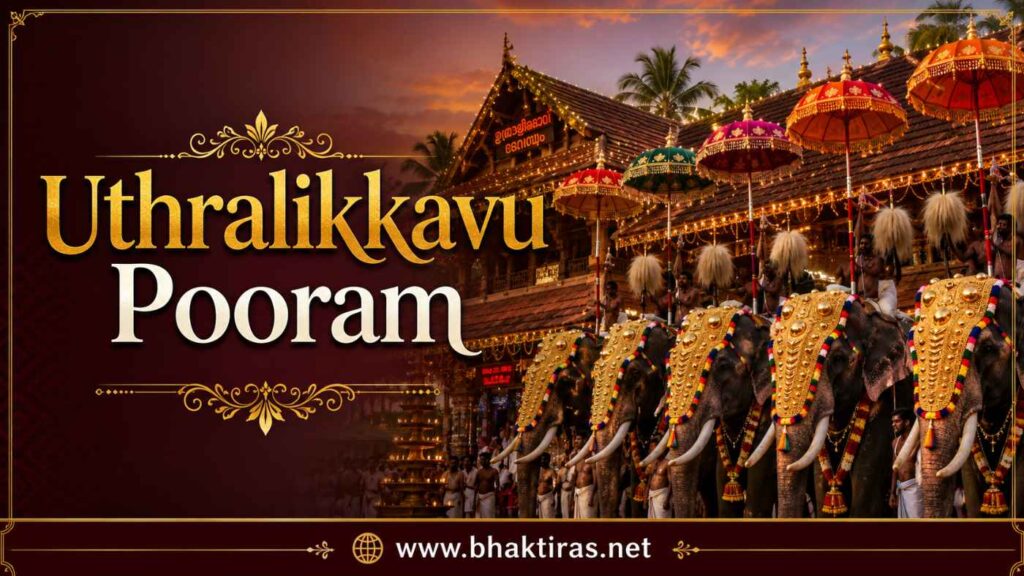
Uthralikkavu Pooram is the yearly festival of the Sree Ruthira Mahakalikavu temple at Wadakkanchery, in the Thalappilly area of Kerala’s Thrissur district. Held around the Uthram star in the Malayalam month of Kumbham, it opens the central Kerala pooram season each spring. Devotees know it for its line of caparisoned elephants, the drumming of pandi melam and panchavadyam, and a fireworks show reckoned among the biggest in the state.
Uthralikkavu Pooram 2026-2028: Dates & Calendar
The next Uthralikkavu Pooram is on Tuesday, 2 March 2027. The date shifts each year because it is fixed by the Uthram star in the Malayalam month of Kumbham, not by a set Gregorian day.
| Year | Main Pooram | Day | Notes |
|---|---|---|---|
| 2026 | 24 February | Tuesday | Passed |
| 2027 | 2 March | Tuesday | Next occurrence |
| 2028 | 22 February | Tuesday | Approximate; confirm with the temple |
The eight-day festival begins with the kodiyettam (flag hoisting) on the second Tuesday of Kumbham. The grand Pooram, with the full elephant procession and fireworks, takes place on the following Tuesday. Always check the temple’s notice for the exact year, as regional calendars can differ by a day.
Why Uthralikkavu Pooram Is Celebrated
Uthralikkavu Pooram honours the temple’s goddess, Uthralikkavu Bhagavathy, a form of Mahakali, and marks the start of the central Kerala pooram season in Kumbham.
The festival is one of the earliest large poorams of the Kerala calendar, held weeks before the more famous Thrissur Pooram. For the villages around Wadakkanchery it is the social and devotional high point of the year, drawing families home and pulling large crowds into the temple grounds.
Devotion to the goddess
At its heart the Pooram is an offering to Uthralikkavu Bhagavathy. The elephant procession, drumming and fireworks are all forms of homage, and many families make personal vows and offerings during the festival week.
Season opener
Uthralikkavu Pooram is counted among the first big poorams of the season in the Thrissur region. Its timing in Kumbham sets the tone for the run of festivals that follows across central Kerala through the spring.
Living temple arts
The festival keeps Kerala’s classical performing traditions alive. Panchavadyam and pandi melam ensembles, along with programmes of Kathakali and other temple arts on the run-up nights, give leading artists a public stage each year.
Deities & Figures Worshipped
The presiding deity is Uthralikkavu Bhagavathy, worshipped as Mahakali, a fierce and protective form of the Mother Goddess. The temple name Ruthira Mahakalikavu points to this Kali aspect.
Uthralikkavu Bhagavathy
The goddess of the Sree Ruthira Mahakalikavu temple, honoured as Mahakali. She is the guardian of the surrounding villages, and the whole Pooram is arranged as an offering to her.
Mahakali / Durga
The Bhagavathy tradition of Kerala reveres the Devi in her Kali and Durga forms – a mother who both protects her devotees and destroys what threatens them. Bhagavathy temples like this one are central to Malayali village worship.
Key Rituals, Step by Step
The festival runs for about eight days, from the flag hoisting to the closing fireworks. Here is the shape of the main sequence.
- Kodiyettam (flag hoisting). On the second Tuesday of Kumbham the temple flag is raised, formally opening the eight-day festival and inviting the goddess and devotees to the celebration.
- Run-up days. Through the week the temple hosts nightly programmes of temple arts, including Kathakali and classical music, building towards the main day.
- Elephant procession. On Pooram day teams of caparisoned elephants from neighbouring village temples – traditionally Enkakkad, Kumaranellur and Wadakkanchery – assemble, each animal dressed in the gold nettipattam forehead ornament and carrying the thidambu, the deity’s decorated image.
- Panchavadyam and pandi melam. Percussion ensembles take over the grounds. Panchavadyam, a five-instrument orchestra, and the temple-drum pandi melam draw leading artists from central Kerala and rise through carefully built rhythmic cycles.
- Venchamaram and aalavattam display. Atop the elephants, performers wave white venchamaram tufts and peacock-feather aalavattam fans in time with the drumming, a slow visual counterpoint to the percussion.
- Kudamattam (parasol exchange). Facing rows of elephants raise and swap brightly coloured ceremonial parasols in quick succession, each set more elaborate than the last, in the display that crowds wait for.
- Vedikettu (fireworks). The festival closes with a major fireworks display, held on the Pooram evening and again in the early hours. The valley setting, ringed by low hills, amplifies the sound and is part of the show’s fame.
Special Foods of Uthralikkavu Pooram
Food around the Pooram is classic central Kerala temple fare, shared at home and offered at the temple.
Sadhya
A vegetarian feast served on a banana leaf, with rice, sambar, avial, thoran, pickles, pappadam and payasam. Families and the temple prepare sadhya during the festival, and sharing it is part of the occasion.
Payasam
Sweet payasam, made with rice or moong dal in jaggery and coconut milk, is both a sadhya dish and a temple prasadam. It is offered to the goddess and distributed to devotees.
Festival snacks
Stalls around the temple grounds sell banana chips, sharkara varatti, murukku and other Kerala snacks, along with tea and cool drinks for the crowds who stay through the long day and night.
Where It Fits in Kerala's Pooram Culture
Uthralikkavu Pooram belongs to Thrissur’s famous cluster of temple poorams, each with its own character but sharing the same grammar of elephants, melam and fireworks.
Wadakkanchery & Thalappilly
The festival is the biggest annual event for Wadakkanchery and the surrounding Thalappilly villages. Local temples send their elephant teams, and the whole area organises around the Pooram week.
The Thrissur Pooram season
It is often described as a curtain-raiser for the region’s festival season, held before Thrissur Pooram, the grandest of them all. Visitors touring central Kerala’s poorams frequently take in both.
A fireworks landmark
The vedikettu here is counted among the largest in Kerala, and its natural amphitheatre of hills gives it a reputation of its own among the state’s fireworks displays.
Uthralikkavu Pooram Do's and Don'ts
A few practical points help you enjoy a large, crowded temple festival safely and respectfully.
Do
- Reach the grounds early to find a good, safe spot before the crowds build.
- Follow the directions of temple staff and police, especially near the elephants.
- Carry water, wear light cotton clothing and protect yourself from the daytime heat.
- Keep a safe distance from elephants and never crowd or startle them.
- Use ear protection for children and older people during the loud fireworks.
Avoid
- Do not push forward toward the elephant lines during the procession or kudamattam.
- Do not stand close to the fireworks area; watch the vedikettu from the marked distance.
- Do not feed, touch or flash lights at the elephants.
- Avoid bringing very young children into the densest parts of the crowd.
- Do not litter the temple grounds; use the bins provided.
Frequently Asked Questions
When is Uthralikkavu Pooram in 2027?
Uthralikkavu Pooram is on Tuesday, 2 March 2027. The main Pooram day is fixed by the Uthram star in the Malayalam month of Kumbham, and it is held one week after the kodiyettam flag hoisting.
When is Uthralikkavu Pooram in 2026 and 2028?
Uthralikkavu Pooram fell on 24 February in 2026 and is expected around 22 February in 2028. The date moves each year because it follows the Uthram star in Kumbham on the Malayalam calendar, so it is best to confirm the 2028 date with the temple nearer the time.
Why is Uthralikkavu Pooram celebrated?
Uthralikkavu Pooram is celebrated as the annual festival of the goddess Uthralikkavu Bhagavathy, a form of Mahakali. It honours the temple’s deity with an elephant procession, drumming and fireworks, and marks the opening of the central Kerala pooram season in Kumbham.
Which goddess is worshipped at Uthralikkavu?
The goddess worshipped is Uthralikkavu Bhagavathy, revered as Mahakali. The temple’s full name, Sree Ruthira Mahakalikavu, reflects this fierce and protective Kali form of the Mother Goddess, who is regarded as the guardian of the Wadakkanchery region.
Where is Uthralikkavu Pooram held?
Uthralikkavu Pooram is held at the Sree Ruthira Mahakalikavu temple in Wadakkanchery, in the Thalappilly area of Thrissur district, Kerala. The venue sits in a low valley ringed by hills, which is part of why its fireworks are so well known.
How many elephants take part in Uthralikkavu Pooram?
Uthralikkavu Pooram features around twenty or more caparisoned elephants, gathered in teams from neighbouring village temples such as Enkakkad, Kumaranellur and Wadakkanchery. Each elephant is decked in the gold nettipattam and carries the thidambu during the procession.
What is the vedikettu at Uthralikkavu Pooram?
The vedikettu is the festival’s fireworks display, counted among the largest in Kerala. It is staged on the Pooram evening and again in the early hours, and the surrounding hills amplify the sound, giving it a distinctive reputation among the state’s poorams.
How is Uthralikkavu Pooram linked to Thrissur Pooram?
Uthralikkavu Pooram is one of the season-opening poorams of the Thrissur region, held some weeks before the celebrated Thrissur Pooram. Both share the same elements – caparisoned elephants, panchavadyam and pandi melam, kudamattam and fireworks – so many festival-goers see them as part of one spring circuit.
May Uthralikkavu Bhagavathy bless you this Pooram season – a joyful festival to all who gather at Wadakkanchery.