
Ashta Vasus – The Eight Elemental Deities
अष्ट वसु
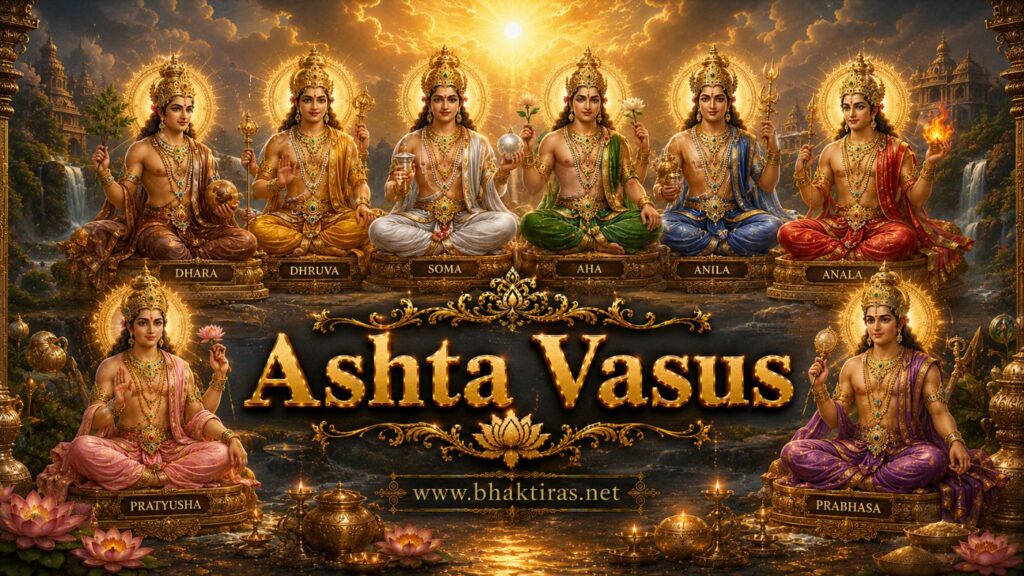
The Ashta Vasus are eight Vedic attendant gods, each embodying a force of nature such as earth, water, fire, wind, sky, moon, dawn and light. They serve as companions of Indra in early texts and later of Vishnu, and one of them, Dyaus, was born on earth as Bhishma in the Mahabharata.
Who Are the Ashta Vasus?
The Ashta Vasus are a set of eight deities in Vedic tradition, and their name means roughly the eight bright or shining ones. Each Vasu holds a portion of the natural world under his care, so the group together covers earth, water, fire, air, sky, the moon, the dawn and the shining light. In the earliest layers of the Vedas they appear as one of the three great classes of gods, grouped alongside the Adityas and the Rudras.
They are often described as attendants who move in the company of Indra, the king of the gods, carrying out the ordinary running of the cosmos. In later Puranic accounts they are linked more closely with Vishnu. What stays constant across the texts is their role as caretakers of the elements, the quiet forces that keep the physical world turning day after day.
Their lineage is usually traced to the sage Kashyapa and the goddess Aditi, or in some versions to the goddess Ganga, which ties directly into their most famous story on earth.
Meaning and Symbolism
As a collective, the Vasus represent the idea that the visible world is not lifeless matter but a family of living powers.
Guardians of the Elements
Each Vasu personifies one building block of nature, so worshipping the eight together is a way of honouring the whole physical creation at once.
Order Over Chaos
The Vasus keep the elements working in harmony rather than at war, which is why they are counted among the gods who uphold rita, the cosmic order.
Service and Duty
They are attendants rather than sovereign rulers, and this makes them a symbol of steady, dutiful service, a theme that carries into Bhishma’s life on earth.
The Eight Vasus
The names and order vary a little between texts, but the following list is the one most commonly given in the Mahabharata and the major Puranas.
- Dhara – The Vasu of earth, standing for stability, patience and the ground beneath all life.
- Apas (Ap) – The Vasu of water, the life-giving and purifying element praised in the Vedic hymns to the waters.
- Anala (Agni) – The Vasu of fire, source of warmth, transformation and the sacred flame of ritual.
- Anila (Vayu) – The Vasu of wind, the breath of the world that carries movement and life.
- Dyaus (Dyu) – The Vasu of the sky and heaven, the ancient Sky Father, later born on earth as Bhishma.
- Soma (Chandra) – The Vasu of the moon, linked to the cool light of night, plants and the nectar of immortality.
- Pratyusha – The Vasu of the dawn and the rising sun, herald of each new day.
- Prabhasa – The Vasu of light and radiance, the shining glow that fills the sky at daybreak.
Vedic Worship and Relevance
The Vasus rarely receive temples of their own; they are invoked as a group during Vedic fire rituals and in the daily recitations where the classes of gods are named together. Priests call on them when honouring the elements, and the simple mantra Om Ashtavasubhyo Namah offers salutation to all eight at once. For a modern devotee, remembering the Vasus is a way of staying grateful for the earth, water, fire and air that make everyday life possible, and of treating the natural world with the respect owed to something sacred.
Lore and Significance
The Curse of Vasishtha
In the Mahabharata, the eight Vasus stole the wish-granting cow Nandini from the sage Vasishtha. When he discovered the theft he cursed all eight to be born as mortals. Seven of them, who had only assisted, were to leave the human world quickly, but Dyaus, who had planned the act, had to live a long human life.
Dyaus Born as Bhishma
The goddess Ganga agreed to become the mother of the cursed Vasus. She drowned the first seven infants soon after birth to free them from the curse, but the eighth, the errant Dyaus, was spared and grew up as Devavrata, later known as Bhishma. His long, celibate and self-sacrificing life is the human working out of the Vasu’s punishment.
Frequently Asked Questions
Who are the eight Vasus?
They are Dhara (earth), Apas (water), Anala or Agni (fire), Anila or Vayu (wind), Dyaus (sky), Soma or Chandra (moon), Pratyusha (dawn) and Prabhasa (light). Together they make up the Ashta Vasus.
What does the word Vasu mean?
Vasu carries the sense of bright, good or dwelling, and the Vasus are often called the shining ones because each embodies a luminous force of nature.
Which Vasu became Bhishma?
Dyaus, the Vasu of the sky, was cursed by the sage Vasishtha to be born as a human and lived that life as Bhishma, the son of King Shantanu and the goddess Ganga.
Are the Vasus attendants of Indra or Vishnu?
In the older Vedic texts they move in the company of Indra, while later Puranic tradition connects them with Vishnu. Both roles cast them as caretakers of the elements.
How are the Ashta Vasus worshipped today?
They are invoked as a group during Vedic fire rituals rather than in dedicated temples, usually with the mantra Om Ashtavasubhyo Namah, as a way of honouring all the natural elements together.
The Ashta Vasus remind us that earth, water, fire and air are living powers worthy of reverence.