
Desert Festival Jaisalmer 2027 – Three Days on the Golden Dunes
जैसलमेर मरु महोत्सव
When is the Jaisalmer Desert Festival in 2027?
The Jaisalmer Desert Festival is expected in February 2027, around the Magha Purnima full moon, most likely 18-20 February. It is a three-day tourism and culture festival held on the Sam sand dunes near Jaisalmer in Rajasthan, filled with camel races, Manganiyar and Langa folk music, and a moonlit finale on the Thar. Exact dates are fixed each year by Rajasthan Tourism, so confirm before you book.
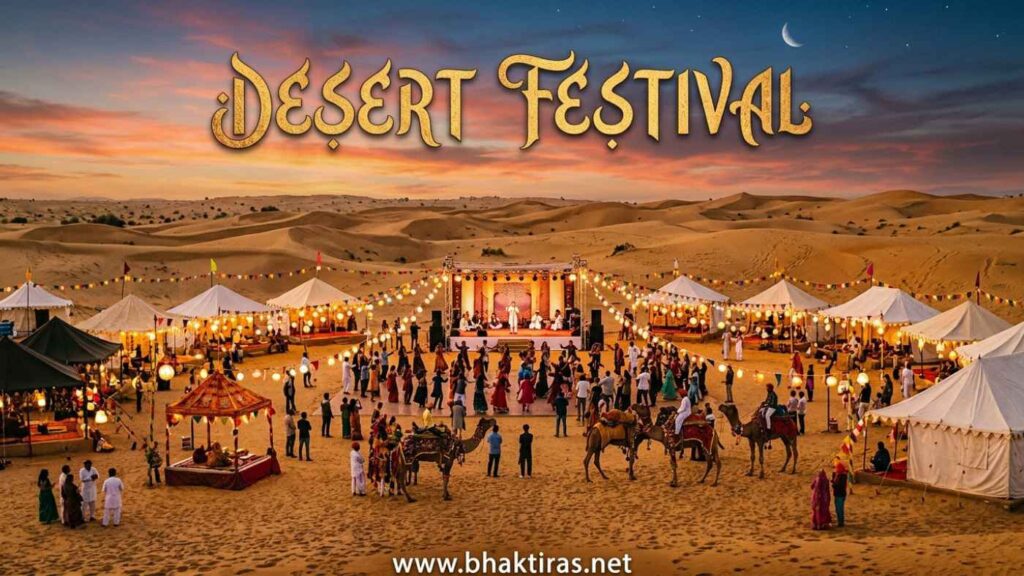
The Jaisalmer Desert Festival is a three-day celebration of life in the Thar, staged each February on the Sam sand dunes about forty kilometres west of the city. Rajasthan Tourism runs it in the cool weeks around the Magha Purnima full moon, when the sand turns amber at dusk and the golden sandstone of Jaisalmer Fort glows on the skyline. Over three days the dunes fill with camel races, folk singers, turban contests and a moonlit closing concert – a working showcase of desert culture rather than a religious observance.
Jaisalmer Desert Festival 2026-2028: Dates & Calendar
The next Jaisalmer Desert Festival is expected in February 2027, around the Magha Purnima full moon. The festival is not tied to a fixed calendar date – Rajasthan Tourism announces the three-day window each year, usually landing in the second or third week of February.
| Year | Dates | Season | Notes |
|---|---|---|---|
| 2026 | 1-3 February | Winter | Past occurrence |
| 2027 | 18-20 February (approx) | Winter | Next occurrence, around Magha Purnima |
| 2028 | Early-mid February (approx) | Winter | To be confirmed by Rajasthan Tourism |
The festival almost always closes on the full-moon night, so the final evening on the dunes is timed to the Magha Purnima moon. Because the tourism board sets the schedule around that moon each year, the dates shift by a week or so between seasons.
Why the Desert Festival Is Celebrated
The Desert Festival celebrates the culture, craft and endurance of people who live in the Thar. It is a tourism festival, created to share Rajasthani desert life with visitors rather than to mark a religious event.
A window into Thar life
The desert shapes everything here – the water-wise farming, the camel as transport and livelihood, the music that carried news across empty distances. The festival gathers all of it into three days so travellers can see how communities thrive where rain is rare and the horizon is a straight line of sand.
Keeping the folk arts alive
Manganiyar and Langa musician families have performed for desert patrons for generations, passing songs down by ear. Paying, ticketed festival stages give these hereditary performers a modern audience and a reason for younger singers to learn the old repertoire instead of leaving for the cities.
A season, not a scripture
There is no deity or holy story behind this festival. It is held in February simply because that is when the desert is cool enough to spend all day outdoors, and it is timed to the full moon so the closing night on the dunes is lit from above.
What Happens, Day by Day
The festival opens with a procession from Jaisalmer Fort out towards the fairground, then moves through camel events, contests and folk performances before the moonlit finale on the Sam dunes.
- Opening procession. The festival begins with a colourful parade from the Jaisalmer Fort area – decorated camels, folk dancers, musicians and costumed performers wind through the streets down to the festival ground.
- Camel decoration and parade. Owners deck their camels in mirrored bridles, tasselled saddles and painted hooves, and the best-dressed animals are judged as they walk before the crowd.
- Camel races and camel polo. Riders sprint their mounts across marked desert tracks, and teams play the desert version of polo from camel-back, one of the festival’s biggest draws.
- Turban tying and moustache contests. Men race to wind a long safa turban correctly against the clock, while others compete for the longest moustache – a proud Rajasthani marker of manhood.
- Mr Desert contest. The signature contest crowns a Mr Desert, judged on turban, moustache, traditional dress and bearing. Past winners have become recurring faces of the festival.
- Folk music and dance. Manganiyar and Langa singers perform on the main stage, joined by Kalbeliya dancers in swirling black skirts and, after dark, fire dancers.
- Puppet shows and craft stalls. Traditional kathputli string-puppet shows run through the day alongside stalls selling Thar textiles, camel-leather goods and mirror-work crafts.
- Full-moon finale. The last evening moves to the open Sam dunes for a grand cultural concert and a fireworks display under the full moon, with the desert stretching out on every side.
What to Eat at the Desert Festival
Festival food is classic Marwari desert cooking – dishes built to keep in the heat, using millet, lentils and dried ingredients rather than fresh greens.
Dal Baati Churma
The desert’s signature plate: baked wheat dough balls soaked in ghee, served with spiced lentils and a sweet crumbled churma. Filling, portable and made for long days outdoors.
Ker Sangri
A tangy dry curry of wild desert berries and beans that grow where little else does. It is the taste of Thar resourcefulness, cooked with plenty of spice and often eaten with bajra roti.
Bajra roti with garlic chutney
Millet flatbread stands up to the heat and keeps for hours, so it is the everyday bread of the desert. Served with a fiery red garlic-and-chilli chutney and a knob of white butter.
Ghevar and mawa sweets
Sweet stalls sell disc-shaped ghevar soaked in syrup and rich mawa-based mithai. They round off a plate of savoury desert food and travel well in the dry air.
Related Desert Fairs of Rajasthan
The Jaisalmer festival is the best known, but Rajasthan’s other desert districts hold their own winter fairs with a similar spirit of camels, music and craft.
Bikaner
The Bikaner Camel Festival, held in January, is built entirely around the camel – fur-cutting design, dressing competitions, races and a camel dance, all against the red sandstone of Junagarh Fort.
Jodhpur
The Marwar Festival focuses on the music and dance of the Marwar region and honours its royal heritage, staged near Mehrangarh Fort and the Umaid Bhawan area in autumn.
Pushkar
The Pushkar fair pairs a vast livestock and camel market with a lakeside carnival of contests and folk performances, drawing traders and travellers from across the state each November.
Desert Festival Do's and Don'ts
A few practical notes to get the most out of three days on the dunes.
Do
- Book accommodation and desert-camp stays weeks ahead, as Jaisalmer fills up completely for the festival.
- Carry layers – the desert is warm by day but genuinely cold once the sun drops.
- Reach the Sam dunes early on the final evening to get a good spot for the concert and fireworks.
- Ask before photographing performers and locals, and consider tipping the folk musicians.
- Bring sun protection, water and covered footwear for walking on hot, soft sand.
Avoid
- Do not assume the dates – confirm the official three-day window with Rajasthan Tourism before you travel.
- Do not overload or mistreat camels for a photo; ride only with licensed, well-kept operators.
- Do not litter on the dunes – the desert is a fragile, open landscape.
- Do not expect fixed seating everywhere; many events are informal and standing-room.
- Do not wander far from the fairground after dark without a guide.
Frequently Asked Questions
When is the Jaisalmer Desert Festival in 2027?
The Jaisalmer Desert Festival is expected in February 2027, most likely around 18-20 February, timed to the Magha Purnima full moon. Rajasthan Tourism sets the exact three-day window each year, so confirm the official dates before booking travel.
When was the Desert Festival in 2026 and when is it in 2028?
In 2026 the Jaisalmer Desert Festival was held in early February, around 1-3 February. The 2028 edition is again expected in early to mid February, but the tourism board announces the precise dates only a few months in advance, so treat any 2028 date as approximate for now.
Where is the Desert Festival held?
The Desert Festival is held in and around Jaisalmer in Rajasthan, with the main events and the grand finale staged on the Sam sand dunes in the Thar desert, roughly forty kilometres west of the city. The golden Jaisalmer Fort forms the backdrop for the opening procession.
Is the Desert Festival a religious festival?
No, the Desert Festival is a cultural and tourism festival, not a religious one. It has no deity or sacred story behind it; it exists to showcase the folk music, crafts, camel culture and desert life of the Thar, and is organised by the state tourism department each winter.
What are the main attractions of the Desert Festival?
The main attractions of the Desert Festival are camel races, camel polo and camel-decoration parades, Manganiyar and Langa folk music, Kalbeliya and fire dancing, and quirky contests like turban-tying, the longest-moustache competition and the Mr Desert crown. It ends with a cultural concert and fireworks on the moonlit dunes.
How do I get to the Jaisalmer Desert Festival?
Reach Jaisalmer by train or road from Jodhpur, which has the nearest major airport about five hours away, then travel out to the Sam dunes by taxi or festival transport. Because the town books out during the festival, arrange your stay and dune transfers well in advance.
What should I wear to the Desert Festival?
Wear light, breathable clothing and sun protection for the daytime events, and pack warm layers for the evenings, when desert temperatures fall sharply. Covered, comfortable footwear helps for walking on soft sand at the dune venue.
Why is the festival timed to the full moon?
The Desert Festival is timed to close on the Magha Purnima full moon so that the final evening on the open dunes is naturally lit from above. February is also the coolest, most comfortable stretch of the year in the Thar, which makes long days outdoors possible.
Come for the camels, stay for the music, and save your last evening for the full moon rising over the Sam dunes – Padharo mhare desh, welcome to our land.