
Vivah Panchami 2026 – The Wedding Day of Rama and Sita
विवाह पंचमी
When is Vivah Panchami in 2026?
Vivah Panchami falls on Monday, 14 December 2026. It marks the wedding anniversary of Lord Rama and Goddess Sita, observed on the fifth day (Panchami) of the bright fortnight in the Hindu month of Margashirsha. The largest celebrations take place at Janakpur in Nepal, Sita’s birthplace, and in Ayodhya.
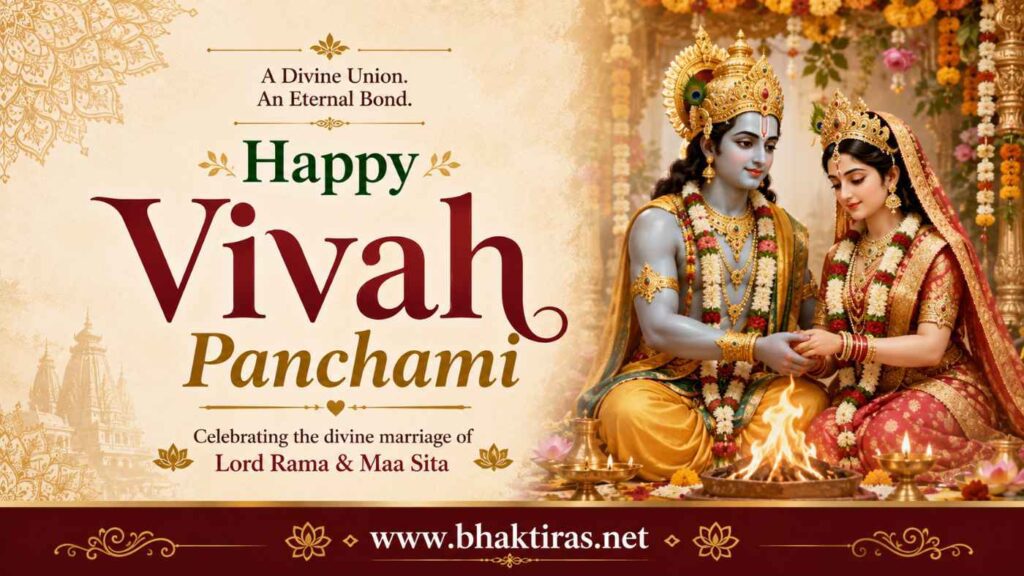
Vivah Panchami is the day Hindus remember the marriage of Lord Rama and Goddess Sita. It falls on the fifth day of the waxing moon in Margashirsha, usually late November or December, and in 2026 lands on 14 December. According to the Ramayana, this is when Rama lifted and strung Shiva’s mighty bow, the Pinaka, at King Janaka’s court in Mithila and so won Sita’s hand. Temples across Mithila, Ayodhya and much of India re-stage the wedding with garlands, kirtan and a full bridal procession.
Vivah Panchami 2026-2028: Dates & Calendar
The next Vivah Panchami is on Monday, 14 December 2026. Because it follows the Hindu lunar calendar, the date shifts each year against the Gregorian one, sitting on Margashirsha Shukla Panchami.
| Year | Date | Day | Notes |
|---|---|---|---|
| 2026 | 14 December | Monday | Next occurrence |
| 2027 | 3 December | Friday | Margashirsha Shukla Panchami |
| 2028 | 21 November | Tuesday | Falls earlier this year |
The wedding rites are timed to the Panchami tithi rather than a fixed clock hour, so most temples hold the main Vivah ceremony in the evening, when the traditional marriage muhurat is kept.
Why Vivah Panchami Is Celebrated
Vivah Panchami is celebrated as the wedding anniversary of Rama and Sita, the day their marriage was fixed after Rama broke Shiva’s bow at Janaka’s swayamvara.
The breaking of Shiva's bow
King Janaka had vowed that Sita would marry only the one who could lift and string the enormous bow of Shiva, the Pinaka. Kings from many lands tried and failed. When the young Rama raised it with ease and it snapped in his hands, the hall knew Sita had found her match. Vivah Panchami keeps this moment alive.
A model of dharma in marriage
For devotees, the union of Rama and Sita is the ideal of a marriage bound by duty, devotion and mutual respect. Reciting their wedding story is felt to bless a household with harmony, which is why many couples read the Ram-Sita Vivah passages of the Ramayana on this day.
The heart of Mithila's identity
For the Maithili people of Janakpur and north Bihar, Sita is a daughter of the soil and Vivah Panchami is a homecoming, not a distant legend. The city fills with pilgrims, folk songs and the affection reserved for a family wedding.
Deities & Figures Worshipped
Vivah Panchami centres on Lord Rama and Goddess Sita, worshipped together as the divine bride and groom, along with the family and sages of the Ramayana wedding.
Lord Rama
The seventh avatar of Vishnu and prince of Ayodhya. On this day he is honoured as the bridegroom (var), dressed and garlanded for his marriage to Sita.
Goddess Sita
Daughter of King Janaka and an incarnation of Lakshmi. Found in a furrow of the earth while ploughing, she is worshipped as the bride and, in Mithila, as a beloved daughter of the region.
King Janaka & Rishi Vishwamitra
Janaka, the wise ruler of Mithila who set the bow test, and the sage Vishwamitra, who brought Rama and Lakshmana to the court, are remembered in the retelling of the swayamvara.
Key Rituals, Step by Step
The day is built around a re-enactment of the wedding itself, staged in temples and homes much like a real Hindu marriage.
- Morning cleaning and setup. Devotees bathe early, clean the shrine and decorate an altar with images or idols of Rama and Sita, marigold garlands and a small mandap.
- Ramayana recital. Families and temples read or chant the Balkand passages of the Ramayana that describe the swayamvara and the breaking of Shiva’s bow.
- Dressing the deities. The idols of Rama and Sita are bathed, dressed in wedding finery and adorned as bride and groom.
- The barat (wedding procession). In Janakpur and Ayodhya a grand procession carries Rama’s image through the streets to Sita’s side, with music, elephants or chariots and singing crowds.
- The Vivah ceremony. Priests perform the marriage rites, tying the symbolic knot and exchanging garlands between Rama and Sita as devotees look on.
- Kirtan and bhajan. Sita-Ram kirtan and Maithili wedding songs fill the evening, celebrating the union.
- Aarti and prasad. The day closes with aarti of the newly wed pair and the sharing of sweets and prasad among the gathering.
Special Foods of Vivah Panchami
Because it is treated as a wedding, the food carries the flavour of a Mithila marriage feast, with sweets offered first to the deities.
Kheer
Rice pudding simmered with milk, sugar and cardamom, a common bhog for Rama and Sita and a staple of any auspicious day.
Thekua & khaja
Crisp wheat-and-jaggery thekua and layered khaja are classic Maithili sweets prepared and offered during the festivities in Janakpur and north Bihar.
Puri and sabzi
A simple festive plate of puris with potato or seasonal vegetable is shared after the wedding rituals in many homes.
Laddu and pedha
Boondi laddus and milk pedhas are distributed as prasad, in keeping with the joy of a wedding celebration.
Regional Names & Variations
The festival is kept across northern and central India and in Nepal, with the flavour changing from place to place.
Janakpur, Nepal
The grandest celebration of all. As Sita’s birthplace, Janakpur hosts a week of festivities around the Janaki Mandir, with a full re-enactment of the wedding, a huge barat and pilgrims from India and Nepal.
Ayodhya
Rama’s own city marks the day with processions and temple ceremonies, welcoming Sita as a new daughter-in-law of Ayodhya in ritual form.
Mithila (north Bihar)
Across the old kingdom of Mithila the day is close to a regional festival, with Maithili wedding songs, decorated shrines and community gatherings.
Central & western India
In many Ram temples across the country, especially where the Ramcharitmanas is loved, devotees hold readings and a smaller symbolic vivah on this Panchami.
Vivah Panchami Do's and Don'ts
A few simple customs guide how the day is observed.
Do
- Read or listen to the Ram-Sita wedding story from the Ramayana or Ramcharitmanas.
- Decorate a clean shrine with images of Rama and Sita as bride and groom.
- Chant Sita-Ram or the Balkand verses and sing bhajans through the day.
- Offer kheer, sweets and fruit, then share the prasad with others.
- Perform the evening aarti of the divine couple with a sincere heart.
Avoid
- Do not treat it casually. Keep the tone of a joyful, respectful wedding.
- Traditionally, some families avoid holding their own weddings on this day, as Rama and Sita’s married life held great trials.
- Avoid tamasic food such as meat, onion and garlic if you are observing the day devotionally.
- Do not let the retelling stray into unverified or altered versions of the story.
- Avoid quarrels and harsh speech within the household on this auspicious day.
Frequently Asked Questions
When is Vivah Panchami in 2026?
Vivah Panchami is on Monday, 14 December 2026. It falls on Margashirsha Shukla Panchami, the fifth day of the waxing moon in the month of Margashirsha, and marks the wedding anniversary of Rama and Sita.
When is Vivah Panchami in 2027 and 2028?
Vivah Panchami will be on Friday, 3 December 2027 and on Tuesday, 21 November 2028. The date moves each year because it follows the Hindu lunar calendar rather than the fixed Gregorian one.
Why is Vivah Panchami celebrated?
Vivah Panchami is celebrated as the day Lord Rama and Goddess Sita were married. It commemorates the moment Rama lifted and broke Shiva’s bow at King Janaka’s court in Mithila and so won Sita’s hand in the swayamvara.
Which god is worshipped on Vivah Panchami?
Lord Rama and Goddess Sita are worshipped together on Vivah Panchami, honoured as the divine bridegroom and bride. Rama is an avatar of Vishnu and Sita is regarded as an incarnation of Lakshmi.
Where is Vivah Panchami celebrated most grandly?
The grandest celebrations of Vivah Panchami are at Janakpur in Nepal, Sita’s birthplace, and in Ayodhya, Rama’s city. Both hold full re-enactments of the wedding with processions, kirtan and Ramayana recitals.
Why do some people avoid weddings on Vivah Panchami?
Some families avoid holding their own weddings on Vivah Panchami because, although Rama and Sita were the ideal couple, their married life was marked by exile and long separation. Out of caution they choose other dates for personal marriages while still honouring the divine wedding.
What is done during Vivah Panchami?
During Vivah Panchami, devotees decorate a shrine with images of Rama and Sita, recite the wedding story from the Ramayana, and stage a symbolic marriage of the two deities. Temples in Mithila and Ayodhya hold a bridal procession, priestly rites, kirtan and evening aarti.
What is the connection between Vivah Panchami and Mithila?
Vivah Panchami is deeply tied to Mithila because Sita was the daughter of King Janaka, who ruled the region from Janakpur. The bow test and the wedding took place at his court, so Mithila celebrates the day as the marriage of its own daughter.
May the blessing of Sita and Rama bring love and steadiness to every home this Vivah Panchami. Sita-Ram.