
Lord Kubera
कुबेर
Kubera is the Hindu god of wealth and the treasurer of the devas. As king of the Yakshas and guardian of the north, he keeps the nine sacred treasures called Nidhis. Families honour him alongside Lakshmi on Dhanteras and Diwali, praying for steady prosperity and protection of what they have earned.
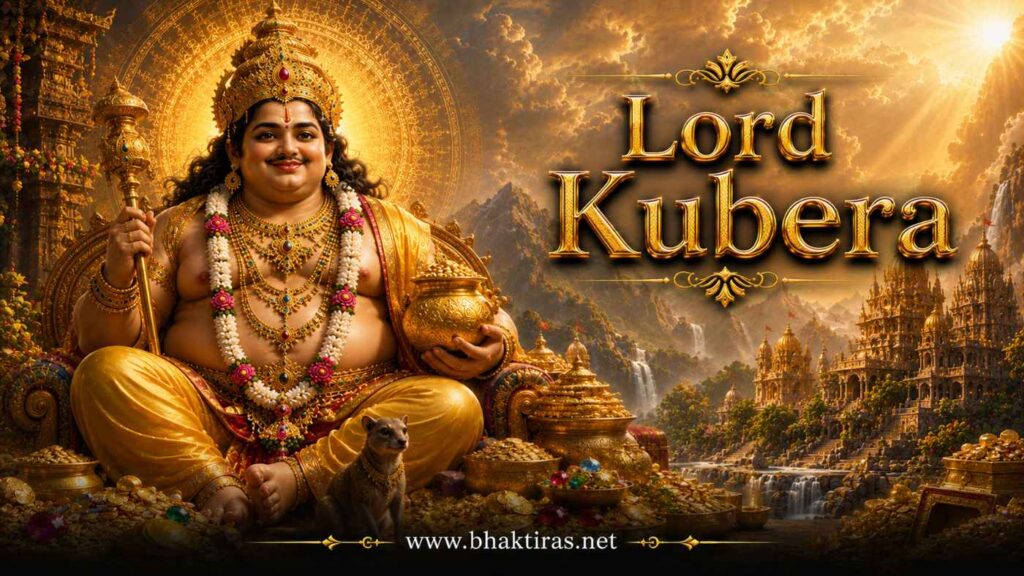
Who Is Lord Kubera?
Kubera is the god who looks after wealth. Not the wealth that flows and grows – that belongs to Lakshmi – but the wealth that is stored, counted, and kept safe. He is the treasurer of the devas, the divine accountant who guards the riches of heaven and hands them out when the gods have need.Iconography and Symbols
Every object Kubera holds points back to the same idea – wealth held, protected, and quietly multiplying.The Plump Body
The Money Pot
The Mace (Gada)
The Mongoose
Jewels and Gold
One Eye and Three Legs
Treasurer of the Gods and the Nine Nidhis
Kubera’s great charge is the wealth of the heavens.Guardian of the North and Alakapuri
Kubera does not only mind the treasury; he holds a direction of the compass.Kubera and Ravana – The Brothers of Lanka
One of the most human threads in Kubera’s story is his tangle with a very famous half-brother.Kubera and Lakshmi – Keeper vs Giver of Wealth
People often blur the two great wealth deities, but their roles are quite distinct.How Lord Kubera Is Worshipped
Kubera worship is deeply practical, woven into the rhythms of home and trade.- Dhanteras and Diwali Puja – The main day is Dhanteras, two days before Diwali, when Kubera is worshipped beside Lakshmi. Coins, gold, and new utensils are cleaned and offered, and the year’s account books are blessed for good fortune ahead.
- The Kubera Yantra – Many homes and shops keep a Kubera yantra, a geometric copper or silver plate charged with his energy. Placed in the north or in a locker, it is treated as a magnet for wealth and a guard over savings.
- North-Facing Cash and Lockers – Following his rule over the north, people position their safe, cash box, or locker so that it opens toward the north. The idea is to align stored money with the direction the wealth-lord protects.
- Chanting the Mantra – Daily repetition of the Kubera mantra, especially on Fridays and during Diwali, is the simplest form of devotion. Merchants often begin the working day with it before opening the shop.
Temples and Sacred Sites
Kubera rarely gets a grand standalone temple; more often he stands as a guardian at the edges of others – yet several places honour him directly.- Alakapuri Shrines and Kailash Links – His mythic home on Mount Kailash keeps him tied to the northern Himalaya, and pilgrims to Shiva’s abode remember Kubera as the wealthy devotee who lives nearby.
- Kubera Bhagawan Temple, near Kailash traditions – In several hill and temple towns small Kubera shrines sit in the north corner of a larger complex, marking him as the directional guardian who watches over the sanctuary’s fortune.
- Temple Doorways and Directional Niches – Across India, Kubera is carved into the northern wall or gateway of countless temples as a Dikpala, so that even without a dedicated shrine, worshippers pass his image and salute the wealth-lord on their way in.
Prayers and Mantras
The most widely chanted Kubera mantra calls on him as Vitteshwara, the lord of wealth. Repeated with a clean mind and a grateful heart, it is used to ask for prosperity, stability, and the wisdom to handle money well.Frequently Asked Questions about Lord Kubera
Who is Lord Kubera?
Kubera is the Hindu lord of wealth and the treasurer of the gods. King of the Yakshas and guardian of the north, he keeps the nine sacred treasures (Nidhis) and grants prosperity to his devotees. He is shown plump and richly adorned, holding a money pot, often with a mongoose that spits jewels.
What is the difference between Kubera and Lakshmi?
Lakshmi is the goddess of wealth itself, the living flow of fortune and abundance. Kubera is its keeper and treasurer, the custodian who stores and guards riches. This is why they are worshipped together on Dhanteras and Diwali, one inviting wealth to arrive and the other helping it stay.
How do you worship Kubera for wealth?
Kubera is worshipped on Dhanteras and Diwali alongside Lakshmi. Devotees place his image or the Kubera yantra in the north of the home or workplace, light a lamp, offer yellow or red flowers and sweets, and chant his mantra. Keeping the cash box or safe in the north is a common practice.
Is Kubera related to Ravana?
Yes. Both are sons of the sage Vishrava. Kubera was the original ruler of Lanka and owner of the flying Pushpaka vimana, until his half-brother Ravana seized both by force. Despite this, Kubera remained a righteous deva and a great devotee of Lord Shiva.
Why is Kubera shown with a mongoose?
In many images Kubera holds a mongoose that spews gems and coins from its mouth. The mongoose is a traditional enemy of snakes, which guard hidden treasure, so it symbolises wealth released and made freely available. It marks Kubera as the giver and keeper of endless riches.
Where does Lord Kubera live?
Kubera rules the city of Alakapuri, set high in the Himalayas on Mount Kailash, near the abode of his beloved Lord Shiva. His kingdom is described as a place of gardens, jewels and endless abundance, from which he oversees the wealth of the three worlds as their appointed treasurer.
Whether you keep a small yantra by the cash box or simply chant his name on Diwali morning, Kubera asks only that you treat your wealth with care – and he will help you hold on to it.