
Bhagavata Mela 2027 – Melattur's Sacred Dance-Drama
भागवत मेला
When is Bhagavata Mela in 2027?
Bhagavata Mela at Melattur is expected around 18 May 2027, tied to Narasimha Jayanti on Vaishakha Shukla Chaturdashi. It is a nearly 500-year-old dance-drama tradition in which the men of Melattur village in Tamil Nadu enact stories from the Bhagavata Purana as a temple offering to Lord Narasimha. Exact festival dates are announced locally each year and can span several days around the Jayanti.
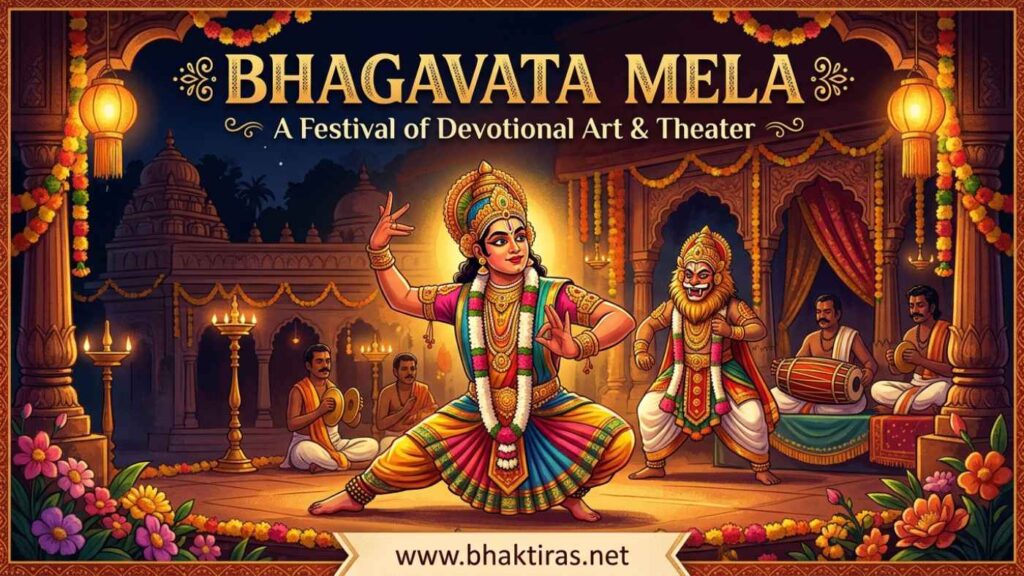
Bhagavata Mela is one of India’s oldest surviving theatre traditions, kept alive for close to five centuries in the village of Melattur near Thanjavur in Tamil Nadu. Every year around Narasimha Jayanti, the men of the village stage all-night dance-dramas drawn from the Bhagavata Purana in the precinct of the Varadaraja Perumal temple. Sung in Telugu and performed as an act of worship rather than entertainment, the plays honour Lord Vishnu, above all in his fierce Narasimha form.
Bhagavata Mela 2026-2028: Dates & Calendar
Bhagavata Mela is held around Narasimha Jayanti, which falls on Vaishakha Shukla Chaturdashi and shifts each year with the Hindu lunar calendar. The next observance is expected around 18 May 2027.
| Year | Narasimha Jayanti | Day | Notes |
|---|---|---|---|
| 2026 | 1 May 2026 | Friday | Already observed this year |
| 2027 | 18 May 2027 | Tuesday | Next occurrence (approximate) |
| 2028 | 7 May 2028 | Sunday | Approximate, tied to the Jayanti |
The mela is traditionally spread across several evenings and nights leading up to and following the Jayanti, with a different play performed each night and Prahlada Charitram reserved as the climax on the main day.
Why Bhagavata Mela Is Celebrated
Bhagavata Mela is celebrated as a living form of worship: the performers offer their art to Lord Narasimha, retelling the Bhagavata Purana so that devotion is shared with the whole village.
A vow kept for five centuries
The tradition traces to the 16th century, when families of Bhagavata dancers and musicians are said to have migrated from the Vijayanagara region and settled in villages granted by Thanjavur’s rulers. Melattur has sustained the practice with fewer breaks than most, making it the best-known surviving centre.
Worship, not spectacle
The plays are treated as a ritual offering. Performers observe discipline and purity, the stage sits within the temple precinct, and the enactment of Narasimha’s appearance is regarded as a sacred moment rather than a theatrical effect.
The story of Prahlada
The most revered play, Prahlada Charitram, tells of the boy-devotee Prahlada whose faith in Vishnu survives every torment from his father Hiranyakashipu, until the Lord bursts from a pillar as the man-lion Narasimha. It is the heart of the Melattur mela.
Deities & Figures Worshipped
The mela centres on Lord Vishnu, worshipped especially in his Narasimha (man-lion) avatar, with the child saint Prahlada as the beloved devotee at the story’s core.
Vishnu as Narasimha
Narasimha is the fourth avatar of Vishnu, half-man and half-lion, who appears to destroy the demon-king Hiranyakashipu and protect his devotee. His appearance is the dramatic climax of Prahlada Charitram and the reason the mela is timed to Narasimha Jayanti.
Prahlada
Prahlada is the young son of Hiranyakashipu whose unshakeable devotion to Vishnu drives the central play. His steadfast faith in the face of persecution is held up as the ideal of pure surrender.
Varadaraja Perumal
The plays are staged in the precinct of Melattur’s Varadaraja Perumal (Unnayi) temple, a form of Vishnu, linking the performance directly to temple worship rather than a secular stage.
Key Rituals, Step by Step
The mela follows a fixed devotional order, from temple worship to the masked entrance of Narasimha on the climactic night.
- Temple worship first. The days open with prayers at the Varadaraja Perumal temple, dedicating the performances to the deity before any play begins.
- All-male cast prepares. By long custom the performers are men of Melattur, who take on every role, including the female characters, after ritual preparation and discipline.
- Todaya Mangalam and invocation. Proceedings begin with traditional invocatory songs and a Ganesha entrance, seeking blessings before the main narrative unfolds.
- Nightly plays from the Purana. Over successive evenings the troupe stages different episodes from the Bhagavata Purana, sung in Telugu to Carnatic music with mridangam and harmonium.
- Prahlada Charitram as the climax. On the main night the beloved Prahlada Charitram is performed, building through Hiranyakashipu’s tyranny to the moment of Narasimha’s appearance.
- The sacred Narasimha mask. The performer of Narasimha wears a consecrated mask; its wearing is treated with reverence, and the appearance is felt as a real presence rather than a costume.
- Shanti and closing offerings. The plays close with pacifying rites and prayers, returning the fierce energy of Narasimha to calm and offering the whole effort back to the deity.
Where It's Performed
Though Melattur is the most famous centre, the Bhagavata Mela tradition survives in a small cluster of Thanjavur-district villages settled by the same migrant families.
Melattur
The best-known home of the tradition, where the mela is staged in the Varadaraja Perumal temple precinct around Narasimha Jayanti. Melattur’s continuity has made its festival a draw for scholars, artists and pilgrims.
Saliyamangalam and Tepperumanallur
Other Thanjavur-district villages linked to the same lineage of Bhagavata performers have kept versions of the tradition alive, though on a smaller scale than Melattur.
Andhra roots
The mela is culturally close to the Kuchipudi dance-drama tradition of Andhra Pradesh, reflecting the shared Telugu-language, Bhagavata Purana heritage of the families who carried it south.
Bhagavata Mela Do's and Don'ts
A few simple points help visitors treat the mela as the act of worship it is meant to be.
Do
- Confirm the exact dates with the temple or village committee before travelling.
- Arrive early, as the main plays run late into the night.
- Watch respectfully and keep quiet during the sacred Narasimha appearance.
- Dress modestly, as you would for a temple visit.
- Learn a little of the Prahlada story beforehand to follow the Telugu songs.
Avoid
- Do not treat the performance as ordinary entertainment or applaud disruptively.
- Avoid flash photography or filming where the organisers ask you not to.
- Do not enter restricted temple areas without permission.
- Do not expect a woman on stage; by tradition all roles are played by men.
- Do not assume fixed dates, as they move each year with the lunar calendar.
Frequently Asked Questions
When is Bhagavata Mela in 2027?
Bhagavata Mela at Melattur is expected around 18 May 2027, tied to Narasimha Jayanti on Vaishakha Shukla Chaturdashi. The festival usually runs across several days near the Jayanti, and the village committee announces the exact schedule locally each year.
When is Bhagavata Mela in 2026 and 2028?
Narasimha Jayanti, around which the mela is held, fell on 1 May 2026 (already observed) and is expected on 7 May 2028. Because the date follows the Hindu lunar calendar, it shifts each year within the month of Vaishakha, usually in May.
Why is Bhagavata Mela celebrated?
Bhagavata Mela is celebrated as an act of devotion to Lord Vishnu, especially in his Narasimha form. For nearly 500 years the men of Melattur have staged Bhagavata Purana plays as a temple offering around Narasimha Jayanti, treating the performance as worship rather than entertainment.
Which god is worshipped at Bhagavata Mela?
Bhagavata Mela honours Lord Vishnu, worshipped above all in his Narasimha (man-lion) avatar. The central play, Prahlada Charitram, builds to Narasimha’s appearance to protect the boy-devotee Prahlada, which is why the festival is timed to Narasimha Jayanti.
Where is Bhagavata Mela performed?
Bhagavata Mela is most famously performed at Melattur, a village in Thanjavur district, Tamil Nadu, within the precinct of the Varadaraja Perumal temple. A few nearby villages settled by the same families of Bhagavata performers also keep the tradition alive on a smaller scale.
What is Prahlada Charitram?
Prahlada Charitram is the most revered play of the Bhagavata Mela, telling the story of Prahlada, the boy-devotee whose faith in Vishnu survives his father Hiranyakashipu’s cruelty. It climaxes with Vishnu bursting from a pillar as Narasimha to destroy the demon-king and protect his devotee.
How old is the Bhagavata Mela tradition?
The Bhagavata Mela tradition is about 500 years old, tracing to the 16th century when families of Bhagavata dancers and musicians settled in Thanjavur-district villages. Melattur has sustained it with unusual continuity, making it one of India’s oldest surviving forms of theatre.
What language is Bhagavata Mela performed in?
Bhagavata Mela is sung in Telugu, the language of the migrant families who carried the tradition to Tamil Nadu, and set to Carnatic music. The plays are drawn from the Bhagavata Purana and staged as a sacred offering within the temple precinct.
May the appearance of Narasimha guard every devotee who gathers at Melattur – Om Namo Narayanaya.