
Ardh Kumbh Mela – the Half Kumbh at Prayagraj and Haridwar
अर्ध कुम्भ मेला
What is the Ardh Kumbh Mela and when is the next one?
The Ardh Kumbh Mela is the “half Kumbh”, held roughly every six years midway between two full (Purna) Kumbh Melas at Prayagraj and Haridwar. Pilgrims gather for a holy dip at the sacred river confluence, joined by the akhara processions and naga sadhus. With the last Haridwar Purna Kumbh in 2021, the next Haridwar Ardh Kumbh is expected around 2027; a Prayagraj Ardh Kumbh follows around 2031. Exact dates are fixed later by the Hindu astronomical calendar.
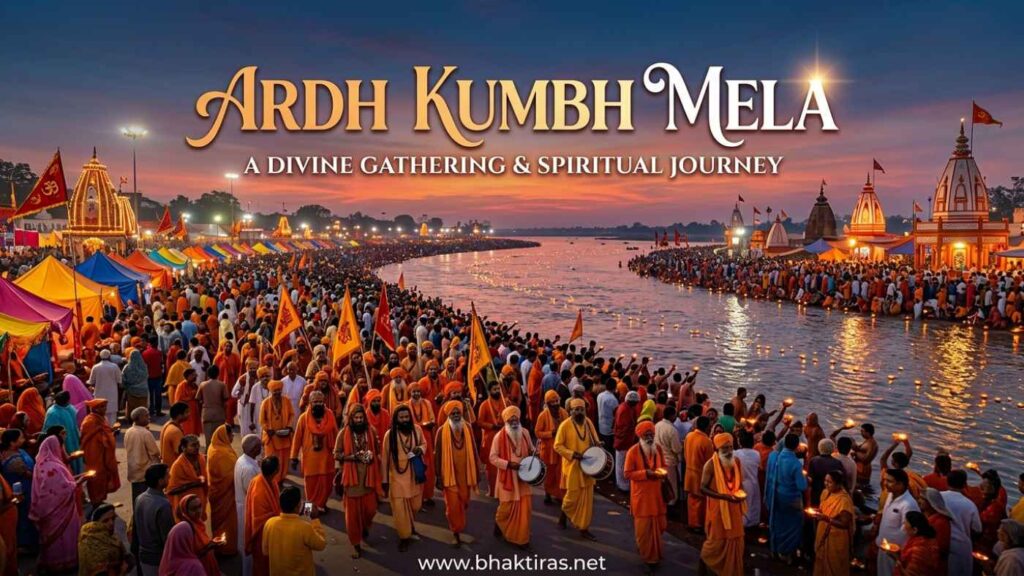
The Ardh Kumbh Mela, literally the “half Kumbh”, falls roughly midway between two full Purna Kumbh gatherings at the same site, so it recurs at Prayagraj and Haridwar about once every six years. It follows the same rhythm as the great Kumbh: a bathing pilgrimage centred on the holy dip at a sacred river confluence, the ordered Shahi Snan processions of the monastic akharas, ash-smeared naga sadhus, and a temporary tented city that houses millions for a few weeks. The scale is smaller than the twelve-yearly Purna Kumbh, yet it still draws tens of millions of pilgrims.
Ardh Kumbh Mela: Recent and Next Events
The Ardh Kumbh does not run every year, so there is no annual date to memorise. It appears at each host city about six years after that city’s last full Kumbh, and the precise window is announced closer to the event.
| Site | Event | Year | Notes |
|---|---|---|---|
| Haridwar | Ardh Kumbh | 2016 | Half Kumbh on the Ganga at Har Ki Pauri |
| Prayagraj | Ardh Kumbh | 2019 | Held 15 January – 4 March; promoted by authorities as “Kumbh” |
| Haridwar | Purna Kumbh | 2021 | Full Kumbh, held during the COVID-19 pandemic |
| Prayagraj | Maha Kumbh | 2025 | Full Kumbh at the Sangam, 13 January – 26 February |
| Haridwar | Ardh Kumbh | ~2027 | Next expected Ardh Kumbh (dates to be announced) |
| Prayagraj | Ardh Kumbh | ~2031 | Following Ardh Kumbh at the Sangam |
A note on naming: authorities have at times rebranded the Prayagraj Ardh Kumbh under a grander title – the 2019 event, for example, was officially promoted as “Kumbh” rather than “Ardh Kumbh”, which is why the year you see advertised may not match the traditional label.
Why the Ardh Kumbh Mela Is Held
The Ardh Kumbh is held so pilgrims need not wait a full twelve years for a major sacred bathing occasion; it marks the halfway point of the Kumbh cycle at Prayagraj and Haridwar.
The half-cycle logic
The great Purna Kumbh returns to each host city roughly every twelve years, governed by the movement of Jupiter through the zodiac. The Ardh Kumbh sits at the midpoint of that span, offering a second large gathering about six years in between so the merit of a Kumbh dip is more often within reach.
The holy dip (snan)
The heart of the mela is the ritual bath at a sacred river point – the Triveni Sangam at Prayagraj where the Ganga, Yamuna and the unseen Sarasvati are said to meet, and Har Ki Pauri on the Ganga at Haridwar. Pilgrims believe bathing on the auspicious days cleanses accumulated karma.
Nectar of the churning
The wider Kumbh tradition recalls the churning of the cosmic ocean, when drops of the nectar of immortality (amrit) are said to have fallen at four sites. The bathing days are timed to the planetary positions linked with that legend, which the Ardh Kumbh shares with the full Kumbh.
Key Rituals, Step by Step
The Ardh Kumbh follows the same ritual pattern as the Purna Kumbh, built around the akhara processions and the timed bathing days.
- Tented city rises. A vast temporary settlement is laid out on the riverbanks and floodplains, with camps, roads, pontoon bridges and sanitation put up weeks in advance to host millions.
- Akharas arrive. The monastic orders (akharas) enter in formal processions and take their allotted camping grounds, establishing the order in which each group will bathe.
- Shahi Snan (royal bath). On the most auspicious days the akharas lead the bathing in a fixed sequence, the naga sadhus often first, moving to the water in ceremonial procession.
- Pilgrim dip. Millions of ordinary pilgrims take their own dip on the main bathing dates, offering prayers to the river and the rising sun.
- Darshan and discourse. Between baths, pilgrims visit the camps of gurus and akharas for teachings, kirtan and blessings.
- Charity and rites. Many perform shraddha for ancestors, give alms (daan) and receive tilak from priests along the ghats.
- Departure. After the final main bathing day the crowds disperse and the tented city is gradually taken down.
Where It Is Held
The Ardh Kumbh is celebrated at only two of the four Kumbh sites; the other two host the full Kumbh but not the half.
Prayagraj (Uttar Pradesh)
Held at the Triveni Sangam, the confluence of the Ganga, Yamuna and the mythical Sarasvati. The Prayagraj Ardh Kumbh is the larger of the two and typically runs from mid-January into early March, overlapping the annual Magh Mela season.
Haridwar (Uttarakhand)
Held on the Ganga as it leaves the Himalayan foothills, with the main bathing at Har Ki Pauri ghat. The Haridwar Ardh Kumbh usually centres on the spring months when the Sun and Jupiter reach the required positions.
Not at Nashik or Ujjain
Nashik (on the Godavari) and Ujjain (on the Shipra) host their own full Kumbh, known as the Simhastha, but by tradition they do not observe a separate Ardh Kumbh – the half Kumbh belongs to Prayagraj and Haridwar.
Ardh Kumbh Mela Do's and Don'ts
A little planning keeps a Kumbh visit safe and rewarding in the enormous crowds.
Do
- Check the official bathing-day calendar once dates are announced and plan around the Shahi Snan days.
- Agree a family meeting point and keep children within sight in the crowds.
- Carry ID, some cash, water and any regular medicines.
- Respect the akhara processions and follow the marshals’ instructions at the ghats.
- Dress modestly and carry a change of clothes for after the dip.
Avoid
- Do not enter the water beyond marked safe zones or ignore lifeguard barriers.
- Do not carry large valuables into the dense bathing crowds.
- Do not litter or pour non-biodegradable offerings into the river.
- Do not attempt to overtake or cut across an akhara procession.
- Do not rely on last-minute lodging on the peak bathing days – book well ahead.
Frequently Asked Questions
What is the Ardh Kumbh Mela?
The Ardh Kumbh Mela is the “half Kumbh”, a large Hindu bathing pilgrimage held roughly every six years at the midpoint between two full Kumbh Melas. It takes place at Prayagraj and Haridwar and centres on a holy dip at the sacred river, along with the akhara processions and naga sadhus of the wider Kumbh tradition.
When is the next Ardh Kumbh Mela?
The next Ardh Kumbh Mela is expected at Haridwar around 2027, six years after the 2021 Haridwar Purna Kumbh, followed by a Prayagraj Ardh Kumbh around 2031 after the 2025 Maha Kumbh. Exact dates are fixed later using the Hindu astronomical calendar, so treat these years as approximate until officially announced.
How often is the Ardh Kumbh held?
The Ardh Kumbh is held about once every six years at each host city, marking the halfway point of the roughly twelve-year full Kumbh cycle. Because Prayagraj and Haridwar are on different cycles, an Ardh Kumbh occurs at one site or the other every few years rather than annually.
Where is the Ardh Kumbh Mela held?
The Ardh Kumbh Mela is held at only two sites: Prayagraj in Uttar Pradesh, at the Triveni Sangam of the Ganga, Yamuna and Sarasvati, and Haridwar in Uttarakhand, on the Ganga at Har Ki Pauri. Nashik and Ujjain host the full Kumbh but do not observe a separate Ardh Kumbh.
What is the difference between Ardh Kumbh and Purna Kumbh?
The Purna (full) Kumbh returns to a host city about every twelve years, while the Ardh (half) Kumbh falls at the midpoint, roughly every six years. Both share the same rituals – the holy dip, Shahi Snan and akhara processions – but the Ardh Kumbh is smaller in scale and duration than the full Kumbh.
Was the 2019 Prayagraj event an Ardh Kumbh?
Yes, the 2019 Prayagraj event was traditionally an Ardh Kumbh, held from 15 January to 4 March 2019, six years after the 2013 Purna Kumbh. Authorities officially promoted it as “Kumbh” rather than “Ardh Kumbh”, which is why the naming can be confusing.
What happens at the Ardh Kumbh Mela?
At the Ardh Kumbh Mela, pilgrims take a ritual dip in the sacred river on auspicious bathing days, while the monastic akharas lead the Shahi Snan (royal bath) in a fixed order. A temporary tented city hosts camps, teachings, kirtan and charity for the millions who attend over several weeks.
How many people attend the Ardh Kumbh?
The Ardh Kumbh draws tens of millions of pilgrims over its full run, with the largest crowds on the main Shahi Snan days. It is smaller than the twelve-yearly Purna Kumbh, which can gather many crore of people, but it is still one of the largest human gatherings in the world.
May the sacred rivers carry your prayers – Har Har Gange.