
Kumbh Mela – The World's Largest Human Gathering
कुम्भ मेला
When and where is the next Kumbh Mela?
The next Purna (full) Kumbh Mela is the Nashik-Trimbakeshwar Simhastha in 2027, held on the Godavari river in Maharashtra. Its main bathing period runs through July to September 2027, with the first major Shahi Snan around 2 August 2027. It follows the Prayagraj Maha Kumbh of 2025, the largest gathering in the festival’s cycle.
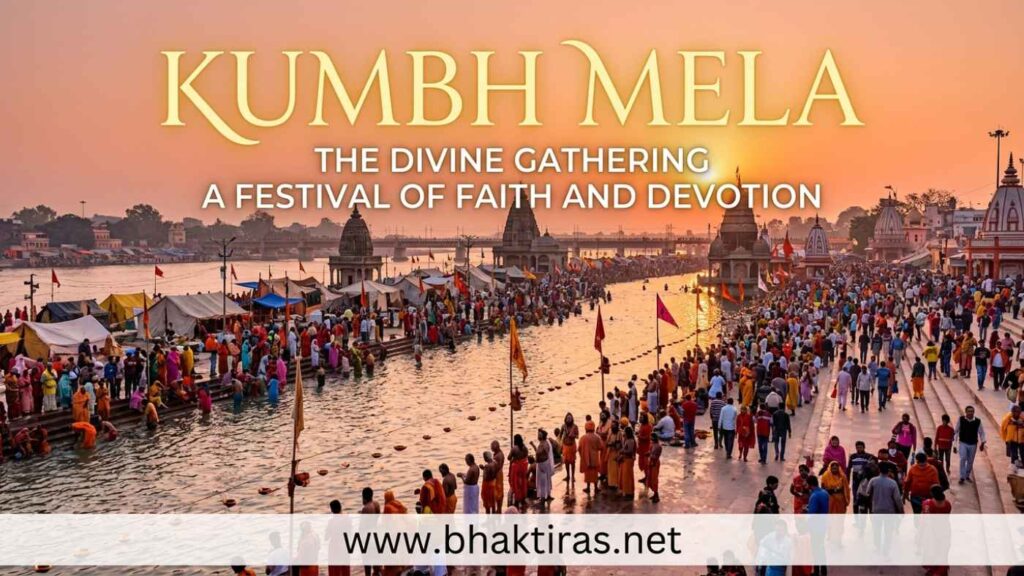
The Kumbh Mela is the largest peaceful gathering of humans on earth, a mass pilgrimage in which tens of millions bathe at a sacred river to wash away sins and move closer to moksha, or liberation. It has no single fixed home. Instead it rotates every three years or so between four holy sites – Prayagraj, Haridwar, Ujjain and Nashik – with the timing fixed by the positions of Jupiter, the Sun and the Moon rather than a set calendar date. UNESCO lists it as Intangible Cultural Heritage of Humanity.
Kumbh Mela Cycle: Recent & Next Dates by Site
The next Purna Kumbh is the Nashik-Trimbakeshwar Simhastha in 2027, with peak bathing between July and September. Because the mela is triggered by planetary positions, its exact dates shift each cycle and are announced closer to the event.
| Site | River | Type | Recent / Next Kumbh |
|---|---|---|---|
| Prayagraj | Ganga-Yamuna-Saraswati Sangam | Maha Kumbh | Held in 2025 (once in 144 years) |
| Nashik-Trimbakeshwar | Godavari | Simhastha Purna Kumbh | 2027 – next; peak Jul-Sep, main snan ~2 Aug 2027 |
| Ujjain | Shipra | Simhastha Purna Kumbh | 2028 (approx. Apr-May) |
| Haridwar | Ganga | Purna Kumbh | 2028 (approx.) |
Each of the four sites hosts a Purna (full) Kumbh once every 12 years, so a Kumbh falls somewhere in India roughly every three years. A half-cycle Ardh Kumbh comes six years after a full Kumbh at Prayagraj and Haridwar. The rarest of all is the Maha Kumbh at Prayagraj, said to occur once in 144 years (after 12 Purna Kumbhs), which was celebrated in 2025.
Why the Kumbh Mela Is Held
The Kumbh Mela is held because a dip in the sacred river during the planetary alignment is believed to cleanse sins and help the soul towards liberation. Its roots lie in the myth of the Samudra Manthan, the churning of the cosmic ocean.
The nectar of immortality
According to the Puranas, gods and demons churned the ocean to obtain amrit, the nectar of immortality. In the struggle that followed, drops of nectar are said to have fallen at four places on earth. Those four sites became the Kumbh Mela cities, and bathing there during the auspicious window is believed to carry the blessing of that nectar.
Washing away sin
Pilgrims come to bathe in the belief that the waters, sanctified by the planetary conjunction, dissolve the karma of past wrongdoing. The bath is treated as a purification of body and conscience, taken with prayer, fasting and charity rather than as a simple wash.
A step towards moksha
Beyond cleansing, the goal is spiritual: to loosen the cycle of birth and rebirth and draw nearer to moksha. For many devotees a single Kumbh bath, especially at a Purna or Maha Kumbh, is a once-in-a-lifetime act of faith.
A gathering of sages
The mela is also where India’s ascetic orders assemble in the open. The akharas and their naga sadhus, along with countless gurus and monks, camp along the riverbank, making it a rare public meeting of the country’s living spiritual traditions.
Sacred Rivers & Figures Honoured
The Kumbh Mela does not centre on a single temple deity. Its focus is the sacred river at each site, worshipped as a goddess, together with the ascetic orders and the myth of the churning of the ocean.
The river goddesses
Each host river is revered as a living goddess. Ganga at Haridwar and Prayagraj, the Godavari at Nashik and the Shipra at Ujjain are all worshipped as sacred mothers whose waters carry the power to purify.
The akharas & naga sadhus
The akharas are ancient monastic orders of Hindu ascetics. Their naked, ash-smeared naga sadhus lead the Shahi Snan processions and are among the most striking sights of the mela.
Vishnu, Shiva & the churning
The founding myth involves Vishnu and Shiva and the churning of the ocean by gods and demons. The mela commemorates the moment the pot (kumbh) of nectar was carried across the sky.
The Kumbh Mela, Step by Step
The heart of the mela is the ritual bath, but it unfolds through a sequence of ceremonies, processions and gatherings over many weeks.
- Flag hoisting (dhwajarohan). The mela is formally opened with the raising of ceremonial flags at the ghats and key temples, marking the start of the sacred period.
- Arrival of the akharas. The monastic orders march in and set up vast tented camps along the riverbank, establishing their allotted grounds in a fixed order of precedence.
- The Shahi Snan (royal bath). On the most auspicious days the naga sadhus and akharas process to the water and bathe first, in a grand parade with elephants, horses, chariots and music.
- The pilgrim bath. After the sadhus, millions of ordinary devotees enter the water to take their own dip, often before dawn, with offerings of flowers and lamps.
- Prayer and offerings. Bathers perform puja, offer water to the Sun, light diyas and give alms, treating the bath as an act of devotion rather than recreation.
- Discourses and darshan. Pilgrims visit the camps of gurus and saints for teachings, blessings and the chance to see revered ascetics rarely visible in public.
- Closing rites. After the final major bathing day, the flags are lowered and the akharas depart, formally ending the mela until the cycle brings it to the next site.
Food at the Kumbh Mela
Food at the mela is simple, vegetarian and often free, offered through community kitchens run by akharas, ashrams and charities so that no pilgrim goes hungry.
Bhandara (free community meals)
Huge free kitchens, or bhandaras, serve simple plates of dal, rice, roti and vegetables to anyone who arrives. Feeding pilgrims is treated as an act of merit, and these langar-style meals are central to the spirit of the gathering.
Sattvic vegetarian fare
Cooking follows a sattvic code: strictly vegetarian, often without onion or garlic. Khichdi, plain sabzi and rice dominate, in keeping with the fasting and self-discipline many pilgrims observe.
Prasad and sweets
Devotees share prasad blessed at the camps, along with simple sweets such as laddoo and jaggery-based treats given as offerings after prayer.
Street snacks at the fairground
Around the tent city, stalls sell familiar Indian fair food – jalebi, samosa, chai and puri – to the crowds who camp for days on end.
The Four Kumbh Sites
The mela takes a different character at each of its four host cities, shaped by the river, the local traditions and the scale of the crowd.
Prayagraj (Uttar Pradesh)
Held at the Triveni Sangam, where the Ganga, Yamuna and the mythical Saraswati meet, this is the grandest of the four. Its rarest form, the Maha Kumbh, comes once in 144 years and was celebrated in 2025, drawing crowds counted in the hundreds of millions.
Haridwar (Uttarakhand)
Set on the Ganga where the river leaves the Himalaya for the plains, the Haridwar Kumbh centres on the ghat of Har Ki Pauri. Its bathing days are timed to the Sun and Jupiter entering Aries.
Ujjain (Madhya Pradesh)
The Ujjain mela on the Shipra river is known as the Simhastha, held when Jupiter enters Leo (Simha). The city’s Mahakaleshwar Jyotirlinga adds to its draw as one of India’s holiest towns.
Nashik-Trimbakeshwar (Maharashtra)
The Godavari mela is split between Ramkund in Nashik and Kushavarta in nearby Trimbakeshwar, home of a Jyotirlinga and the river’s source. Like Ujjain it is a Simhastha, tied to Jupiter’s entry into Leo, and is the next Purna Kumbh in 2027.
Kumbh Mela Do's and Don'ts
The Kumbh is vast, crowded and physically demanding, so a little preparation keeps the experience safe and respectful.
Do
- Do bathe on the auspicious days with respect, keeping the ritual simple and mindful.
- Do plan travel and lodging well ahead, as the sites fill months in advance.
- Do note fixed meeting points and keep children close in the enormous crowds.
- Do carry ID, essential medicines, water and warm or light clothing to suit the season.
- Do follow the crowd-control routes and instructions from officials and volunteers.
Avoid
- Don’t wade into deep or fast water; stay within the marked bathing zones.
- Don’t carry large amounts of cash or valuables into the crush.
- Don’t intrude on the akhara camps or the sadhus without invitation.
- Don’t litter or pollute the river; use the bins and toilets provided.
- Don’t attempt to reach the ghats during the Shahi Snan processions unless permitted.
Frequently Asked Questions
When and where is the next Kumbh Mela?
The next Purna Kumbh Mela is the Nashik-Trimbakeshwar Simhastha in 2027, on the Godavari river in Maharashtra. Its main bathing period falls between July and September 2027, with the first major Shahi Snan around 2 August 2027. It follows the Prayagraj Maha Kumbh held in 2025.
How often is the Kumbh Mela held?
A Purna (full) Kumbh Mela is held at each of the four sites once every 12 years, so a Kumbh takes place somewhere in India roughly every three years as it rotates between Prayagraj, Haridwar, Ujjain and Nashik. The exact timing is set by the positions of Jupiter, the Sun and the Moon, not a fixed calendar date.
What is the difference between Kumbh, Ardh Kumbh and Maha Kumbh?
A Purna Kumbh is the full 12-year mela at any of the four sites. An Ardh Kumbh is the half-cycle mela held six years after a Purna Kumbh at Prayagraj and Haridwar. The Maha Kumbh is the rarest, held at Prayagraj once every 144 years, and was celebrated in 2025.
Why is the Kumbh Mela celebrated?
The Kumbh Mela is celebrated to bathe in a sacred river during a rare planetary alignment, an act believed to wash away sins and help the soul towards moksha. It commemorates the myth of the churning of the ocean, when drops of the nectar of immortality are said to have fallen at the four Kumbh sites.
What is the Shahi Snan?
The Shahi Snan, or royal bath, is the most sacred bathing day of the Kumbh Mela. On these days the naga sadhus and the ascetic akharas process to the river and bathe first, in a grand parade, before millions of pilgrims follow. The dates are fixed to the most auspicious planetary moments of the mela.
Which rivers host the Kumbh Mela?
The Kumbh Mela is held on four sacred rivers: the Ganga-Yamuna-Saraswati Sangam at Prayagraj, the Ganga at Haridwar, the Shipra at Ujjain and the Godavari at Nashik. Each river is worshipped as a goddess, and its waters are believed to be especially purifying during the mela.
When was the last Maha Kumbh Mela?
The last Maha Kumbh Mela was held at Prayagraj in 2025. Occurring only once in 144 years, it was the largest gathering in the festival’s cycle and drew crowds counted in the hundreds of millions to the Triveni Sangam.
Is the Kumbh Mela recognised by UNESCO?
Yes. The Kumbh Mela was inscribed on UNESCO’s Representative List of the Intangible Cultural Heritage of Humanity in 2017. It is recognised as the largest peaceful gathering of people anywhere in the world.
Whichever river calls you, may the waters of the Kumbh carry your prayers – Har Har Gange.