
Chaliya Jatra 2026 – Kumaon's Chholiya Sword Dance Fair
छलिया / छोलिया
What is Chaliya Jatra and when is it held?
Chaliya Jatra is a Kumaoni fair and folk tradition of the Pithoragarh region built around the Chholiya (Chhaliya) sword-and-shield dance. It has no single fixed all-India date; it is held at local temple jatras and during the wedding season, so the timing shifts by village and year. Confirm the exact days with local temple committees in Pithoragarh before you travel.
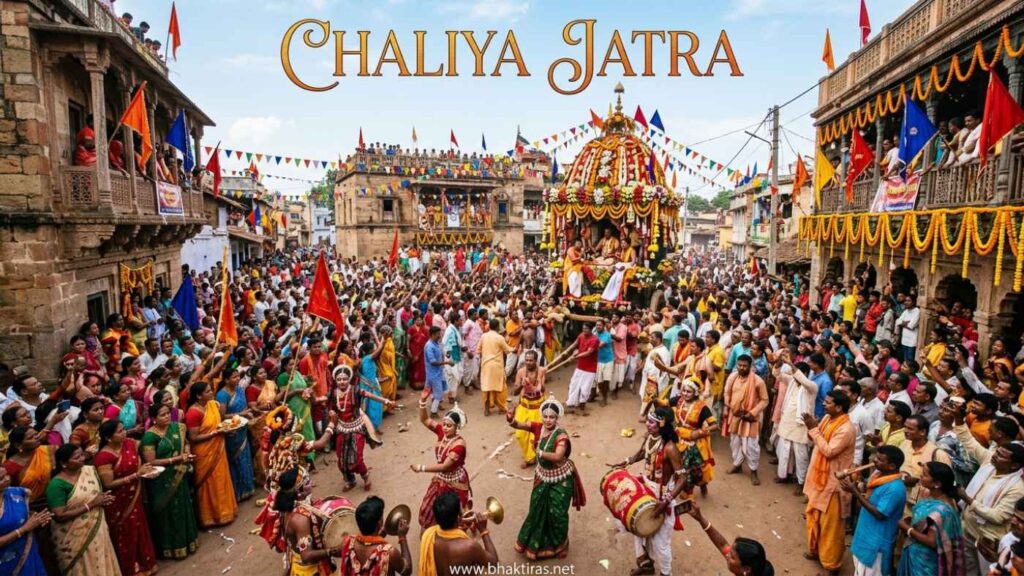
Chaliya Jatra is one of the living folk traditions of the Pithoragarh hills in Kumaon, Uttarakhand. At its heart is the Chholiya, or Chhaliya, dance: costumed swordsmen circle and spar with curved blades and painted shields to the pounding of the dhol and damau and the long call of the ranasingha horn. The gathering ties together temple worship of Shiva, Bhairav and local guardian deities, a village fair, and cultural performance. Unlike calendar festivals, it follows local jatras and the wedding season, so its dates move from place to place and year to year.
Chaliya Jatra: When It Happens
Chaliya Jatra does not fall on one fixed tithi. The Chholiya dance appears at local temple jatras through the year and, above all, during the Kumaoni wedding season, so timing is decided village by village.
| Occasion | Typical season | Notes |
|---|---|---|
| Temple jatras & fairs | Varies through the year | Held on the presiding deity’s fair day; set by each temple committee |
| Wedding-procession Chholiya | Auspicious wedding months (often the cooler season) | Danced ahead of the baraat; the most common setting for Chholiya |
| Cultural festivals | Varies | Staged at district and state cultural events and fairs |
Because dates shift by locality and year, treat any specific day you see online as provisional and check with organisers in Pithoragarh before planning a visit.
Why Chaliya Jatra Matters
The tradition keeps alive a martial folk art that Kumaoni communities have carried for centuries, wrapped inside temple worship and a village fair.
A martial art turned dance
The Chholiya grew out of the fighting traditions of Kumaon’s Rajput and Katyuri warriors, when marriages were once concluded at the point of the sword. Over generations the duel was stylised into a rhythmic dance of attack, feint and defence, so the movement still reads as a mock sword fight.
Protection from harm
Communities have long believed the Chholiya guards a wedding party from evil spirits and ill will. Dancing the blades ahead of the procession was meant to clear the path and shield the bride and groom, which is why it became a fixture of the baraat.
Devotion and the fair
At a jatra the dance sits alongside worship of Shiva, Bhairav and local guardian deities, plus a fair with stalls, food and music. It is as much a community gathering and act of devotion as a performance.
Kumaoni identity
For the Pithoragarh region the Chholiya is a marker of local identity, passed from older dancers to younger ones. Keeping the jatra going is one of the main ways the art form survives outside a stage setting.
Deities & Figures Honoured
Worship at a Chaliya Jatra centres on Shiva and his fierce guardian form Bhairav, alongside the local deities of each temple and village.
Shiva
As the great god of the Himalayas, Shiva is central to Kumaoni devotion, and many of the region’s temples and jatras are dedicated to him. His presence frames the fair as an act of worship, not only entertainment.
Bhairav
Bhairav, the fierce protective aspect linked to Shiva, is invoked as a guardian who wards off harm. His martial character sits naturally with the sword dance and its protective purpose.
Devi & local deities
Village guardian goddesses and local deities are honoured at their own temple jatras where the Chholiya is danced. The exact deity depends on which shrine is hosting the fair.
How the Chholiya Is Performed
A Chholiya troupe blends dancers and a loud percussion ensemble into a single moving spectacle.
- The troupe assembles. A full group is often around twenty or more people – a set of costumed sword dancers plus the musicians who drive them.
- Costume and blade. Dancers dress in bright, layered wedding-style costumes with turbans, and carry a curved sword in one hand and a painted shield in the other.
- The music begins. The dhol and damau drums set the beat, joined by the ranasingha horn and, in many troupes, the masakbeen bagpipe and hudka, building a driving rhythm.
- Worship first. At a temple jatra the dance opens with offerings and worship to the presiding deity before the dancers take the ground.
- The mock duel. Dancers pair off and circle, striking and parrying with sword against shield in stylised combat, advancing and retreating in time with the drums.
- Formations and spins. The group weaves through patterns and turns, the tempo rising and falling as leaders cue changes with the music.
- Leading the procession. In its wedding setting the troupe dances ahead of the baraat, clearing and blessing the path as it moves toward the venue.
- The fair carries on. Around the dance the jatra continues with stalls, food and community gathering until the event winds down.
Food at a Kumaoni Fair
A jatra doubles as a village fair, so the food is hearty Kumaoni hill cooking sold from stalls and shared at home.
Bhatt ki Churkani
A dark, savoury curry of black soybeans slow-cooked with spices, a staple of Kumaoni home cooking that often appears at gatherings.
Aloo ke Gutke
Boiled potatoes tossed with cumin, red chilli and local spices, usually served with crisp puris – a favourite fair and festival plate.
Bal Mithai & Singori
Kumaon’s best known sweets: bal mithai, a fudge-like brown sweet coated in white sugar balls, and singori, khoya wrapped in a green malu leaf.
Fair snacks & jalebi
Jatra stalls sell hot jalebi, pakoras and tea, the usual fair fare that draws families to linger through the day.
Where the Chholiya Is Danced
The Chholiya belongs to the Kumaon division and its neighbouring hill districts across the border.
Pithoragarh
A stronghold of the tradition, where the dance features at temple jatras and weddings across the district’s hill villages.
Almora, Bageshwar & Champawat
The other core Kumaon districts where the Chholiya is a familiar part of weddings and local fairs.
Kumaoni communities of Nepal
Related sword-dance traditions are found in the adjoining hill districts of far-western Nepal, reflecting the shared culture across the border.
Chaliya Jatra Do's and Don'ts
A few pointers for enjoying a jatra respectfully as a visitor.
Do
- Confirm the exact fair dates with local temple organisers before you travel.
- Ask before photographing dancers, musicians or families closely.
- Watch the sword dance from a safe distance, especially with children along.
- Try the local Kumaoni food from the fair stalls.
- Follow the temple’s customs for entry, footwear and offerings.
Avoid
- Do not treat any online date as fixed – it varies by village and year.
- Do not step into the dancing area or handle the swords and shields.
- Do not disturb the worship rituals that open the event.
- Do not litter the temple and fair grounds.
- Do not assume it runs on the same day everywhere in Kumaon.
Frequently Asked Questions
What is Chaliya Jatra?
Chaliya Jatra is a Kumaoni fair and folk tradition of the Pithoragarh region of Uttarakhand, centred on the Chholiya (Chhaliya) sword-and-shield dance. It combines temple worship of Shiva, Bhairav and local deities with a martial folk dance and a village fair.
When is Chaliya Jatra held?
Chaliya Jatra has no single fixed all-India date. The Chholiya dance appears at local temple jatras through the year and, most commonly, during the Kumaoni wedding season, so the timing is set locally and changes by village and year. Confirm the exact dates with temple committees in Pithoragarh.
What is the Chholiya dance?
The Chholiya is a Kumaoni martial folk dance in which costumed dancers perform a stylised mock sword fight, striking and parrying with curved swords and painted shields. It is danced to the beat of the dhol and damau drums and the call of the ranasingha horn, and grew out of the fighting traditions of Kumaon’s warrior clans.
Why is the Chholiya danced at weddings?
The Chholiya is danced at weddings because Kumaoni communities believe it protects the marriage party from evil spirits and ill will. The troupe leads the baraat, clearing and blessing the path, a custom that traces back to a time when marriages were once settled by the sword.
Which god is worshipped at Chaliya Jatra?
Worship at Chaliya Jatra centres on Shiva and his fierce guardian form Bhairav, along with the local guardian deities and goddesses of each host temple. The dance opens with offerings to the presiding deity, framing the fair as an act of devotion.
Where is the Chholiya dance popular?
The Chholiya is popular across the Kumaon division of Uttarakhand, especially the districts of Pithoragarh, Almora, Bageshwar and Champawat. Related sword-dance traditions are also found in the adjoining hill districts of far-western Nepal.
Is Chaliya Jatra the same everywhere in Kumaon?
No, Chaliya Jatra is not held on the same day everywhere in Kumaon. Each temple and village sets its own fair around its presiding deity, and Chholiya troupes also perform at weddings and cultural events, so both the dates and the exact form vary from place to place.
Can visitors attend Chaliya Jatra?
Yes, visitors can usually attend the public temple jatras and fairs where the Chholiya is danced. Confirm the dates and any customs with local organisers in advance, watch the sword dance from a safe distance, and ask before photographing performers or families.
If you make it to the Pithoragarh hills for a jatra, stand back, let the dhol carry you, and enjoy one of Kumaon’s oldest living arts.