
Sangken 2027 – The Buddhist New Year Water Festival
संगकेन
When is Sangken in 2027?
Sangken falls on 14-16 April 2027, running the same three dates every year because it follows the solar calendar. It is the New Year festival of the Theravada Buddhist communities of Arunachal Pradesh and eastern Assam, marked by bathing Buddha images and sprinkling clean water as a blessing.
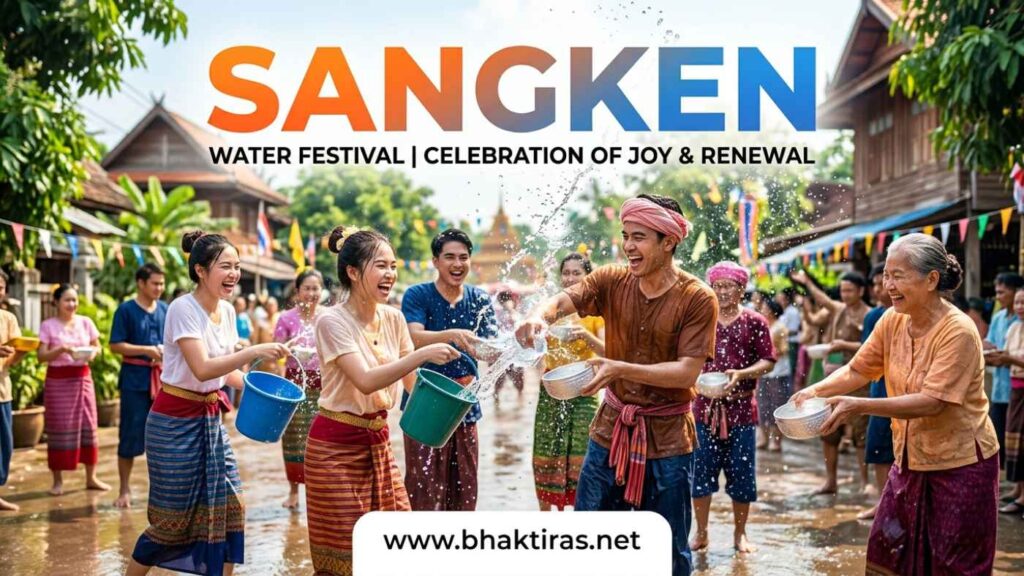
Sangken is the New Year festival of the Tai Khamti, Singpho, Tikhak, Khamyang and related Theravada Buddhist communities of Arunachal Pradesh and eastern Assam. Held over three days in mid-April, it belongs to the same solar New Year family as Songkran in Thailand and Thingyan in Myanmar. Images of the Buddha are moved to a decorated pavilion and bathed as an act of purification, after which people gently sprinkle and splash clean water on one another to wash away the old year and welcome good fortune.
Sangken 2026-2028: Dates & Calendar
Sangken next falls on 14-16 April 2027. The dates barely shift year to year because the festival marks the solar New Year rather than a lunar tithi.
| Year | Dates | Days | Notes |
|---|---|---|---|
| 2026 | 14-16 April | Tuesday-Thursday | Already observed this year |
| 2027 | 14-16 April | Wednesday-Friday | Next occurrence |
| 2028 | 14-16 April | Friday-Sunday | Falls over a weekend |
The first day opens with the ceremonial removal and bathing of the Buddha images; the middle day carries the main community water-sprinkling; the third day winds down with the return of the images and final merit-making.
Why Sangken Is Celebrated
Sangken is celebrated as the Theravada Buddhist New Year, a time to cleanse the body and mind, earn merit and begin the year with goodwill. Water is the central symbol of that renewal.
A fresh start
The turn of the solar year is treated as a chance to leave behind the faults and misfortunes of the past twelve months. Washing the Buddha images and one another with clean water expresses that wish for a pure beginning.
Purification, not just play
The water is meant to be clean and the sprinkling gentle and respectful. What looks like a joyful splashing game carries an older meaning: water as a blessing that removes impurity and cools anger, greed and ill will.
Merit and restraint
During Sangken devotees make offerings, give alms to monks and take special care to avoid harming any living being. Many observe the days quietly at the vihara before joining the public celebration.
Shared Tai heritage
The festival links these northeastern communities to the wider Tai Buddhist world of Southeast Asia, sharing roots with Thailand’s Songkran and Myanmar’s Thingyan while keeping its own local character.
Who Is Honoured at Sangken
Sangken centres on Gautama Buddha rather than a pantheon of gods. The ritual bathing of his image is the heart of the festival.
Gautama Buddha
Images of the Buddha are carried in procession from the shrine and placed in a specially built pavilion, where devotees pour scented and clean water over them. The act honours the Buddha and reaffirms the community’s Theravada faith at the start of the new year.
Key Rituals, Step by Step
The three days move from a solemn temple rite into a joyful community celebration and back to quiet merit-making.
- Building the kyong-fra. Before the festival a decorated pavilion, the kyong-fra, is prepared to receive and shelter the Buddha images for the three days.
- Bringing out the Buddha. On the first day, at an auspicious hour, the images are carefully taken from the vihara and carried to the kyong-fra to the beat of drums and cymbals.
- Bathing the images. Devotees pour clean and lightly scented water over the Buddha figures, the central act of purification that gives the festival its meaning.
- Offerings and alms. People bring flowers, sweets and food to the pavilion, give alms to the monks and listen to teachings, earning merit for the year ahead.
- Sprinkling one another. Once the images are bathed, the community turns to each other, gently sprinkling and splashing clean water as a mutual blessing and greeting.
- Music and folk dance. Traditional Tai songs and group dances fill the second day, drawing families and visitors into the celebration.
- Returning the images. On the final day the Buddha images are respectfully carried back to the shrine, closing the festival with prayers and good wishes for the new year.
Special Foods of Sangken
Sangken tables lean on the rice-based dishes and sweets of the Tai Khamti and neighbouring communities, shared freely with guests and offered at the vihara.
Khao lam / rice in bamboo
Sticky rice, sometimes mixed with coconut, is packed into hollow bamboo and roasted over fire. It is a festive staple that travels well and is easy to share during the water play.
Steamed rice cakes & sweets
Sweet rice-flour cakes and jaggery-based treats are prepared for offerings and for giving to neighbours, in keeping with the spirit of generosity.
Khaw poon and rice dishes
Rice-noodle and light broth dishes are cooked in large quantities to feed the many guests who visit homes and the pavilion over the three days.
Where Sangken Is Celebrated
Sangken is concentrated in a small but distinct cultural belt across Arunachal Pradesh, Assam and neighbouring Myanmar.
Namsai & Lohit, Arunachal Pradesh
The districts of Namsai and Lohit are the heartland of the festival, with the Tai Khamti community hosting large public celebrations around the viharas and golden pagoda.
Eastern Assam
Tai Buddhist groups such as the Tai Phake, Tai Aiton and Tai Khamyang keep Sangken in their villages in upper Assam, with the same Buddha-bathing rite at its core.
Singpho and Tikhak areas
Singpho and Tikhak communities observe Sangken alongside their Khamti neighbours, sharing the New Year water customs and temple rituals.
Kachin & Sagaing, Myanmar
Across the border, related Tai and Buddhist communities mark the same solar New Year, tying Sangken to the wider Songkran and Thingyan tradition of the region.
Sangken Do's and Don'ts
A few simple courtesies keep the festival respectful as well as joyful.
Do
- Use clean, fresh water for sprinkling one another
- Treat the Buddha images and the kyong-fra pavilion with reverence
- Join the merit-making, offerings and alms-giving at the vihara
- Sprinkle gently and greet elders with a respectful gesture
- Wear light clothes you do not mind getting wet
Avoid
- Do not throw dirty water, ice or coloured liquids at people
- Do not harm any living being during the festival days
- Do not splash monks, elders or the Buddha images roughly
- Do not treat the water play as an excuse for rough behaviour
- Do not bring alcohol-fuelled disorder into the temple grounds
Frequently Asked Questions
When is Sangken in 2027?
Sangken is on 14-16 April 2027. Because it follows the solar calendar, the festival keeps to the same three dates almost every year rather than shifting with the moon.
When is Sangken in 2026 and 2028?
Sangken falls on 14-16 April in both 2026 and 2028, just as in 2027. The 2026 festival has already been observed, so the next occurrence is 14-16 April 2027.
Why is Sangken celebrated?
Sangken is celebrated as the Theravada Buddhist New Year, a time of purification and renewal. Bathing the Buddha images and sprinkling clean water symbolise washing away the past year’s faults and beginning the new one with merit and goodwill.
Who celebrates Sangken?
Sangken is celebrated by the Theravada Buddhist communities of the northeast, chiefly the Tai Khamti, Singpho, Tikhak and Khamyang, along with the Tai Phake, Tai Aiton and Tai Khamyang of eastern Assam. It is centred on the Namsai and Lohit districts of Arunachal Pradesh.
What is the kyong-fra in Sangken?
The kyong-fra is a specially decorated pavilion built for Sangken. On the first day the Buddha images are carried from the shrine to the kyong-fra, where devotees bathe them with clean water throughout the three days before returning them to the vihara.
Is Sangken related to Songkran and Thingyan?
Yes. Sangken belongs to the same solar New Year tradition as Thailand’s Songkran and Myanmar’s Thingyan. All three fall in mid-April and share the custom of water as a symbol of cleansing and blessing for the year ahead.
Why is water used in Sangken?
Water in Sangken stands for purification and blessing. It is first poured over the Buddha images as an act of devotion, then sprinkled gently between people to wash away the old year and wish one another a fresh, fortunate start.
How long does Sangken last?
Sangken lasts three days, from 14 to 16 April. The first day carries the bathing of the Buddha, the middle day the main community water celebration, and the final day the return of the images and closing prayers.
May Sangken bring you a clean start and a bright year ahead – Sangken Sung Sung Long Long.