
Maghe Sankranti 2027 – Nepal's Winter Solstice Festival
माघे संक्रान्ति
When is Maghe Sankranti in 2027?
Maghe Sankranti falls on Thursday, 14 January 2027. It marks the sun’s entry into Makar (Capricorn) and the first day of the Nepali month of Magh, ending the coldest stretch of winter. People take holy dips at river confluences and eat warming seasonal foods such as til laddoo, chaku and ghee.
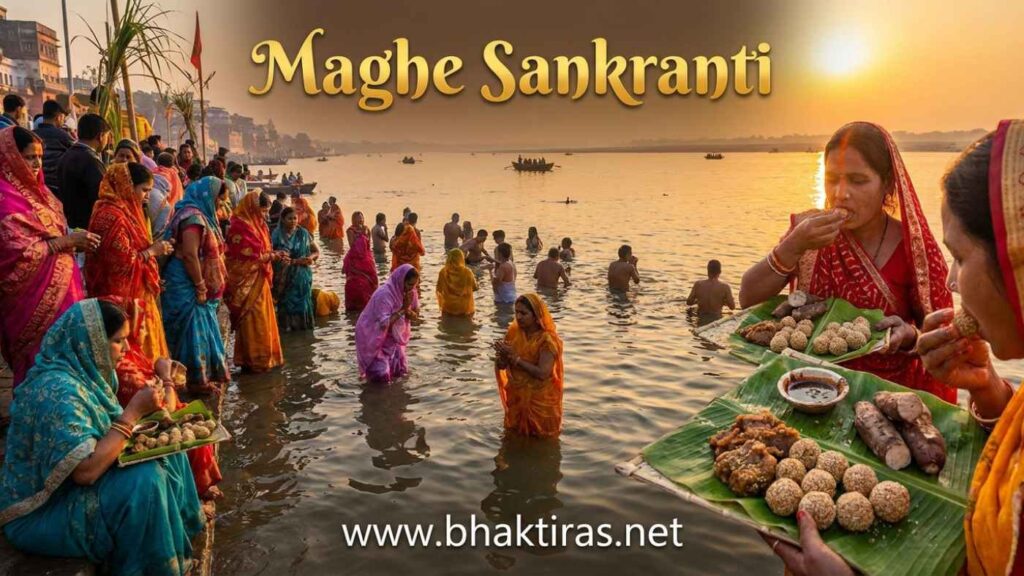
Maghe Sankranti is Nepal’s version of the mid-winter solar festival, observed on the first day of the month of Magh when the sun moves into Makar (Capricorn). It closes the frigid month of Poush and signals that days will slowly lengthen and warm. Devotees rise before dawn for a ritual bath at sacred river meetings, share sesame sweets, molasses and ghee, and seek blessings from elders. For the Tharu community of the Terai it is the biggest festival of the year – their New Year, called Maghi.
Maghe Sankranti 2026-2028: Dates & Calendar
The next Maghe Sankranti falls on Thursday, 14 January 2027. Because it tracks the sun’s transit into Capricorn rather than a lunar tithi, the date is almost fixed, drifting to 15 January in some leap years.
| Year | Date | Day | Notes |
|---|---|---|---|
| 2026 | 14 January | Wednesday | Past occurrence |
| 2027 | 14 January | Thursday | Next occurrence |
| 2028 | 15 January | Saturday | Shifts a day in this leap year |
The festival is nearly always on 14 January, moving to 15 January around leap years such as 2028. It is one of the few Nepali festivals fixed to a solar date, which is why Tharu, Magar and Madhesi communities can plan Maghi celebrations well in advance.
Why Maghe Sankranti Is Celebrated
Maghe Sankranti celebrates the sun beginning its northward journey and the end of the harshest winter, a turning point tied to warmth, renewal and gratitude.
The sun turns north
The festival marks the sun’s entry into Makar (Capricorn) and the start of Uttarayan, its six-month northward course. Longer, warmer days ahead make it an auspicious moment for new beginnings and charitable giving.
Tharu New Year (Maghi)
For the Tharu people of the western Terai, Maghi is the single most important festival of the year and their New Year. Families gather, debts and labour contracts are traditionally settled, and villages hold feasts and folk dances that can last several days.
A festival of warmth
Eating ghee, sesame and molasses on the coldest day is both symbolic and practical – these foods generate heat in the body. Sharing them with family and offering them to elders carries wishes for a healthy, prosperous year.
Deities & Figures Worshipped
Maghe Sankranti honours Surya, the Sun, whose movement into Capricorn defines the day.
Surya
The Sun god is the focus of the festival, worshipped at sunrise as he begins his northward path. The holy dip and morning offerings are made in his honour, thanking him for light, warmth and the coming harvest season.
Key Rituals, Step by Step
Observance centres on a pre-dawn holy bath, seasonal foods and blessings from elders.
- Holy dip at dawn. Devotees travel to sacred river confluences such as Devghat near Chitwan and Sankhamul on the Bagmati to bathe before sunrise.
- Offerings to the Sun. After bathing, people offer water and prayers to Surya as he rises, marking the start of his northward journey.
- Sharing seasonal sweets. Households prepare and exchange til (sesame) laddoo, chaku (hardened molasses), ghee, sweet potato and yam.
- Eating khichdi and root vegetables. A warming meal of khichdi with ghee, along with yam and sweet potato, is cooked and shared through the day.
- Blessings from elders. Younger family members receive tika and blessings from elders, who give sesame and molasses as tokens of goodwill.
- Tharu community feasts. In Tharu villages the day opens Maghi with communal meals, home visits, singing and Sakhiya and other folk dances.
Special Foods of Maghe Sankranti
The menu leans on warming, energy-rich foods eaten to counter the winter cold.
Til laddoo
Sweet balls of roasted sesame bound with molasses or sugar. Sesame is central to the day and is both eaten and given away as a gesture of goodwill.
Chaku
A dense, chewy sweet made by boiling down sugarcane molasses, often with sesame or nuts. It is one of the signature treats of the festival.
Ghee & khichdi
A comforting bowl of khichdi topped generously with clarified butter is a staple meal, valued for the warmth and energy it provides on the coldest day.
Sweet potato & yam
Boiled or roasted root vegetables, especially sweet potato and yam (tarul), are eaten in abundance and shared among neighbours and family.
Regional Names & Variations
The same solar moment is marked under different names across Nepal and the neighbouring Terai and Bihar border.
Tharu Terai (Maghi)
Among the Tharu of the western Terai it is Maghi, the New Year and the community’s biggest celebration, with feasts, home visits and days of folk dance.
Kathmandu Valley
In the valley families gather for holy dips at Sankhamul on the Bagmati and share til, chaku and ghee, with special sweets sold in the days beforehand.
Maithili Terai & Bihar border
Maithili and Madhesi communities along the Nepal-Bihar border observe it on the fixed solar date with river bathing, sesame sweets and family gatherings.
Maghe Sankranti Do's and Don'ts
A few simple customs help you observe the day in the traditional spirit.
Do
- Take an early holy dip at a river confluence if you can
- Eat and share sesame, chaku and ghee
- Offer prayers to the rising Sun
- Visit elders and receive their blessings
- Give food or sweets in charity
Avoid
- Do not confuse it with the exact same date as leap-year 2028
- Do not skip the warming seasonal foods that define the day
- Do not treat it as a purely lunar festival – it follows the sun
- Do not overlook the Tharu Maghi New Year context
- Do not fabricate muhurat times – check a reliable panchang
Frequently Asked Questions
When is Maghe Sankranti in 2027?
Maghe Sankranti is on Thursday, 14 January 2027. It marks the sun’s entry into Makar (Capricorn) and the first day of the Nepali month of Magh, ending the coldest part of winter.
When is Maghe Sankranti in 2026 and 2028?
Maghe Sankranti was on Wednesday, 14 January 2026 and will be on Saturday, 15 January 2028. The date is nearly fixed to 14 January but shifts to 15 January around leap years, and 2028 is a leap year.
Why is Maghe Sankranti celebrated?
Maghe Sankranti is celebrated to mark the sun turning northward (Uttarayan) and the end of the harshest winter. It is a day of holy river dips, warming foods and gratitude, and for the Tharu community it is the New Year, called Maghi.
Which god is worshipped on Maghe Sankranti?
Maghe Sankranti honours Surya, the Sun god, whose movement into Capricorn defines the festival. Devotees bathe and offer prayers to the rising sun at dawn.
What foods are eaten on Maghe Sankranti?
Traditional foods include til (sesame) laddoo, chaku (molasses sweet), ghee, khichdi, sweet potato and yam. These warming, energy-rich foods are eaten and shared to counter the winter cold.
What is Maghi and how does it relate to Maghe Sankranti?
Maghi is the name Maghe Sankranti takes among the Tharu people of Nepal’s Terai, where it is celebrated as the New Year and the community’s biggest festival. It features communal feasts, home visits and folk dances over several days.
How is Maghe Sankranti different from Makar Sankranti?
Maghe Sankranti and Makar Sankranti mark the same solar event – the sun entering Capricorn – on the same near-fixed date. Maghe Sankranti is the Nepali observance (with Tharu, Maithili and Madhesi customs and the Maghi New Year), while Makar Sankranti is the wider Indian harvest festival.
Where do people take holy dips on Maghe Sankranti?
In Nepal, popular bathing spots include the Devghat confluence near Chitwan and Sankhamul on the Bagmati river in Kathmandu. Devotees gather before sunrise to bathe and offer prayers to the Sun.
However you mark the sun’s turn towards warmth, we wish you a blessed Maghe Sankranti and a joyful Maghi.