ॐ
Elephanta Caves (Gharapuri), Shiva
Shiva • Gharapuri Island, Mumbai Harbour, Maharashtra
॥ ॐ नमः शिवाय ॥
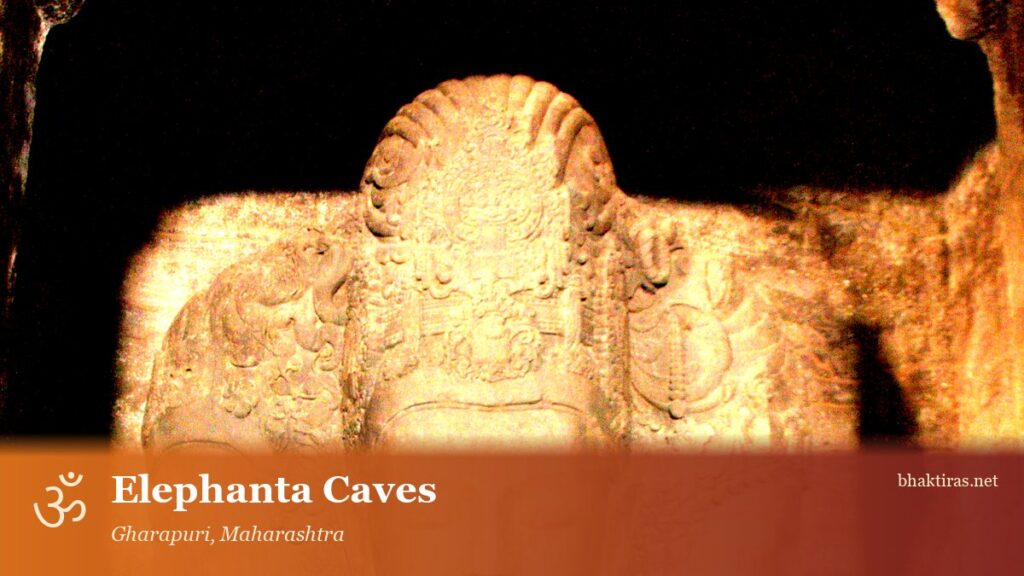
The Elephanta Caves are a group of rock-cut Shaiva shrines on Gharapuri island in Mumbai harbour, carved roughly between the 5th and 7th centuries. The main cave centres on the great three-faced Sadashiva bust and is a UNESCO World Heritage Site reached by ferry from the Gateway of India.
A cave carved from the hill
Rather than being built up from blocks, the main cave was cut downward and inward into the basalt of the island, so its pillars, aisles and shrines were all released from solid rock. The result is a pillared hall arranged around a free-standing Shiva linga shrine and a series of large wall panels.
The Portuguese named the island Elephanta after a stone elephant they found near the landing; its older name is Gharapuri.
The Trimurti Sadashiva
The centrepiece is the Sadashiva, often called the Trimurti — a three-faced bust of Shiva about 6 m high carved into the rear wall. The calm central face, the gentle face to one side and the fierce face to the other are read as his creative, protective and destructive aspects gathered in one image.
Lit by daylight from the cave mouth, the sculpture has a presence that has made it one of the most reproduced images of Indian art.
Panels of Shiva
Around the hall, large relief panels show Shiva in a range of myths and forms, several of them among the finest of their kind. The carving moves between violent action and deep stillness from one panel to the next.
Some panels were defaced in later centuries, but enough survives to read the full programme.
- Nataraja, Shiva as the cosmic dancer
- Ardhanarishvara, the half-male, half-female form
- Gangadhara, Shiva receiving the river Ganga
- Kalyanasundara, the marriage of Shiva and Parvati
Reaching Elephanta
The island is reached by an hour-long ferry from the Gateway of India in Mumbai; a small toy train or a short walk and a flight of steps lead up to the caves, past stalls and resident monkeys. Ferries do not run during the monsoon when the sea is rough.
The caves are managed as a protected monument, and an annual dance festival is held on the island; the site was inscribed by UNESCO in 1987.
Frequently Asked Questions
What are the Elephanta Caves?
The Elephanta Caves are a group of rock-cut Shaiva cave shrines on Gharapuri island in Mumbai harbour, carved roughly between the 5th and 7th centuries. They are dedicated mainly to Shiva. The site is a UNESCO World Heritage monument.
What is the Trimurti at Elephanta?
The Trimurti, or Sadashiva, is a three-faced bust of Shiva about 6 m high carved into the back wall of the main cave. Its three faces represent Shiva’s creative, protective and fierce aspects. It is the centrepiece of the cave and one of the most famous images in Indian art.
Why is it called Elephanta?
The name comes from a large stone elephant the Portuguese found near the landing place, after which they named the island Elephanta. The island’s older Indian name is Gharapuri. The stone elephant itself was later moved to a museum in Mumbai.
How do you get to the Elephanta Caves?
You reach the caves by an hour-long ferry from the Gateway of India in Mumbai. From the jetty a short walk or a small train, followed by a flight of steps, leads up to the caves. Ferries usually do not operate during the monsoon season.
Which forms of Shiva are shown in the carvings?
The wall panels show Shiva as Nataraja the cosmic dancer, as Ardhanarishvara the half-male half-female form, as Gangadhara receiving the river Ganga, and in the marriage scene with Parvati. Together with the central Trimurti, these make up the cave’s Shaiva programme.
Is Elephanta a UNESCO World Heritage Site?
Yes. The Elephanta Caves were inscribed on the UNESCO World Heritage list in 1987. They are valued for the quality of their rock-cut sculpture, above all the great Trimurti image of Shiva.
॥ हर हर महादेव ॥ • Bhaktiras.net Temple Guide
| Primary Deity | Shiva |
| Carved | c. 5th–7th century CE |
| Type | Rock-cut caves |
| Main Image | Trimurti Sadashiva (~6 m) |
| Island | Gharapuri |
| Access | Ferry from Gateway of India |
| UNESCO | Inscribed 1987 |
| Location | Mumbai Harbour, Maharashtra |
Related Temples
Explore more sacred temples connected by deity and region.