ॐ
Kopeshwar Temple, Khidrapur
Shiva (Kopeshwar) • Khidrapur, Kolhapur, Maharashtra
॥ ॐ नमः शिवाय ॥
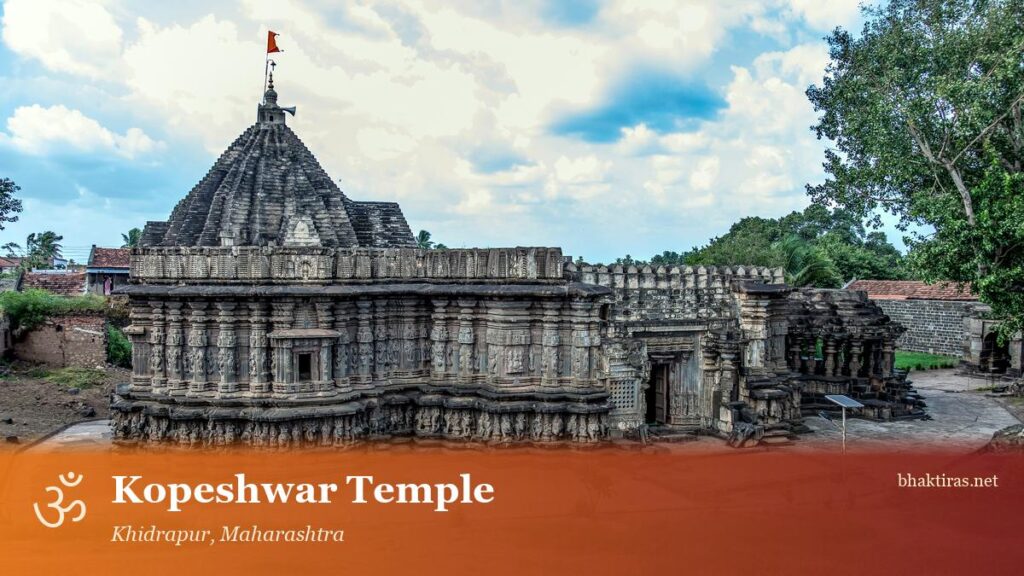
Kopeshwar Temple is a 12th-century Shiva temple at Khidrapur on the Krishna river in Kolhapur district. Begun by the Shilaharas and completed under the Chalukyas and Yadavas, it is celebrated for its open circular Swarga Mandapa and its richly sculptured walls — a heritage landmark of the Deccan.
A 12th-century Deccan temple
Kopeshwar Temple was built in the 12th century by the Shilahara dynasty and completed under the Chalukyas and Yadavas, placing it among the major surviving temples of the medieval Deccan. It stands at Khidrapur on the bank of the Krishna river, on the edge of present-day Kolhapur district.
Shiva is worshipped here as Kopeshwar. The long span of its construction under successive dynasties is reflected in the scale and finish of the stonework, the product of generations of craftsmanship.
The Swarga Mandapa
The temple’s most celebrated feature is the Swarga Mandapa, an open circular hall ringed by forty-eight carved pillars and left open to the sky at its centre. The opening draws daylight directly into the hall, a deliberate and unusual design that sets the temple apart.
From the Swarga Mandapa the plan leads through to the sanctum, the sequence of halls carrying the worshipper inward. The circular open mandapa remains the architectural signature for which Kopeshwar is best known.
Sculpture and the absent Nandi
The walls of the temple are densely sculptured, with rows of elephants carved along the base appearing to bear the structure, and figures and ornament covering the surfaces above. The carving is among the finest work of its period in the region.
A distinctive feature is the absence of a Nandi before the sanctum, where the bull mount of Shiva normally sits. Here the Nandi, known as Dhopeshwar, stands apart from the main shrine — an unusual arrangement that visitors often note.
Visiting Khidrapur
Khidrapur lies on the Krishna river near the Maharashtra–Karnataka border in Kolhapur district, reached by road from Kolhapur and nearby towns. The riverside setting adds to the appeal of the visit.
As a protected heritage monument the temple rewards an unhurried visit to take in the Swarga Mandapa and the wall sculpture. Visitors should observe ordinary temple etiquette and care for the carved fabric of the site.
- Period: 12th century, Shilahara–Chalukya–Yadava
- Highlight: Swarga Mandapa with 48 carved pillars, open to the sky
- Distinctive: no Nandi before the sanctum (Dhopeshwar stands apart)
- Setting: Khidrapur on the Krishna river
Frequently Asked Questions
Which deity is worshipped at Kopeshwar Temple?
The temple is dedicated to Lord Shiva, worshipped here as Kopeshwar. It is a 12th-century Shaiva temple at Khidrapur on the Krishna river.
When was Kopeshwar Temple built?
It was built in the 12th century, begun by the Shilahara dynasty and completed under the Chalukyas and Yadavas. The long construction under successive dynasties is reflected in its elaborate stonework.
What is the Swarga Mandapa?
The Swarga Mandapa is an open circular hall ringed by forty-eight carved pillars and left open to the sky at its centre. It is the temple’s most celebrated architectural feature.
Why is there no Nandi before the sanctum?
Kopeshwar is unusual in having no Nandi directly before the sanctum, where Shiva’s bull mount normally sits. Instead the Nandi, called Dhopeshwar, stands apart from the main shrine.
Where is Kopeshwar Temple located?
It stands at Khidrapur on the Krishna river in Kolhapur district, Maharashtra, near the Karnataka border. It is reached by road from Kolhapur and nearby towns.
What is the temple known for architecturally?
It is known for the open circular Swarga Mandapa and its richly sculptured walls, including rows of carved elephants along the base. It is regarded as a heritage landmark of the Deccan.
॥ हर हर महादेव ॥ • Bhaktiras.net Temple Guide
| Primary Deity | Shiva (Kopeshwar) |
| Location | Khidrapur, Kolhapur, Maharashtra |
| Established | 12th century (c. 1100) |
| Built By | Shilaharas; completed under Chalukyas/Yadavas |
| Highlight | Swarga Mandapa, 48 pillars, open to sky |
| Distinctive Feature | No Nandi before the sanctum |
| Setting | Krishna river |
| Tradition | Shaivism |
Related Temples
Explore more sacred temples connected by deity and region.