ॐ
Aundha Nagnath Temple
Nageshwar (Shiva) • Hingoli, Maharashtra
॥ ॐ नमः शिवाय ॥
Aundha Nagnath in Maharashtra’s Hingoli district is venerated by many traditions as the Nageshwar Jyotirlinga, counted in some accounts as the first, or Adya, Jyotirlinga. Legend credits the Pandavas, and Yudhishthira in particular, with raising it during their exile. The surviving stone temple is a richly carved example of the Hemadpanthi style of the Yadava period, and the shrine is closely tied to the saint Namdev and the Varkari tradition.
The Nageshwar Jyotirlinga
Aundha Nagnath is held by many traditions to be the Nageshwar Jyotirlinga, one of the twelve great Jyotirlingas of Shiva. In some accounts it is reckoned the Adya, or first, among them, which gives the shrine a special standing among Shaiva pilgrims.
The identification is a matter of long tradition rather than a single fixed claim, and different regions hold their own Nageshwar; here at Aundha the belief is deeply rooted.
A temple of the Pandava legend
Local legend credits the Pandavas with building the temple during their years of exile, naming Yudhishthira, the eldest brother, as the one who raised it. The story binds the shrine to the great epic narrative of the Mahabharata.
Such legends place Aundha within the sacred geography of the Pandavas’ wanderings, lending the site an antiquity that devotees cherish.
Hemadpanthi stone carving
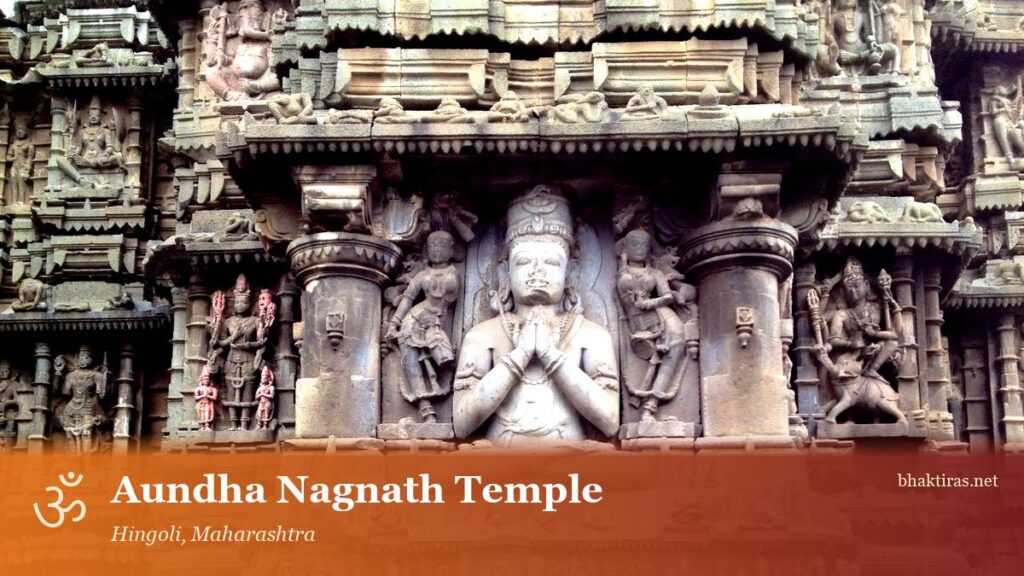
The surviving temple is built in the Hemadpanthi style associated with the Yadava period, a manner of dry-stone construction in which carved blocks are fitted without mortar. Its lower walls carry dense and skilful relief carving.
The carved figures and decorative bands across the base reward close attention, marking the temple as an accomplished work of medieval Deccan craftsmanship.
- Revered as the Nageshwar Jyotirlinga
- Linked by legend to the Pandavas’ exile
- Hemadpanthi stone temple of the Yadava era
Namdev, the Varkaris and Mahashivratri
Aundha Nagnath is closely associated with the saint Namdev and through him with the Varkari tradition of Maharashtra, whose devotional movement drew strength from such sacred sites. The connection keeps the shrine alive in the region’s bhakti memory.
Mahashivratri is the principal festival, when devotees gather in large numbers for night-long worship of the Jyotirlinga. It is the high point of the temple’s year.
Frequently Asked Questions
Is Aundha Nagnath a Jyotirlinga?
Aundha Nagnath is venerated by many traditions as the Nageshwar Jyotirlinga, one of the twelve great Jyotirlingas of Shiva. Some accounts reckon it the Adya, or first, among them. The identification rests on long-standing tradition.
Where is the Aundha Nagnath temple?
The temple is at Aundha Nagnath in the Hingoli district of Maharashtra, in the Marathwada region. It is a noted Shaiva pilgrimage site.
Who is said to have built the temple?
Local legend credits the Pandavas, especially Yudhishthira, with building the temple during their exile. The story ties the shrine to the Mahabharata narrative.
What architectural style is the temple?
The surviving temple is in the Hemadpanthi style of the Yadava period, a dry-stone manner using carved blocks fitted without mortar. Its lower walls carry dense, skilful relief carving.
How is the temple connected to Namdev?
Aundha Nagnath is closely tied to the saint Namdev and through him to Maharashtra’s Varkari tradition. The connection keeps the shrine prominent in the region’s bhakti devotion.
What is the main festival at Aundha Nagnath?
Mahashivratri is the principal festival, when devotees gather in large numbers for night-long worship of the Jyotirlinga. It is the high point of the temple’s year.
॥ हर हर महादेव ॥ • Bhaktiras.net Temple Guide
| Primary Deity | Shiva (Nageshwar Jyotirlinga) |
| Standing | Adya (first) Jyotirlinga in some accounts |
| Legend | Built by the Pandavas in exile |
| Architecture | Hemadpanthi, Yadava period |
| Saint Link | Namdev, Varkari tradition |
| Main Festival | Mahashivratri |
| District | Hingoli |
| State | Maharashtra |
Related Temples
Explore more sacred temples connected by deity and region.