
ॐ
Tulja Bhavani Temple, Tuljapur
Tulja Bhavani Devi • Tuljapur, Maharashtra
॥ ॐ दुं दुर्गायै नमः ॥
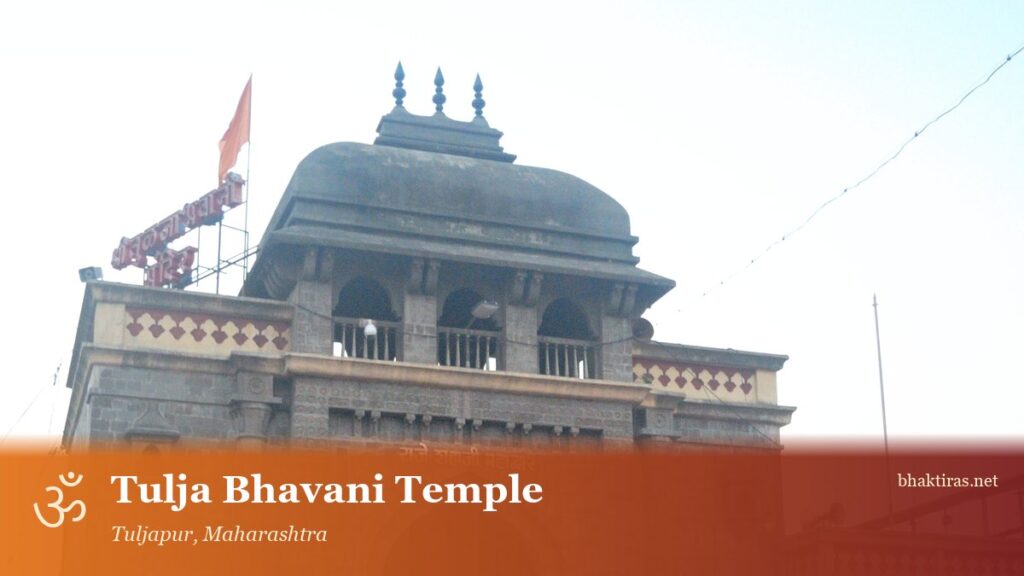
At Tuljapur in Dharashiv district, the Tulja Bhavani temple holds the goddess revered as the kuladevi of Chhatrapati Shivaji Maharaj. Tradition tells that she granted him the Bhavani sword, and the shrine has been bound to Maratha devotion ever since. It is counted among the three-and-a-half Shakti Peethas of Maharashtra, and its swayambhu image draws vast crowds through the festival season.
The goddess of Shivaji Maharaj
Tulja Bhavani is honoured as the kuladevi of Chhatrapati Shivaji Maharaj, and tradition holds that the goddess gave him the Bhavani sword that became a symbol of Maratha resolve. That story has tied the shrine to Maharashtra’s history and to a deep current of devotion.
Because of this bond, the temple is far more than a regional Devi seat. It carries a place in the cultural memory of the Maratha country, and pilgrims come to the goddess who blessed the founder of the Maratha state.
One of the three-and-a-half Peethas
Tuljapur is counted among the three-and-a-half Shakti Peethas of Maharashtra, a grouping that marks the principal goddess seats of the region. This standing places Tulja Bhavani at the heart of the state’s Devi worship.
As a leading Peetha, the shrine gathers devotion from across Maharashtra and beyond. The half-Peetha tradition is a distinctive local way of ranking these seats, and Tuljapur sits firmly among the foremost.
The swayambhu image
The presiding deity is a swayambhu, self-manifested, image of Mahishasuramardini, the goddess shown with eight arms slaying the buffalo demon. This martial form fits her role as the goddess of victory invoked by warriors.
In a rite unusual among temples, the image is periodically taken from the sanctum for a ceremonial sleep, a Nidra observance, before being returned. These cycles of rest and return are part of the distinctive ritual life of Tuljapur.
Festivals at Tuljapur
Navaratri is the great season at the temple, when the town fills with pilgrims and the goddess is honoured through the nine nights. The scale of the gathering reflects her standing across Maharashtra.
Shakambhari observances form the other major cycle of rites, alongside the periodic sleep ceremonies of the deity. Together they make the temple calendar one of the busiest among the state’s Devi shrines.
- Kuladevi of Chhatrapati Shivaji Maharaj
- One of Maharashtra’s three-and-a-half Shakti Peethas
- Swayambhu eight-armed Mahishasuramardini image
Frequently Asked Questions
Where is the Tulja Bhavani temple?
The Tulja Bhavani temple is at Tuljapur in Dharashiv district (formerly Osmanabad), Maharashtra. It is one of the most visited Devi shrines in the state.
Why is Tulja Bhavani linked to Shivaji Maharaj?
Tulja Bhavani is the kuladevi, or family deity, of Chhatrapati Shivaji Maharaj. Tradition holds that the goddess granted him the Bhavani sword, binding the shrine to Maratha history.
Is Tuljapur a Shakti Peetha?
Yes, Tuljapur is counted among the three-and-a-half Shakti Peethas of Maharashtra. This places it among the foremost goddess seats of the region.
What is special about the deity’s image?
The image is a swayambhu, or self-manifested, eight-armed form of Mahishasuramardini slaying the buffalo demon. It is periodically taken from the sanctum for a ceremonial sleep, or Nidra, rite.
What festivals are celebrated at Tuljapur?
Navaratri is the principal festival, drawing vast crowds through the nine nights. Shakambhari observances and the periodic sleep ceremonies of the goddess are also important.
When is the best time to visit?
Navaratri is the peak season, when the temple and town are at their most vibrant but also most crowded. For a calmer visit, the cooler months outside the major festivals are better.
॥ जय भवानी ॥ • Bhaktiras.net Temple Guide
| Primary Deity | Tulja Bhavani |
| Role | Kuladevi of Shivaji Maharaj |
| Tradition | Three-and-a-half Shakti Peethas |
| Location | Tuljapur, Dharashiv |
| Image | Swayambhu, eight-armed Mahishasuramardini |
| Special Rite | Periodic Nidra (sleep) ceremony |
| Main Festival | Navaratri |
| Also Observed | Shakambhari |
Related Temples
Explore more sacred temples connected by deity and region.
 ShivaAmbarnath Shiv Temple (Ambreshwar)📍 Maharashtra
 ShivaAundha Nagnath Temple📍 Maharashtra
 GaneshaBallaleshwar Temple, Pali (3rd Ashtavinayak)📍 Maharashtra
 ShivaBhimashankar Temple📍 Maharashtra
 GaneshaChintamani Temple, Theur (5th Ashtavinayak)📍 Maharashtra
 GaneshaDagdusheth Halwai Ganpati Temple, Pune📍 Maharashtra