ॐ
Brajeshwari Devi Temple, Kangra
Goddess Brajeshwari (Durga) • Nagarkot, Kangra, Himachal Pradesh
॥ ॐ दुं दुर्गायै नमः ॥
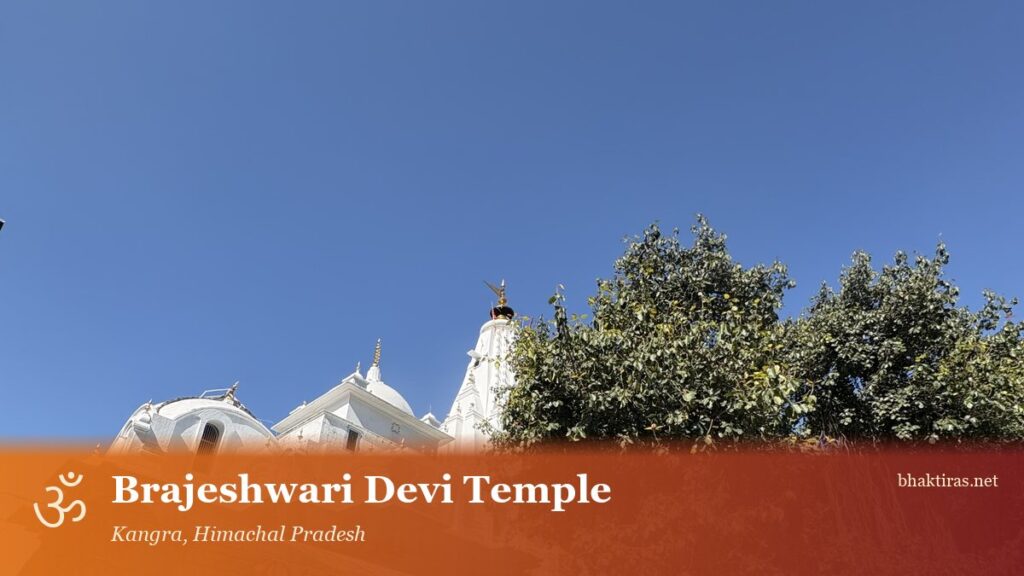
In the old fort town of Nagarkot in Kangra, the Brajeshwari Devi Temple marks one of the Shakti Peethas — the spot where, in tradition, the left breast of Sati is said to have fallen. So famed was its wealth that medieval raiders plundered it again and again, and the shrine standing today was rebuilt after the Kangra earthquake of 1905. A distinctive local rite coats the goddess in butter each Makar Sankranti.
A Shakti Peetha of the Kangra valley
Brajeshwari, also called Bajreshwari, belongs to the circle of Shakti Peethas formed where parts of Sati’s body are believed to have fallen as Vishnu’s discus dismembered her. Tradition associates Kangra with the falling of her left breast, and the goddess is venerated here in that potent aspect.
The temple sits in Nagarkot, the historic name of the Kangra fort settlement, in the lower Himalayan ranges of Himachal Pradesh. Its setting among old ramparts and hill country gives the pilgrimage a frontier flavour, distinct from the plains shrines of the goddess.
Wealth, plunder and repeated rebuilding
In medieval times the temple was reputed to be extraordinarily rich, its treasury heavy with the offerings of centuries. That fame made it a target: it was sacked more than once by invaders drawn to its gold, and each plunder was followed by the slow work of restoration.
The cycle of destruction and rebuilding finally met a natural calamity. The great Kangra earthquake of 1905 levelled much of the structure, and the temple visitors see now was raised afterwards. Its history is thus one of resilience as much as devotion.
The butter offering of Makar Sankranti
The temple’s most unusual custom is the coating of the goddess in a thick layer of butter, performed around Makar Sankranti. Tradition explains the rite as a soothing of wounds: after a fierce battle against demons, the goddess is said to have been healed by the cooling application of butter, and the ritual re-enacts that care.
For several days the deity remains covered in the offering before it is removed, and devotees regard the butter as blessed. The practice gives the festival a tactile, intimate quality rarely seen at other Devi shrines.
In the old Kangra fort town
The shrine lies within the historic precinct of Nagarkot, close to the famous Kangra Fort that has guarded the valley for centuries. Pilgrims frequently combine darshan with a visit to the fort and the wider Kangra circuit of Devi temples in the region.
The hill setting means the approach is scenic and the climate cool, and the temple draws steady crowds through the year that swell sharply during Navaratri. The surrounding town keeps its old character as a place of both worship and defence.
Frequently Asked Questions
Which Shakti Peetha is at Kangra?
The Brajeshwari Devi Temple at Nagarkot, Kangra is the Shakti Peetha associated in tradition with the falling of Sati’s left breast. The goddess is worshipped here as Brajeshwari, also called Bajreshwari.
Why was the temple repeatedly plundered?
The shrine was famed in medieval times for its great wealth, which made it a target for raiders. It was sacked more than once and rebuilt each time, before the 1905 earthquake forced another reconstruction.
What is the butter offering at Brajeshwari Devi Temple?
Around Makar Sankranti the goddess is covered in a thick coating of butter. Tradition holds that this soothes the wounds she received in battle against demons, and devotees consider the butter blessed.
When was the present temple built?
The current structure was raised after the Kangra earthquake of 1905, which destroyed much of the earlier temple. The site itself is far older, with a long history of plunder and rebuilding.
Where is the temple located?
It stands in Nagarkot, the old fort town of Kangra in Himachal Pradesh, close to the historic Kangra Fort. Pilgrims often visit the fort and the region’s other Devi shrines on the same trip.
When is the best time to visit?
Navaratri brings the largest gatherings, and Makar Sankranti is notable for the butter offering. The hill climate keeps the town pleasant for much of the year, with crowds heaviest during these festivals.
॥ जय माता दी ॥ • Bhaktiras.net Temple Guide
| Primary Deity | Brajeshwari / Bajreshwari (Durga) |
| Location | Nagarkot, Kangra |
| State | Himachal Pradesh |
| Significance | Shakti Peetha (Sati’s left breast, tradition) |
| History | Plundered repeatedly in medieval times |
| Rebuilt | After the 1905 Kangra earthquake |
| Special Rite | Butter offering at Makar Sankranti |
| Nearby Landmark | Kangra Fort |
Related Temples
Explore more sacred temples connected by deity and region.