
ॐ
Nalateswari Temple, Nalhati
Goddess Nalateswari (Durga) • Nalhati, Birbhum, West Bengal
॥ ॐ दुं दुर्गायै नमः ॥
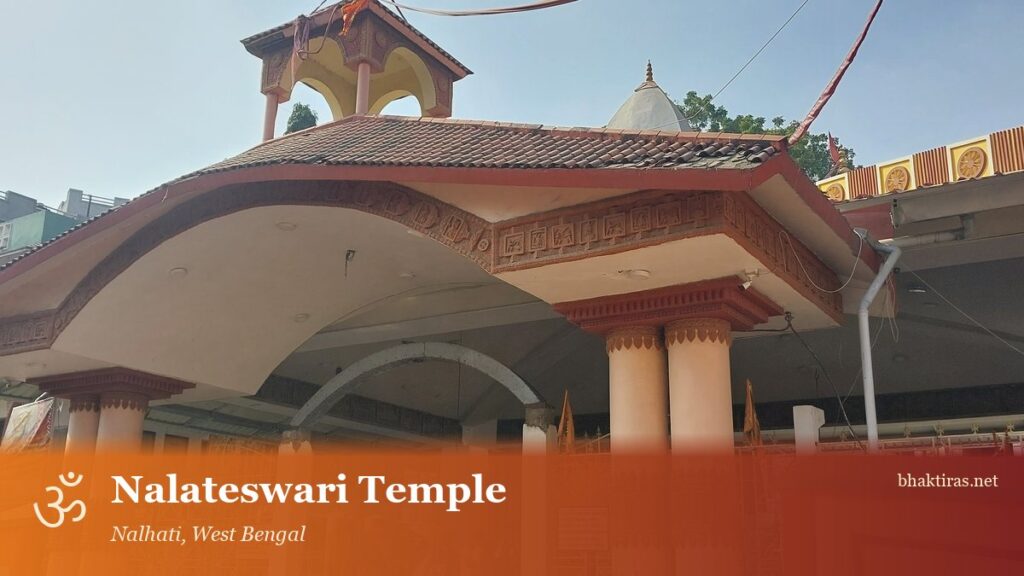
Nalateswari Temple at Nalhati in Birbhum is a Shakti Peetha tied to the falling of Sati’s nala — the throat-pipe or vocal tract — a legend that gives the town its very name. The goddess is worshipped here not as an idol but as a rock face smeared with vermilion beneath a silver crown, with the sage Yogesh as the attendant Bhairava.
The Shakti Peetha of the throat
Nalateswari, also written Nalhateswari, is counted among the Shakti Peethas. Tradition holds that the nala of Sati — the throat-pipe or vocal tract — fell at this spot when her body was scattered.
This legend is more than lore here, for it gives the town its name: Nalhati is held to derive from the nala that descended. The attendant Bhairava of the seat is named Yogesh, worshipped with the goddess as guardian of the place.
A goddess worshipped as living rock
Unlike temples where a carved idol holds the sanctum, at Nalateswari the goddess is present as a rock face. The stone is smeared with vermilion and set beneath a silver crown, so that the worshipped form is the rock itself.
This way of honouring the goddess as living stone is found at several Shakta seats and carries a sense of her arising from the earth. Devotees take darshan of the vermilion-marked face as the direct presence of the deity.
- Goddess worshipped as a rock face, not an idol
- Smeared with vermilion beneath a silver crown
- Attendant Bhairava named Yogesh
The shrine on its hill
The temple sits on a small hill at Nalhati, in the Birbhum district of West Bengal. The modest rise sets the shrine a little apart from the town and gives the approach the feel of a short ascent to the goddess.
Birbhum is a district thick with Shakta worship and with places tied to the Sati legend, and Nalateswari takes its place among them. The hilltop setting and the rock-form deity together give the shrine its particular character.
Kali Puja and Navaratri
The main observances at Nalateswari are Kali Puja and Navaratri, the seasons when devotion to the goddess across Bengal reaches its height. At these times the shrine draws its largest gatherings.
On ordinary days the temple keeps a quieter rhythm, with local devotees coming for darshan of the vermilion rock. The two festivals mark the high points of its yearly cycle of worship.
Frequently Asked Questions
Why is Nalateswari Temple a Shakti Peetha?
Nalateswari is a Shakti Peetha because tradition holds that the nala of Sati — the throat-pipe or vocal tract — fell at this spot. Shakti Peethas mark where parts of the goddess are said to have descended. This body-part legend is part of Shakta tradition rather than recorded history.
How did Nalhati get its name?
Nalhati is held to take its name from the nala of Sati, the throat-pipe said to have fallen here in the Shakti Peetha legend. The town and the temple share this origin story. It ties the place directly to the goddess Nalateswari.
How is the goddess worshipped at Nalateswari?
At Nalateswari the goddess is worshipped not as a carved idol but as a rock face smeared with vermilion beneath a silver crown. The worshipped form is the rock itself, taken as the direct presence of the deity. This honouring of the goddess as living stone is found at several Shakta seats.
Who is the Bhairava at Nalateswari?
The attendant Bhairava of the Nalateswari seat is named Yogesh. He is worshipped alongside the goddess as guardian of the place, as a Bhairava is at every Shakti Peetha. The pairing of goddess and Bhairava is part of the tradition of these seats.
Where is Nalateswari Temple located?
Nalateswari Temple sits on a small hill at Nalhati, in the Birbhum district of West Bengal. Birbhum is a district thick with Shakta worship and with sites tied to the Sati legend. The hilltop setting sets the shrine a little apart from the town.
What are the main festivals at Nalateswari?
The main observances are Kali Puja and Navaratri, the seasons when goddess worship across Bengal reaches its height. The shrine draws its largest gatherings at these times. On ordinary days it keeps a quieter rhythm with local devotees.
॥ जय माता दी ॥ • Bhaktiras.net Temple Guide
| Deity | Nalateswari (Durga) |
| Tradition | Shakti Peetha (nala / throat of Sati) |
| Location | Nalhati, Birbhum, West Bengal |
| Worshipped form | Vermilion rock face, silver crown |
| Bhairava | Yogesh |
| Setting | On a small hill |
| Name origin | Nala of Sati (gives Nalhati its name) |
| Main festivals | Kali Puja & Navaratri |
Related Temples
Explore more sacred temples connected by deity and region.
 DurgaAmbika Kalna Temples (Rajrajeshwari)📍 West BengalॐDurgaJhargram Rajbari & Sabitri Temple📍 West Bengal
 DurgaKiriteswari Temple, Murshidabad📍 West Bengal
 DurgaKrishnanagar Rajbari Temples📍 West BengalॐDurgaNandikeshwari Temple, Sainthia📍 West BengalॐDurgaRatnavali Shakti Peeth, Khanakul📍 West Bengal