
ॐ
Jambukeswarar Temple, Thiruvanaikaval
Shiva (Water Element) · Pancha Bhoota Stalam · Tiruvanaikaval
॥ ॐ नमः शिवाय ॥
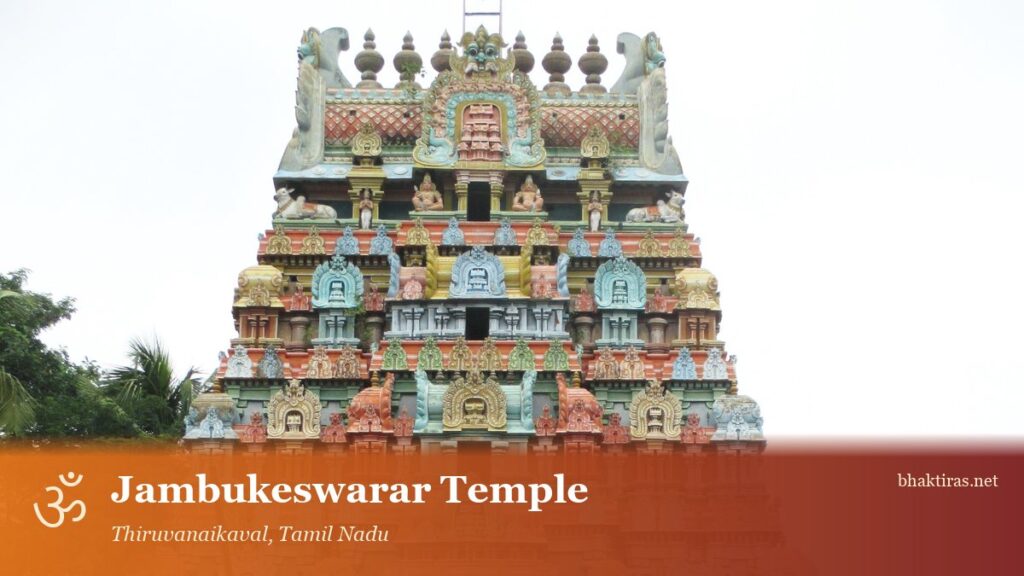
Jambukeswarar is the Pancha Bhoota Stalam of the element Water, at Thiruvanaikaval near Srirangam in Tiruchirapalli. Here Shiva is worshipped as the Appu lingam, set in a sanctum where a perennial underground spring keeps the stone forever moist. The goddess is Akhilandeswari, and a legend of a spider and an elephant gives the place its name. Five concentric walls of Chola-era stone enclose the shrine.
The lord of the Water element
Jambukeswarar holds Water (Appu or Jala) among the five Pancha Bhoota Stalams. In the inner sanctum a natural spring seeps continually beneath the lingam, so that the stone is always wet — a visible sign of the element it embodies, and a feature priests point to during the daily worship.
The shrine of the goddess Akhilandeswari faces the lord in an unusual arrangement, and the temple’s rituals dwell on the pairing of Shiva as water with the goddess as its calming, sustaining grace.
The spider, the elephant and the name
The temple’s name comes from its founding legend. A spider and an elephant, the story goes, each worshipped Shiva beneath a jambu (rose-apple) tree by the spring — the elephant bathing the lingam with water, the spider spinning a canopy to shade it. Their devotion, and the tree, gave the place the name Thiruvanaikaval and the lord the name Jambukeswarar.
The legend is retold in the temple’s sculpture and ritual, and the jambu tree is honoured as the sthala vriksham at the heart of the site.
Five walls of Chola stone
The temple is laid out within five concentric prakaram walls, an architecture of nested enclosures that grew under Chola patronage and later additions. The corridors between them carry pillared halls, gateways and subsidiary shrines, leading the pilgrim inward toward the water sanctum.
Set close to the great Ranganathaswamy temple of Srirangam on the Kaveri island, Jambukeswarar completes a celebrated pairing of Shaiva and Vaishnava devotion in the Tiruchirapalli region.
How to reach Jambukeswarar Temple
- By road: Thiruvanaikaval lies on the Srirangam island near Tiruchirapalli, a short drive from the city centre, with frequent local buses and taxis.
- By train: Tiruchirapalli Junction is the main railhead, well connected across Tamil Nadu and beyond, with Srirangam station closer still to the temple.
- By air: Tiruchirapalli International Airport is only a short drive away, with domestic and select international links.
Frequently Asked Questions
Which element does Jambukeswarar represent?
It is the Pancha Bhoota Stalam of Water (Appu or Jala); Shiva is worshipped as the Appu lingam at Thiruvanaikaval.
Why is the lingam always wet?
A perennial underground spring seeps beneath the lingam in the sanctum, keeping the stone continually moist as a sign of the Water element it embodies.
Who is the goddess here?
The goddess is Akhilandeswari, whose shrine faces the lord in an unusual arrangement central to the temple’s worship.
What is the legend behind the name?
A spider and an elephant are said to have worshipped Shiva beneath a jambu tree by the spring; their devotion and the tree gave the place its name, Thiruvanaikaval and Jambukeswarar.
What is notable about the temple’s layout?
It is enclosed by five concentric prakaram walls of Chola-era stone, with corridors, halls and shrines leading inward to the water sanctum.
Where is the temple located?
It stands at Thiruvanaikaval on the Srirangam island near Tiruchirapalli in Tamil Nadu, close to the Ranganathaswamy temple.
॥ हर हर महादेव ॥ • Bhaktiras.net Temple Guide
| Element | Water (Appu) |
| Pancha Bhoota group | Yes |
| Sanctum feature | Perennial spring |
| Goddess | Akhilandeswari |
| Enclosures | Five prakaram walls |
| Location | Thiruvanaikaval, Tiruchirapalli |
Related Temples
Explore more sacred temples connected by deity and region.
 ShivaAiravatesvara Temple, Darasuram📍 Tamil Nadu
 ShivaArunachaleswarar Temple, Thiruvannamalai📍 Tamil Nadu
 ShivaArunachaleswarar Temple, Tiruvannamalai📍 Tamil Nadu
 ShivaBrihadeeswara Temple, Thanjavur📍 Tamil Nadu
 ShivaChidambaram Nataraja Temple📍 Tamil Nadu
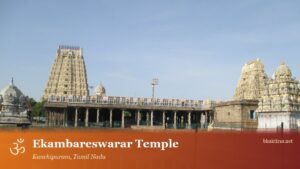 ShivaEkambareswarar Temple, Kanchipuram📍 Tamil Nadu