
Rann Utsav 2026-27 – Gujarat's White Desert Festival
રણ ઉત્સવ
When is Rann Utsav 2026-27 and where is it held?
Rann Utsav 2026-27 runs from 5 November 2026 to 4 March 2027 at the Tent City near Dhordo village in the Kutch district of Gujarat. It is a seasonal cultural and tourism festival on the White Rann, the vast salt desert that glows silver-white under the winter sky, and it is especially loved on full-moon nights. Gujarat Tourism organises it, so the exact opening and closing dates are set fresh each year.
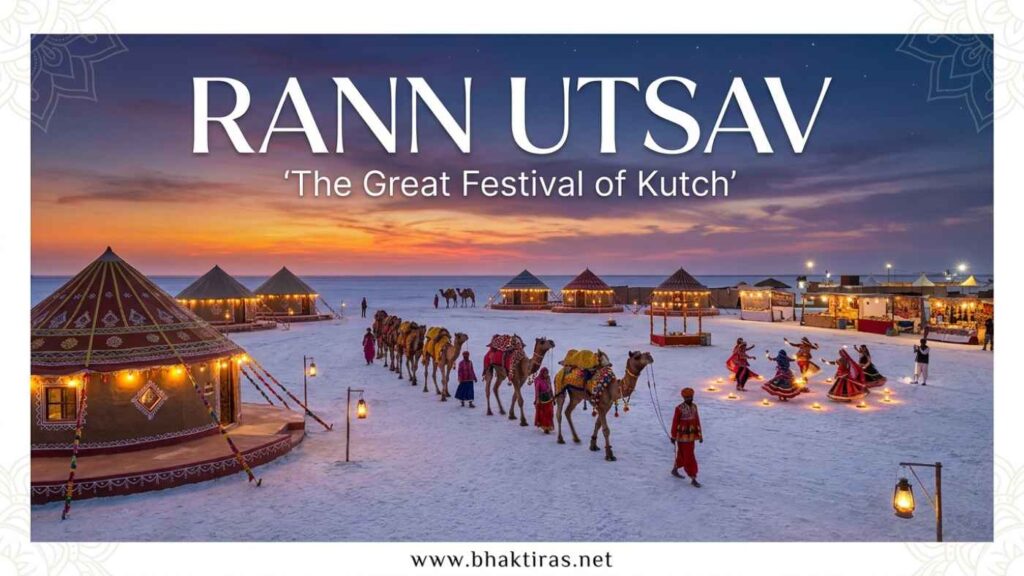
Rann Utsav is Gujarat’s winter festival on the White Rann of Kutch, a flat sheet of cracked salt that stretches to the horizon and turns pale and luminous after dark. Each year Gujarat Tourism raises a temporary Tent City near the border village of Dhordo, filling it with Kutchi folk music, dance, embroidery, camel rides and desert nights under a big moon. The 2026-27 edition runs from about 5 November 2026 to 4 March 2027. It is a cultural and tourism event, not a religious one – the draw is the landscape and the living crafts of Kutch.
Rann Utsav 2026-27: Season & Dates
The 2026-27 season opens around 5 November 2026 and the Tent City stays up until 4 March 2027. Because it is a tourism festival, Gujarat Tourism confirms the exact dates fresh each year, usually timed to open near the Kartik Purnima full moon.
| Season | Opens | Closes | Notes |
|---|---|---|---|
| 2025-26 | 23 October 2025 | 4 March 2026 | Previous edition |
| 2026-27 | 5 November 2026 | 4 March 2027 | Current edition, opens near the full moon |
| 2027-28 | Around November 2027 | Around March 2028 | To be announced by Gujarat Tourism |
The festival spans several full-moon nights across the season – roughly early November, early December, early January and early February – when the white salt is at its most striking. Full-moon weekends and holiday stretches (Diwali, Christmas to New Year, Makar Sankranti, Republic Day) are the busiest and are worth booking well ahead.
Why Rann Utsav Matters
Rann Utsav celebrates one of India’s most unusual landscapes and the living culture of Kutch, packaged so ordinary travellers can experience the White Rann in comfort.
Gujarat Tourism launched the festival to open up the Great Rann of Kutch, a seasonal salt marsh that floods in the monsoon and dries into a hard white crust by winter. Its long-running campaign line, Kutch Nahi Dekha To Kuch Nahi Dekha (if you have not seen Kutch, you have not seen anything), captures the pitch.
The White Rann
The salt desert is the star. After the monsoon water evaporates, it leaves a crust of white salt that runs flat to the skyline. On a clear full-moon night the ground reflects the moonlight and the whole plain seems to shine, with almost no landmarks to break the view.
A living crafts region
Kutch is one of India’s richest zones for handmade textiles – Ahir and Rabari embroidery, bandhani tie-dye, Ajrakh block printing, Rogan painting, leatherwork, bell-making and lacquered wood. The festival gives these artisan communities a direct market and a stage.
Tourism, not religion
Unlike most events in the Hindu calendar, Rann Utsav has no scriptural origin or ritual meaning. It is a modern, secular festival built around scenery, folk performance and craft, though it borrows the rhythm of the traditional full-moon nights.
The White Rann & Kutch Culture
Rann Utsav is centred on a place and a way of life rather than any god, so this section looks at the desert and the people whose culture fills the tent city.
The Great Rann of Kutch
The Rann is a huge seasonal salt flat on the India-Pakistan frontier. Sea and monsoon water flood it each summer, then dry out to leave the famous white crust that Rann Utsav is built around. It is also home to the Indian wild ass and, in nearby wetlands, large numbers of flamingos.
Kutchi folk music & dance
Evenings at the tent city feature Kutchi and Sindhi folk traditions – the swirling Garba and Dandiya, the men’s Manjira and dhol rhythms, Sufi and folk singers, and puppetry. Programmes change through the season and often include visiting artists.
Artisan communities
The villages around Dhordo, Nirona, Bhujodi and Ajrakhpur are craft hubs. Rabari and Ahir women’s embroidery, Khatri bandhani and Ajrakh, Rogan art from Nirona and copper-bell making are all sold and demonstrated at the festival bazaars.
What Happens & What to Do
A visit usually mixes a Tent City stay with sunset and moonlight trips onto the salt and day excursions to nearby sights.
- Stay at the Tent City. Base yourself in the Dhordo Tent City, a temporary resort of several hundred tents ranging from simple to luxury, with meals, cultural shows and organised excursions included in most packages.
- Walk onto the White Rann. Head out to the salt flats near sunset. Watch the sun drop over the endless white plain, then stay for the moon; a viewing platform and camel-cart rides help you get out onto the crust.
- Catch a full-moon night. Time your trip to one of the season’s full moons if you can. The reflected moonlight on the salt is the single sight the festival is famous for.
- Watch the folk programme. Spend an evening at the cultural stage for Kutchi and Sindhi music and dance, and browse the craft bazaar for embroidery, bandhani, Ajrakh and bell-work.
- Ride camels, horses or ATVs. Try a camel-cart ride across the salt, a horse ride, or a quad-bike (ATV) run along marked tracks for a faster loop of the desert edge.
- Drive up Kala Dungar. Take a half-day trip to Kalo Dungar (Black Hill), the highest point in Kutch at 462 m, for a wide view over the Rann and a stop at its old Dattatreya temple.
- See nearby sights. Add the craft villages, the Bhirandiyara road stalls, the mirror-work Kutch handicraft markets in Bhuj, and, with more time, the Harappan site of Dholavira and the Indian Wild Ass Sanctuary.
Kutchi Food to Try
The Tent City serves a full Gujarati-Kutchi spread, but the fun is in Kutch’s own street food and thali when you venture into Bhuj and the villages.
Dabeli
The signature snack of Kutch: a soft pav bun stuffed with spiced mashed potato, a sweet-tangy dabeli masala, pomegranate seeds, roasted peanuts and sev. It is said to have started in Mandvi and is now sold across Gujarat.
Bhungra bateta
A rustic Kutchi dish of boiled potatoes tossed with green chilli, garlic and spices, often eaten with bajra or thick rotla. Simple, punchy and very local.
Kutchi thali
A full vegetarian platter of dal, kadhi, seasonal shaak (vegetables), bajra and jowar rotla, khichdi, buttermilk and jaggery. Winter versions may include undhiyu and warming millet breads.
Bhujia & farsan
Kutch is famous for crisp savoury snacks – sev, gathiya and the fine spicy Bhujia. Buy packets in Bhuj to carry home alongside Gujarati sweets.
Winter sweets
Look for jaggery-based sweets, adadiya and gud-based treats sold in the cold months, plus fresh kesar produce and chikki at roadside stalls on the Bhuj-Dhordo route.
Getting There & Around Kutch
Dhordo is remote, so most visitors route through Bhuj and plan the border-area permits before setting off.
Dhordo & the Tent City
Dhordo is a small village about 80 km north of Bhuj and the gateway to the White Rann. The Tent City is set up on its edge for the festival season and is the usual base for reaching the salt flats.
Bhuj (nearest hub)
Bhuj is the district headquarters, with the nearest airport and railway station. It has flight and train links to Ahmedabad and Mumbai, and is where most road trips into the Rann begin.
Border-area permits
The White Rann sits close to the India-Pakistan border, so entry needs a permit issued by the Border Security Force. You can apply online through the Gujarat Rann permit portal or get one at the Bhirandiyara check post on the Bhuj-Dhordo road; many official Tent City packages include it.
Nearby excursions
Common add-ons are Kalo Dungar for the viewpoint, the Harappan ruins at Dholavira, the craft villages of Nirona and Bhujodi, Mandvi’s beach and the Indian Wild Ass Sanctuary in the Little Rann.
Rann Utsav Visitor Tips
A little planning around booking, permits and the cold desert nights makes the trip far smoother.
Do
- Book the Tent City and full-moon-night stays well in advance, as peak weekends fill up early.
- Arrange the White Rann border permit online beforehand, or confirm your package includes it.
- Pack warm layers – winter desert nights get genuinely cold, even when days are mild.
- Time at least one evening around sunset and moonrise on the salt flats for the best views.
- Carry cash, sunglasses, sunscreen, a torch and any regular medicines, since Dhordo is remote.
Avoid
- Do not expect to just turn up – unbooked tents and permits can be a problem in peak season.
- Do not stray beyond marked areas or ignore BSF instructions near the sensitive border zone.
- Do not litter or damage the salt crust; carry your rubbish back and respect the fragile desert.
- Do not photograph military posts or personnel around Kala Dungar and the border.
- Do not underestimate distances – Dhordo is far from Bhuj, so plan travel time and fuel.
Frequently Asked Questions
When is Rann Utsav 2026-27?
Rann Utsav 2026-27 runs from about 5 November 2026 to 4 March 2027 at the Dhordo Tent City in Kutch, Gujarat. It is a seasonal festival lasting roughly four months. As Gujarat Tourism sets the dates each year, confirm the exact opening on the official portal before you book.
Where is Rann Utsav held?
Rann Utsav is held on the White Rann of Kutch, a vast white salt desert in Gujarat, at a temporary Tent City near the village of Dhordo. Dhordo is about 80 km north of Bhuj, the district’s main town and the location of the nearest airport and railway station.
Is Rann Utsav a religious festival?
No, Rann Utsav is a secular cultural and tourism festival, not a religious one. Gujarat Tourism created it to showcase the White Rann landscape and the folk music, dance and handicrafts of Kutch. It has no scriptural story or ritual, though it is timed around the traditional full-moon nights.
Why visit on a full-moon night?
The White Rann is at its most magical on full-moon nights, when moonlight reflects off the flat white salt and the whole plain appears to glow. The festival spans several full moons across the winter, so many travellers time their stay to one. These nights are popular, so book early.
Do I need a permit to visit the White Rann?
Yes, the White Rann is near the India-Pakistan border, so you need a Border Security Force permit to enter. You can apply online through the Gujarat Rann permit portal or obtain one at the Bhirandiyara check post on the Bhuj-Dhordo road. Many official Tent City packages include the permit for guests.
What is there to do at Rann Utsav?
At Rann Utsav you can stay in the Dhordo Tent City, walk out onto the salt flats at sunset and moonrise, watch Kutchi folk music and dance, and shop the handicraft bazaars. Camel-cart rides, ATV runs, a trip up Kala Dungar for the viewpoint and visits to nearby craft villages are common additions.
What food should I try in Kutch?
Kutch is known for dabeli, a spiced potato-stuffed bun topped with pomegranate and sev, and for bhungra bateta, a rustic potato dish. A full vegetarian Kutchi thali with bajra rotla, dal and shaak, plus crisp Bhujia and winter sweets, rounds out the local food you will find in Bhuj and the villages.
What is the best time to visit Rann Utsav?
The best time to visit Rann Utsav is between November and February, when the salt is dry and white and the desert nights are cool. Full-moon weekends offer the most dramatic views, while the Diwali, New Year, Makar Sankranti and Republic Day stretches are lively but crowded. Warm clothing is essential for the cold nights.
Come for the endless white horizon, the moonlit salt and the warm Kutchi welcome – Rann Utsav is best seen slowly, under a big desert sky.