
Magh Mela 2027 – The Yearly Sangam Pilgrimage at Prayagraj
माघ मेला
When is the Magh Mela in 2027?
The Magh Mela of 2027 runs through the Hindu month of Magha, roughly 22 January to 6 March 2027, at the Triveni Sangam in Prayagraj. It is the annual bathing fair on the same riverbank as the Kumbh, built around six auspicious Snan (holy-dip) days. The first big dip is Makar Sankranti on 14 January 2027, and the largest is Mauni Amavasya on 6 February 2027.
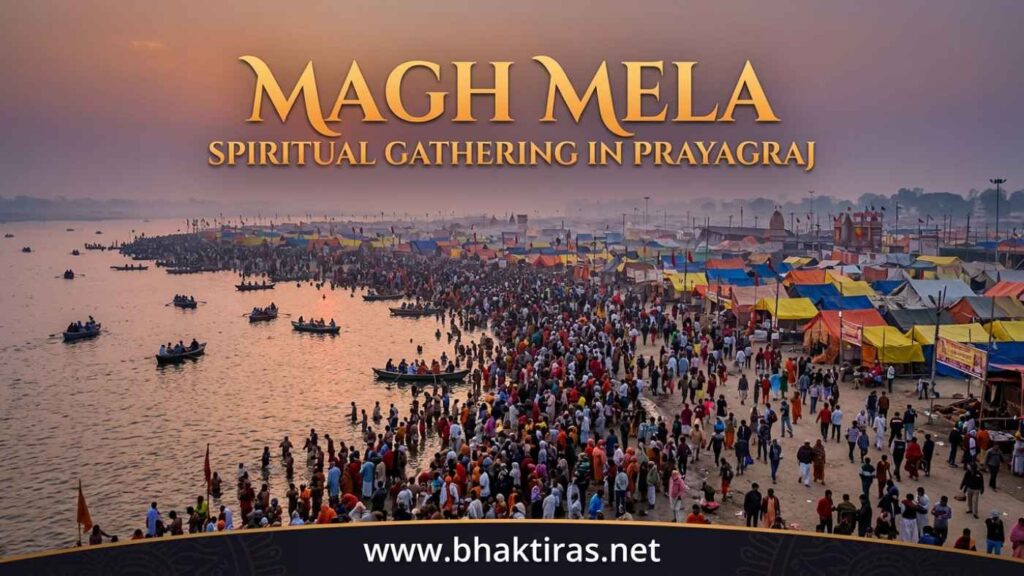
The Magh Mela is the annual pilgrimage and fair held every winter at the Triveni Sangam in Prayagraj, where the Ganga, Yamuna and the unseen Saraswati are believed to meet. Through the Hindu month of Magha, from about mid-January to early March, pilgrims gather on the sandy floodplain to bathe on a handful of especially sacred days. Many stay the whole month as kalpavasis, living simply in riverside tents. This yearly gathering is the parent tradition from which the much larger Ardh Kumbh and Purna Kumbh later grew, which is why people often call it the mini Kumbh.
Magh Mela 2027-2028: Dates & Calendar
The 2027 Magh Mela stretches across the month of Magha, roughly 22 January to 6 March. Because it follows the Hindu lunisolar calendar, the exact span shifts by a few weeks each year.
| Year | Magha Mela span | First major dip | Notes |
|---|---|---|---|
| 2026 | 3 Jan – 15 Feb (approx) | Makar Sankranti, 14 Jan | Held before the 2027 mela |
| 2027 | 22 Jan – 6 Mar (approx) | Makar Sankranti, 14 Jan | Next occurrence |
| 2028 | 12 Jan – 23 Feb (approx) | Makar Sankranti, 15 Jan | Following year |
The main Snan (holy-dip) days of the 2027 Magh Mela are: Makar Sankranti – 14 January, Paush Purnima – 22 January (the traditional start of Kalpavas), Mauni Amavasya – 6 February (the biggest and most crowded dip), Basant Panchami – 11 February, Maghi Purnima – 20 February, and Maha Shivaratri – 6 March, which closes the mela. Spans are approximate and are fixed each year by local priests and the district administration.
Why the Magh Mela Is Held
The Magh Mela is held because a dip at the Sangam during Magha is believed to be exceptionally purifying, and because the month is traditionally set aside for austerity, prayer and charity.
The month of Magha
Hindu texts single out Magha as the ideal month for bathing at a sacred confluence. A month of self-discipline, japa and giving during this period is said to wash away accumulated wrongs and steady the mind. This belief draws pilgrims to the Sangam year after year.
The parent of the Kumbh
The Magh Mela is the base tradition from which the larger Kumbh events developed. The Ardh Kumbh falls every sixth year and the Purna Kumbh every twelfth year at Prayagraj; in the years between, the annual Magh Mela keeps the same rites, site and bathing days on a smaller scale.
The living Sangam
Bathing where three rivers meet carries deep meaning in Hindu thought – the visible Ganga and Yamuna and the hidden Saraswati. Standing waist-deep at the meeting point at dawn, then offering water to the rising sun, is the central act the whole mela is built around.
What Is Worshipped at the Mela
The Magh Mela centres on the sacred rivers themselves rather than a single temple deity, with worship offered to the Sangam and the Sun.
The Triveni Sangam
The confluence of the Ganga, Yamuna and Saraswati is treated as sacred in its own right. Pilgrims bow to the water, take a dip, and float small leaf-boats of flowers and lamps as offerings.
Surya
After bathing, pilgrims face the rising sun and offer arghya – water poured from cupped hands – a simple act of thanks that opens most mornings at the mela.
Sadhus and akharas
Ascetics, sant-mahatmas and monastic orders set up camps along the bank. Their discourses, kirtan and daily rituals give the mela its spiritual centre of gravity, though the great processional Shahi Snan of the akharas belongs to the Kumbh years.
The Magh Mela, Step by Step
For most pilgrims the visit follows a simple, unhurried rhythm around the bathing days.
- Arrive and settle. Pilgrims reach the tent city on the floodplain, often a day before a Snan date, and find a spot near their community or akhara camp.
- Rise before dawn. The holiest bathing is done in the cold pre-dawn hours, so families wake early and walk to the water’s edge in the dark.
- Take the holy dip. Standing at or near the Sangam, pilgrims immerse themselves, usually three or more times, with the names of the rivers and their chosen deity on their lips.
- Offer to the Sun. Wet from the dip, they face the rising sun and pour arghya, then apply tilak and offer a short prayer.
- Daan and seva. Giving is central to Magha – pilgrims donate food, blankets, sesame (til), grain or money to sadhus, the poor and priests.
- Darshan and satsang. The day is spent visiting camps for discourses, kirtan and the blessings of visiting saints.
- Kalpavas. Those who have vowed to stay the full month keep to a spare routine – one simple meal, repeated bathing, chanting and study – until the mela closes around Maha Shivaratri.
Kalpavas: Living the Month at the Sangam
Beyond the day-visitors, a large group commits to Kalpavas – staying on the riverbank for the whole month of Magha.
What Kalpavas means
Kalpavasis pledge to live austerely in tents by the river for the full month, bathing daily at the Sangam, eating once a day and spending their time in prayer, fasting, study and charity. The vow is often taken by older pilgrims and repeated for many years.
The tent city
A temporary township rises on the sand each winter – lanes, pontoon bridges, water points, camps of akharas and religious organisations, and rows of pilgrim tents – only to be dismantled once the river reclaims the floodplain.
Daily discipline
Life during Kalpavas is deliberately simple: a cold dawn dip, sattvic food, long stretches of japa and listening to scripture. The restraint is the point – the month is treated as a retreat from ordinary comforts.
Magh Mela Do's and Don'ts
A few practical and respectful pointers for visiting the Sangam during the mela.
Do
- Plan your dip around the Snan dates and arrive early, as crowds swell overnight.
- Carry warm clothing – Magha mornings at Prayagraj are cold and the dip is colder.
- Give daan of food, blankets or grain if you can; charity is part of the observance.
- Note your camp location and family meeting point before entering the crowd.
- Follow the marked bathing ghats and the instructions of mela authorities.
Avoid
- Do not litter or leave offerings that pollute the river; use the bins provided.
- Do not venture into deep or unmarked water; stay within the roped bathing zones.
- Do not carry heavy valuables into the crush on the biggest days like Mauni Amavasya.
- Do not photograph sadhus or bathing pilgrims without asking first.
- Do not treat kalpavasis’ camps as a spectacle; move through quietly and with respect.
Frequently Asked Questions
When is the Magh Mela in 2027?
The Magh Mela of 2027 runs through the Hindu month of Magha, roughly 22 January to 6 March 2027, at the Triveni Sangam in Prayagraj. It is anchored by six holy bathing days, from Makar Sankranti on 14 January to Maha Shivaratri on 6 March. Exact spans are set each year by local priests and the district administration.
What are the main bathing (Snan) days of the 2027 Magh Mela?
The six main Snan days of the 2027 Magh Mela are Makar Sankranti (14 January), Paush Purnima (22 January), Mauni Amavasya (6 February), Basant Panchami (11 February), Maghi Purnima (20 February) and Maha Shivaratri (6 March). Mauni Amavasya draws the single largest crowd of the mela.
Where is the Magh Mela held?
The Magh Mela is held at the Triveni Sangam in Prayagraj (formerly Allahabad), Uttar Pradesh – the confluence of the Ganga, Yamuna and the mythical Saraswati. A temporary tent city is built each winter on the river floodplain to host the pilgrims.
How is the Magh Mela different from the Kumbh Mela?
The Magh Mela is the annual version held every year, while the Kumbh at Prayagraj is far larger and occurs on a longer cycle – the Ardh Kumbh roughly every sixth year and the Purna Kumbh every twelfth year. The Magh Mela is the parent tradition, using the same site and bathing days, which is why it is often called the mini Kumbh.
What is Kalpavas during the Magh Mela?
Kalpavas is the vow of living austerely on the riverbank at the Sangam for the whole month of Magha. Kalpavasis stay in tents, bathe daily in the river, eat once a day and spend the month in prayer, fasting, scripture and charity, breaking camp around Maha Shivaratri.
Why is bathing in Magha considered so important?
Bathing at a sacred confluence during Magha is believed to be especially purifying in Hindu tradition, and the month is set aside for self-discipline, prayer and giving. A dawn dip at the Sangam followed by an offering to the Sun is regarded as cleansing for both body and mind.
When is the Magh Mela in 2028?
The 2028 Magh Mela will again run through the month of Magha, roughly 12 January to 23 February 2028, closing around Maha Shivaratri on 23 February. As with every year, the precise dates are fixed by the local calendar and the Prayagraj mela administration.
Is the Magh Mela open to everyone?
Yes, the Magh Mela is open to all pilgrims and visitors, and there is no charge to bathe at the Sangam. It is busiest on the main Snan days, so many people plan around those dates while others visit on quieter days of the month.
May your dip at the Sangam bring peace and a clear heart. Har Har Gange.