Bhai Dooj 2026 – The Sister-Brother Day of Diwali
भाई दूज
When is Bhai Dooj in 2026?
Bhai Dooj falls on Wednesday, 11 November 2026. It is the fifth and final day of Diwali, observed on Kartik Shukla Dwitiya, when sisters apply a tilak on their brothers’ foreheads and pray for their long life, and brothers pledge protection and offer gifts.
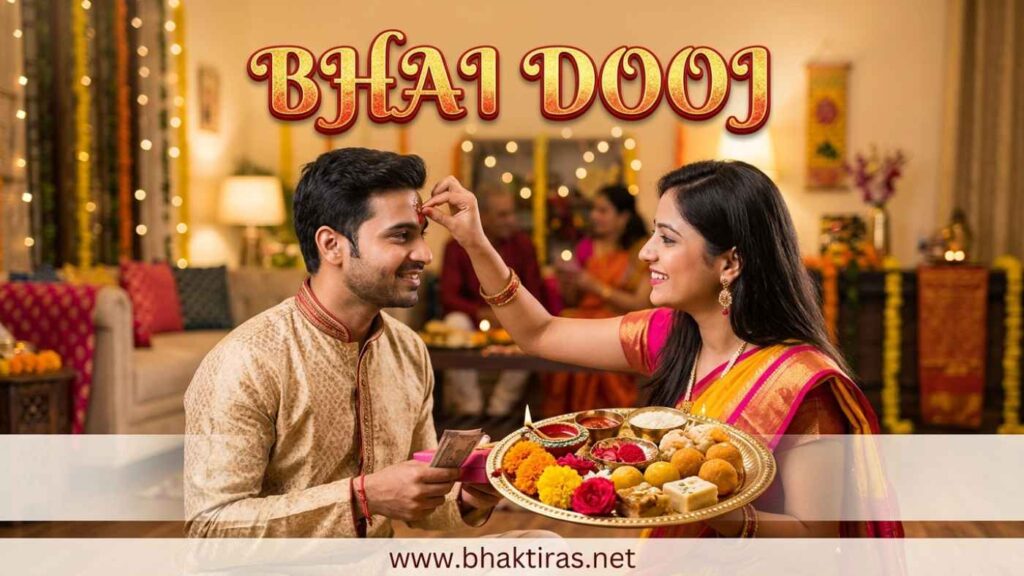
Bhai Dooj is the tender sibling festival that closes the five days of Diwali, falling on the second day of the bright fortnight of Kartik. On this morning a sister seats her brother, marks his forehead with a tilak of vermilion or sandal paste, waves a lamp in aarti and feeds him sweets while praying for his long, healthy life; the brother, in turn, gives her a gift and promises to protect her always. The day recalls Yamraj, the god of death, visiting his sister Yamuna, which is why it is also honoured as Yama Dwitiya.
Bhai Dooj 2026-2028: Dates & Calendar
Bhai Dooj next falls on 11 November 2026. Because it follows the Hindu lunar calendar and lands on Kartik Shukla Dwitiya, the Gregorian date shifts each year, usually between mid-October and mid-November.
| Year | Date | Day | Notes |
|---|---|---|---|
| 2026 | 11 November | Wednesday | Next occurrence – fifth day of Diwali |
| 2027 | 31 October | Sunday | Kartik Shukla Dwitiya |
| 2028 | 19 October | Thursday | Kartik Shukla Dwitiya |
The tilak is traditionally applied during the Dwitiya tithi, most often in the forenoon; the exact auspicious window is listed year by year in local panchangs, so check yours for the aparahna timing in your city.
Why Bhai Dooj Is Celebrated
Bhai Dooj celebrates the bond between sisters and brothers and the wish for each other’s wellbeing. Its best-known story is the visit of Yamraj to his sister Yamuna.
Yamraj visits Yamuna
According to the popular legend, Yamraj, the god of death, went to see his sister Yamuna after a long separation. She welcomed him warmly, applied a tilak, garlanded him and served a meal. Touched, Yama declared that any brother who receives a tilak from his sister on this day would be blessed with a long life, which is why the day is called Yama Dwitiya.
Krishna and Subhadra
A second tradition links the day to Krishna, who visited his sister Subhadra after slaying the demon Narakasura. She received him with a tilak, sweets and flowers, and the affectionate welcome became a model for the festival.
A prayer for long life
At its heart Bhai Dooj is a prayer, not a transaction. The sister’s aarti and tilak carry a wish for her brother’s protection and long life, and his gift and vow to safeguard her answer that love in kind.
Deities & Figures Worshipped
Bhai Dooj does not centre on temple worship of a single god; the figures remembered are Yamraj and Yamuna, whose reunion gives the day its name and meaning.
Yamraj
Yama, the god of death and dharma, is remembered as the brother who was honoured by his sister Yamuna. His blessing of long life to tilak-receiving brothers frames the whole day, and some households offer a prayer to Yama for protection from untimely death.
Yamuna
The river-goddess Yamuna is the ideal sister of the legend. Her warm welcome of her brother is the pattern every sister re-enacts, and bathing in or remembering the Yamuna is considered especially meritorious on this day.
Key Rituals, Step by Step
The observance is simple and home-based, centred on the sister’s tilak and aarti for her brother.
- Prepare the thali. The sister arranges a plate with vermilion or sandal paste, rice grains (akshat), a lamp for aarti, sweets and a coconut or dry fruits.
- Seat the brother. The brother sits on a low wooden seat or mat, often facing east, sometimes on a rangoli or chowk drawn for him.
- Apply the tilak. The sister marks his forehead with the tilak and presses on a few rice grains, the central act of the day.
- Perform aarti. She waves the lit lamp before him and prays for his long life and wellbeing.
- Offer sweets and food. She feeds him sweets and, in many homes, a full festive meal cooked with his favourite dishes.
- Tie or receive a token. In some regions the sister ties a protective thread; the brother then gives her a gift or money and pledges to look after her.
- Share a meal together. The family eats together, and elders bless the siblings, closing the Diwali season on a warm note.
Special Foods of Bhai Dooj
The meal is affectionate and homemade, built around the brother’s favourite dishes and classic Diwali sweets.
Festive sweets
Barfi, kaju katli, laddoo and pedha are shared as the sister feeds her brother after the tilak, carrying over the sweetness of the Diwali days.
Basundi & Shrikhand
For Bhau Beej, rich milk-based sweets such as basundi and thick, saffron-scented shrikhand often accompany a puran poli or festive thali.
Bhai Phonta feast
In Bengal the day means an elaborate spread for the brother – luchi, several vegetable and fish or meat dishes, and sweets like sandesh and rasgulla.
Homemade savouries
Alongside sweets, families serve the leftover Diwali namkeen and freshly cooked favourites the brother loves, from pooris to festive rice.
Regional Names & Variations
The same festival is loved across India and Nepal under different names, with small local differences in ritual.
Maharashtra & Goa (Bhau Beej)
Called Bhau Beej, the day features the tilak and aarti, and sisters who have no brother may honour the moon instead. Rich milk sweets mark the meal.
Bengal (Bhai Phonta)
Known as Bhai Phonta, the sister applies a phonta of sandal, kajal and ghee on her brother’s forehead, recites a protective verse, then serves a grand feast.
North India (Bhai Dooj / Bhai Tika)
Across Uttar Pradesh, Rajasthan, Bihar and neighbouring states it is Bhai Dooj, with the tilak, sweets and gifts as the core, often preceded by a bath in the Yamuna where possible.
Nepal (Bhai Tika)
In Nepal the day, Bhai Tika, is a highlight of Tihar; sisters apply a distinctive multi-coloured tika and encircle their brothers with a ritual garland and oil, praying for their long life.
Bhai Dooj Do's and Don'ts
A few gentle customs help keep the day meaningful and warm.
Do
- Apply the tilak during the day’s auspicious tithi, ideally in the forenoon
- Let the sister complete the aarti and blessing before the brother eats
- Prepare or share the brother’s favourite home-cooked dishes
- Have the brother offer a heartfelt gift, not just a token
- Include cousins and extended family so no sibling feels left out
Avoid
- Do not rush or skip the tilak and aarti – they are the heart of the day
- Avoid treating the gift as an obligation rather than affection
- Do not quarrel or speak harshly with siblings on this day
- Avoid serving stale or purely store-bought food if a home meal is possible
- Do not overlook a sister or brother living far away – a call or video tilak keeps the bond
Frequently Asked Questions
When is Bhai Dooj in 2026?
Bhai Dooj in 2026 falls on Wednesday, 11 November. It is observed on Kartik Shukla Dwitiya, the second day of the bright fortnight of Kartik, and is the fifth and final day of Diwali.
When is Bhai Dooj in 2027 and 2028?
Bhai Dooj is on Sunday, 31 October 2027 and Thursday, 19 October 2028. The date shifts each year because it follows the Hindu lunar calendar and always falls on Kartik Shukla Dwitiya.
Why is Bhai Dooj also called Yama Dwitiya?
Bhai Dooj is called Yama Dwitiya because it recalls Yamraj, the god of death, visiting his sister Yamuna, who welcomed and honoured him with a tilak and a meal. Pleased, Yama blessed brothers who receive a tilak from their sisters on this day with long life.
What do sisters and brothers do on Bhai Dooj?
On Bhai Dooj a sister applies a tilak on her brother’s forehead, performs aarti and prays for his long life, then feeds him sweets. The brother gives her a gift and pledges to protect her, and the family shares a festive meal.
Which god is worshipped on Bhai Dooj?
Bhai Dooj centres on the figures of Yamraj and his sister Yamuna rather than temple worship of a single deity. Some households also offer a prayer to Yama for protection and long life, which is why the day is known as Yama Dwitiya.
What is Bhai Dooj called in different regions?
Bhai Dooj is known as Bhau Beej in Maharashtra and Goa, Bhai Phonta in Bengal and Bhai Tika in Nepal. Across North India it is simply Bhai Dooj or Bhai Dwitiya, and the tilak and prayer for the brother remain the shared core everywhere.
How is Bhai Dooj related to Diwali?
Bhai Dooj is the fifth and final day of the Diwali festival, coming two days after the main Lakshmi Puja night. It follows Govardhan Puja and closes the Diwali season with a celebration of the sister-brother bond.
What can a sister do if she has no brother?
A sister without a brother may honour the moon-god or a cousin, close friend or another relative with the tilak and prayer. The spirit of the day is the wish for a loved one’s long life and protection, so the ritual adapts to family circumstances.
May the tilak of this Bhai Dooj carry every sister’s love and every brother’s promise – Happy Bhai Dooj.