
ॐ
Shore Temple, Mahabalipuram
Shiva • Mahabalipuram, Chengalpattu, Tamil Nadu
॥ ॐ नमः शिवाय ॥
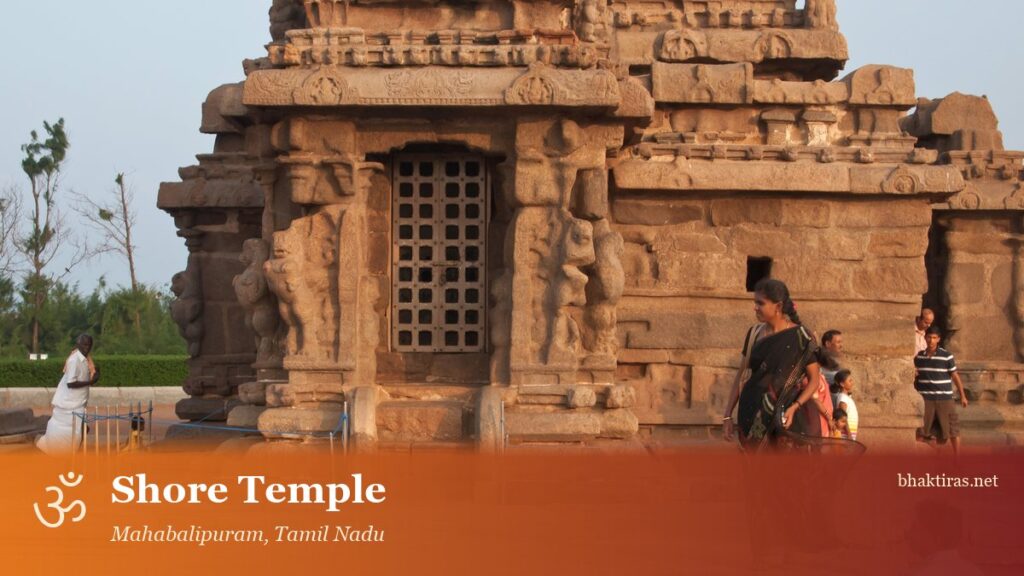
The Shore Temple at Mahabalipuram is a granite temple raised around 700–728 by the Pallava king Rajasimha on the very edge of the Bay of Bengal. One of the earliest structural stone temples in South India, it forms part of the UNESCO Group of Monuments at Mahabalipuram.
From rock-cut to built
Most of the earlier monuments at Mahabalipuram are carved out of living rock — caves, monolithic rathas and open-air reliefs. The Shore Temple marks a turning point: it is built up from cut and stacked granite blocks, an early example of the structural temple that would dominate South Indian architecture for the next thousand years.
It was raised under the Pallava ruler Rajasimha, also called Narasimhavarman II, in the opening decades of the 8th century.
Two gods, two directions
The temple is unusual in combining three shrines in one complex: two dedicated to Shiva and one, between them, holding a reclining image of Vishnu (Anantashayana). The two Shiva towers face opposite ways, one east toward the sunrise over the sea and one west toward the land.
This double orientation meant the rising sun would strike one sanctum directly off the water, a deliberate piece of staging that also made the spires a daytime landmark for ships.
Standing against the sea
Centuries of salt wind have softened the granite carving, and a protective breakwater and rows of planted casuarina now shield the temple from erosion. The compound wall is topped by long rows of seated Nandi figures, many worn but still recognisable.
After the 2004 tsunami briefly drew back the water, submerged structures and a stone lion were glimpsed offshore, reviving old accounts of a larger group of temples now under the waves.
- Two Shiva shrines facing east and west
- A central reclining-Vishnu shrine
- A boundary wall lined with rows of Nandi bulls
Visiting the Shore Temple
The temple stands within a ticketed enclosure on the seafront and is best seen early, before the sea haze thickens and the crowds arrive. It pairs with the nearby Pancha Rathas, Arjuna’s Penance relief and the cave temples, all part of the same World Heritage group.
Mahabalipuram (Mamallapuram) lies about 55 km south of Chennai along the coast road, an easy day trip from the city.
Frequently Asked Questions
Who built the Shore Temple at Mahabalipuram?
The Shore Temple was built by the Pallava king Rajasimha, also known as Narasimhavarman II, around 700–728 CE. It is one of the earliest structural stone temples of South India. It stands on the Bay of Bengal shore at Mahabalipuram.
Which deities are worshipped at the Shore Temple?
The complex holds both Shiva and Vishnu. Two shrines are dedicated to Shiva and face opposite directions, while a central shrine houses a reclining image of Vishnu. This combination in a single structure is unusual for the period.
Why does the temple face the sea?
One of its two Shiva towers faces east so the rising sun strikes the sanctum directly off the water, while the other faces west toward the land. The seaward orientation also made the spires a daytime landmark for passing ships. The arrangement was a deliberate piece of architectural staging.
Is the Shore Temple a UNESCO World Heritage Site?
Yes. It is part of the Group of Monuments at Mahabalipuram, inscribed by UNESCO in 1984. The group also includes the Pancha Rathas, the Arjuna’s Penance relief and several cave temples.
Was the carving damaged by the sea?
Yes, centuries of salt-laden wind have worn down the granite reliefs. A breakwater and planted casuarina trees now help protect the temple from further erosion. Despite the weathering, the towers and the rows of Nandi figures on the wall remain clearly visible.
How far is Mahabalipuram from Chennai?
Mahabalipuram, also called Mamallapuram, is about 55 km south of Chennai along the coastal road. It is an easy day trip by car or bus. The Shore Temple is usually visited together with the other monuments in the same area.
॥ हर हर महादेव ॥ • Bhaktiras.net Temple Guide
| Primary Deity | Shiva |
| Built | c. 700–728 CE |
| Dynasty | Pallava |
| Patron | King Rajasimha |
| Material | Granite |
| Shrines | Two Shiva, one Vishnu |
| UNESCO | Inscribed 1984 |
| Location | Mahabalipuram, Tamil Nadu |
Related Temples
Explore more sacred temples connected by deity and region.
 ShivaAiravatesvara Temple, Darasuram📍 Tamil Nadu
 ShivaArunachaleswarar Temple, Thiruvannamalai📍 Tamil Nadu
 ShivaArunachaleswarar Temple, Tiruvannamalai📍 Tamil Nadu
 ShivaBrihadeeswara Temple, Thanjavur📍 Tamil Nadu
 ShivaChidambaram Nataraja Temple📍 Tamil Nadu
 ShivaEkambareswarar Temple, Kanchipuram📍 Tamil Nadu