ॐ
Baijnath Temple, Kumaon
Shiva as Vaidyanath • Baijnath, Bageshwar, Uttarakhand
॥ ॐ नमः शिवाय ॥
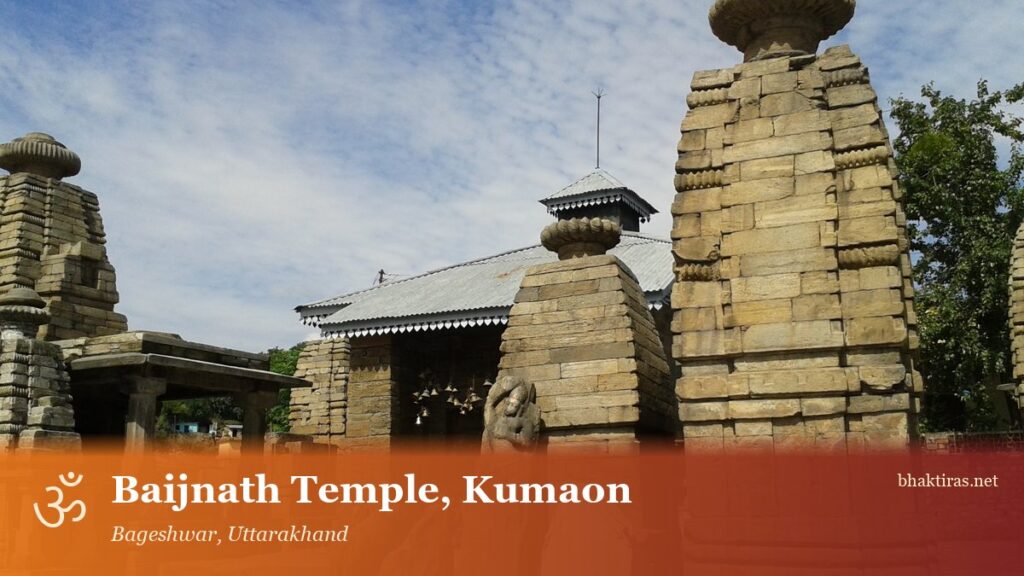
On the bank of the Gomati in the Kumaon hills, a group of grey-stone shrines marks Baijnath, where Shiva is worshipped as Vaidyanath, the lord of physicians. The Katyuri kings raised these temples around the 12th century, and the main sanctum keeps a finely carved image of Parvati. The setting, close to Kausani, joins quiet river meadows with some of the oldest stonework in the region.
The Katyuri foundation
Baijnath grew up as a temple cluster under the Katyuri dynasty, who held this part of Kumaon as their seat before their power faded. The dressed-stone shrines you see today are dated by most accounts to roughly the 12th century, set within a walled compound beside the water.
The site sits in what was once the Katyuri capital area, and the temples reflect a court that could command skilled masons. Smaller subsidiary shrines surround the principal one, a common pattern in early Himalayan temple groups.
Shiva as Vaidyanath
Here the lord is venerated as Vaidyanath, a name that casts Shiva as the divine physician who heals body and spirit. Devotees who come with illness or worry address him in that role, and the dedication gives the temple its enduring local importance.
The sanctum is also remembered for its image of Parvati, carved with the care typical of the better Katyuri work. Together the figures hold the shrine in the old north-Indian devotional pairing of Shiva and his consort.
Nagara stonework on the Gomati
The architecture follows the classical Nagara idiom, with a curving spire over the sanctum and carved bands across the outer walls. Built entirely of stone rather than the timber and slate of later hill temples, the group has weathered centuries on the riverbank.
The Gomati flows close by, and the temples were placed so that the water and the shrine read as one composition. The plainer surfaces of some shrines beside the ornamented main one suggest building across more than one phase.
Visiting Baijnath
Baijnath lies in Bageshwar district, an easy reach from the hill station of Kausani, and many travellers fold it into a wider Kumaon route. The cool climate makes the spring and autumn months especially pleasant for a visit.
Mornings are quiet and good for unhurried darshan and photography of the carvings. The riverside compound rewards a slow walk among the shrines rather than a quick stop.
- District: Bageshwar, Kumaon division
- Nearest hill base: Kausani
- Builders: Katyuri kings, around the 12th century
- Style: classical Nagara stone temples
Frequently Asked Questions
Who built the Baijnath temples?
The Katyuri kings built the Baijnath temple group, generally dated to around the 12th century. The Katyuris ruled much of Kumaon and Garhwal from a seat in this very area, and the dressed-stone shrines reflect their patronage.
Which deity is worshipped at Baijnath?
Shiva is worshipped at Baijnath as Vaidyanath, the lord of physicians. The main sanctum also holds a celebrated image of Parvati, so the shrine honours the divine pair together.
Where is Baijnath temple located?
Baijnath stands on the bank of the Gomati river in Bageshwar district of Uttarakhand, in the Kumaon hills. It is close to the hill station of Kausani and easy to combine with a Kumaon tour.
What architectural style is Baijnath?
Baijnath is built in the classical Nagara style, with a curving sanctum spire and carved stone walls. Unlike many later Himalayan shrines of timber and slate, the whole group is made of dressed stone.
Is Baijnath the same as the Baidyanath Jyotirlinga?
No. The Baidyanath Jyotirlinga is at Deoghar in Jharkhand. The Kumaon Baijnath shares the Vaidyanath name for Shiva but is a separate Katyuri-era temple group in Uttarakhand.
What is the best time to visit Baijnath?
Spring and autumn are the most comfortable times, with clear hill weather and mild days. Early mornings are best for quiet darshan and for studying the stone carving.
॥ हर हर महादेव ॥ • Bhaktiras.net Temple Guide
| Primary Deity | Shiva as Vaidyanath |
| Builders | Katyuri kings |
| Period | c. 12th century |
| River | Gomati |
| Style | Classical Nagara stone |
| District | Bageshwar |
| Region | Kumaon |
| Nearest base | Kausani |
Related Temples
Explore more sacred temples connected by deity and region.