ॐ
Kashi Vishwanath Temple, Guptkashi
Shiva (Vishwanath) • Guptkashi, Uttarakhand
॥ ॐ नमः शिवाय ॥
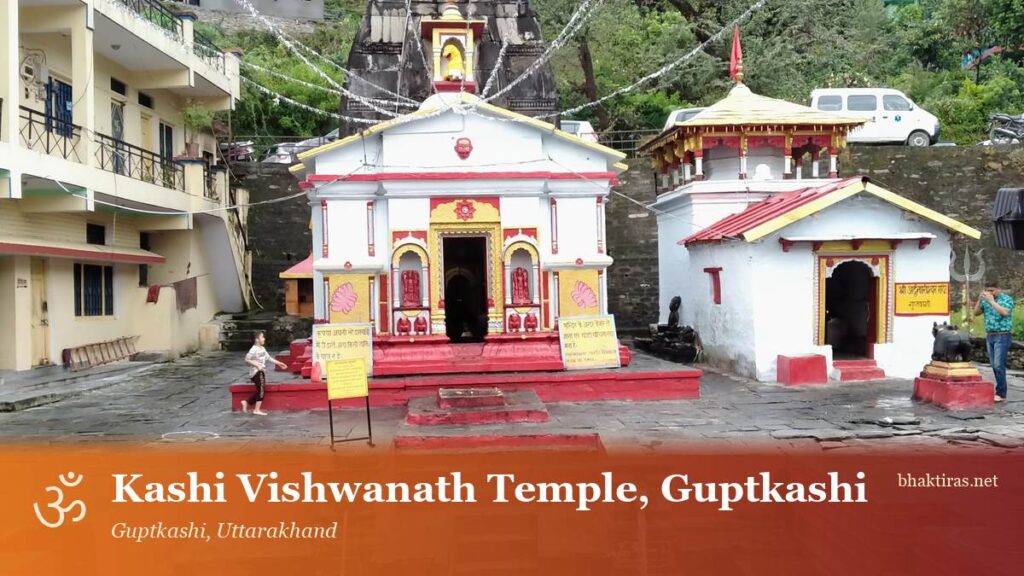
At Guptkashi in the Kedar valley, on the road to Kedarnath, the Kashi Vishwanath temple honours Shiva as Vishwanath, echoing the great shrine of Kashi. Its name recalls the legend that Shiva hid here, gupt, from the Pandavas before revealing himself at Kedarnath.
A Shiva temple on the Kedarnath road
Guptkashi lies in the Rudraprayag district of Uttarakhand, set in the Kedar valley along the route that pilgrims take toward Kedarnath. The town is a common halt on the Char Dham journey through the Garhwal hills.
Its Kashi Vishwanath temple gives Guptkashi a Shaiva focus, with the lord worshipped as Vishwanath, the same title borne by the deity at Kashi, the city of Varanasi. The shared name links this hill shrine to the famous plains temple.
The legend of the hidden lord
The name Guptkashi means the hidden Kashi, and it comes from a story of the Mahabharata. After the great war the Pandavas sought Shiva to seek release from their sins, and the lord, unwilling to face them, hid himself here before moving on.
He is said to have finally revealed himself at Kedarnath, further up the valley. Guptkashi thus marks a stage in that pursuit, a place where the lord concealed his presence before the encounter at the higher shrine.
Vishwanath and Ardhanareshwar
Within the complex, beside the Vishwanath shrine, stands a temple to Ardhanareshwar, the form that joins Shiva and Parvati in a single body, half male and half female. The two shrines stand together within the temple precinct.
This pairing gives the site a double focus, the lord of all as Vishwanath and the united form of god and goddess as Ardhanareshwar. Pilgrims visit both as part of their darshan here.
- Vishwanath shrine, echoing Kashi
- Ardhanareshwar temple alongside
- Manikarnik Kund with two water spouts
The Manikarnik Kund
Within the temple grounds is the Manikarnik Kund, a sacred tank fed by two spouts. Tradition holds that these bring the waters of the Ganga and the Yamuna together at this spot, a meeting of two great rivers in miniature.
During the Char Dham season the town and its temple grow busy with pilgrims passing through. The kund, the shrines and the legend together make Guptkashi a meaningful pause on the way to Kedarnath.
Frequently Asked Questions
Why is it called Guptkashi?
The name Guptkashi means the hidden Kashi. It comes from the legend that Shiva hid, gupt, here from the Pandavas before revealing himself at Kedarnath.
Which deity is worshipped at the Guptkashi temple?
The temple is dedicated to Shiva, worshipped as Vishwanath, the same title borne by the deity at Kashi in Varanasi. A shrine to Ardhanareshwar stands beside it.
What is the Manikarnik Kund?
The Manikarnik Kund is a sacred tank within the temple grounds, fed by two spouts. Tradition says these bring the waters of the Ganga and the Yamuna together at this spot.
What is the Ardhanareshwar temple here?
The Ardhanareshwar temple stands beside the Vishwanath shrine and is dedicated to the form that joins Shiva and Parvati in one body, half male and half female. Pilgrims visit both shrines together.
Is Guptkashi on the way to Kedarnath?
Yes, Guptkashi lies in the Kedar valley on the route to Kedarnath. It is a common halt for pilgrims during the Char Dham season.
Where is Guptkashi located?
Guptkashi is in the Rudraprayag district of Uttarakhand, in the Garhwal Himalaya. It sits along the road leading toward Kedarnath.
॥ हर हर महादेव ॥ • Bhaktiras.net Temple Guide
| Primary Deity | Shiva as Vishwanath |
| Name Meaning | Hidden Kashi (Gupt + Kashi) |
| Legend | Shiva hid from the Pandavas |
| Adjacent Shrine | Ardhanareshwar temple |
| Sacred Tank | Manikarnik Kund (two spouts) |
| On Route To | Kedarnath |
| Location | Guptkashi, Rudraprayag |
| State | Uttarakhand |
Related Temples
Explore more sacred temples connected by deity and region.