ॐ
Kodungallur Bhagavathy Temple
Bhadrakali • Kodungallur, Thrissur, Kerala
॥ ॐ दुं दुर्गायै नमः ॥
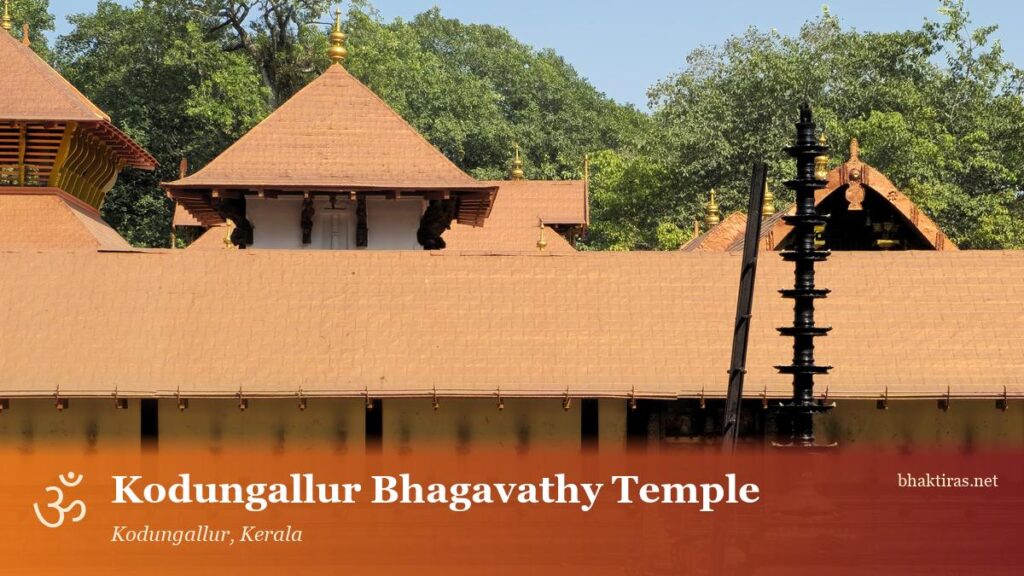
At the old Chera port of Kodungallur — the Cranganore of European maps and the Muziris of Roman traders — the Bhagavathy here is Bhadrakali, the fierce protector goddess of Kerala. Worshippers know her as the form said to have sprung from Shiva’s third eye to end the demon Darika, and her shrine is among the most important Shakta centres on the Malabar coast. The annual Bharani draws crowds whose loud, ecstatic devotion has made the temple famous across the region.
The goddess and her legend
The presiding deity is Bhadrakali, a fierce aspect of the Mother goddess. The temple tradition holds that she emerged from Shiva’s third eye to destroy the demon Darika, and her image carries the weapons and severed head of that conquest — a reminder that her ferocity is turned against evil and toward the protection of her devotees.
Kerala has long worshipped Bhadrakali as a guardian of communities, and Kodungallur is treated by many Malayali families as the source-shrine of that worship. The goddess is approached as a mother who is fierce on behalf of her children rather than a distant figure, which shapes the unusually direct and emotional character of devotion here.
Muziris, the Cheras, and Kannagi
Kodungallur sits on ground tied to the ancient Chera kingdom and to the trading port the Romans called Muziris, a hub where pepper and spices left the Malabar coast for the Mediterranean. The temple’s antiquity is bound up with that history, placing it among the oldest active Mother-goddess sites in the region.
Tradition also connects the shrine to Kannagi, the wronged heroine of the Tamil epic Silappadikaram, who in the story is venerated as a goddess after her grief and anger. This thread links Kodungallur to a wider south Indian devotion to the powerful, justice-bearing feminine.
The Bharani festival
The defining event is the Bharani festival in the Malayalam month of Meenam, when oracles known as velichappadu gather and devotion turns loud and uninhibited. The festival’s songs and shouted invocations are unlike the quiet of most temple worship, and they express a frank, intense relationship with the goddess.
A distinctive rite called the kavutheendal marks a high point of the gathering. The Bharani has historically drawn very large crowds and remains the single occasion that most defines the temple’s public character.
- Bharani falls in the Malayalam month of Meenam (Mar–Apr); exact dates follow the lunar calendar each year.
- Velichappadu (oracle) traditions are central to the festival atmosphere.
- The kavutheendal is a defining ritual moment of the celebration.
Visiting the temple
Kodungallur lies in Thrissur district, reachable by road from Thrissur town and from the Kochi area, with the nearest major railhead and airport serving the wider region. Pilgrims often combine a visit with the heritage sites around this historic port town.
The temple is busiest during Bharani; on ordinary days it offers a calmer setting to see one of Kerala’s principal Bhadrakali shrines. Visitors should follow the temple’s dress and conduct norms as posted on site.
Frequently Asked Questions
Who is the deity at Kodungallur Bhagavathy Temple?
The deity is Bhadrakali, a fierce form of the Mother goddess. Temple tradition holds that she sprang from Shiva’s third eye to destroy the demon Darika. She is worshipped as a powerful protector of her devotees.
Where is Kodungallur Bhagavathy Temple located?
The temple is in Kodungallur, also spelled Cranganore, in Thrissur district of Kerala. It sits on ground linked to the ancient Chera port of Muziris. It is reachable by road from Thrissur and the Kochi area.
What is the Bharani festival?
Bharani is the temple’s defining festival, held in the Malayalam month of Meenam. It is known for its loud, ecstatic devotion, its oracle (velichappadu) traditions, and the kavutheendal ritual. Exact dates follow the lunar calendar each year.
Why is Kodungallur historically important?
Kodungallur is tied to the ancient Chera kingdom and the Roman-era spice port known as Muziris. This makes it one of the oldest active Mother-goddess shrines on the Malabar coast. The temple’s history is woven into the region’s early trade past.
Is the temple connected to the Silappadikaram?
Yes, tradition links Kodungallur to Kannagi, the heroine of the Tamil epic Silappadikaram, who is venerated as a goddess in that story. This connects the shrine to a broader south Indian devotion to the powerful feminine. It is part of the temple’s legendary heritage.
What kind of Shakta centre is Kodungallur?
Kodungallur is a principal Shakta centre on the Malabar coast and is regarded by many Kerala families as a source-shrine of Bhadrakali worship. Devotion here is unusually direct and emotional. It draws pilgrims from across the region, especially during Bharani.
॥ जय भद्रकाली ॥ • Bhaktiras.net Temple Guide
| Primary Deity | Bhadrakali |
| Tradition | Shakta |
| Location | Kodungallur, Thrissur, Kerala |
| Historic Name | Cranganore / Muziris |
| Main Festival | Bharani (Meenam) |
| Key Ritual | Kavutheendal |
| Oracle Tradition | Velichappadu |
| Region | Malabar coast |
Related Temples
Explore more sacred temples connected by deity and region.