ॐ
Chausath Yogini Temple, Khajuraho
64 Yoginis · Khajuraho, Madhya Pradesh
॥ ॐ दुं दुर्गायै नमः ॥
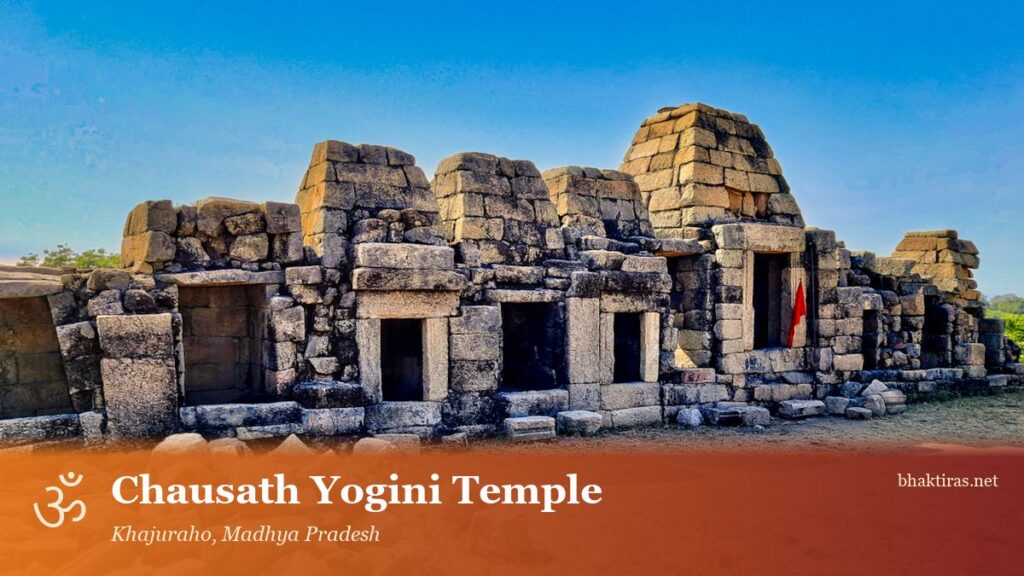
The Chausath Yogini Temple at Khajuraho is the oldest surviving temple of the famous group, and the only one built of granite — a stark, open-air shrine of the sixty-four yoginis raised by the Chandelas in the 9th century. Rectangular rather than round, its rows of small cells once held the images of the fierce goddesses of the Tantric tradition, and it stands at the dawn of Khajuraho’s great age.
The oldest temple of Khajuraho
Built around the late 9th century, the Chausath Yogini is the earliest of the Khajuraho temples, predating the famous sandstone shrines by a century or more, and the only one made of coarse granite. Its plain, severe form is a world away from the ornate temples that followed, marking the beginning of Chandela temple-building.
The cells of the yoginis
Unlike the circular yogini temples found elsewhere, the Khajuraho shrine is a long rectangle raised on a high platform, its inner walls lined with sixty-four small cells — of which around thirty-five survive — each once enshrining an image of a yogini, the powerful goddesses worshipped in groups of sixty-four in the Tantric cults. Open to the sky, it was built for rites very different from those of ordinary temples.
In the temple-town of Khajuraho
Khajuraho, the capital-temple complex of the Chandelas, is a UNESCO World Heritage group famous for its sculpture, and the Chausath Yogini stands a little apart as its oldest and most austere shrine. Visited by lovers of early architecture and by Shakta pilgrims, it offers a glimpse of the Tantric worship that underlies much of the site.
How to reach the temple
- By road: the temple is at Khajuraho in Chhatarpur district, within the western group of monuments.
- By train: Khajuraho has its own railway station.
- By air: Khajuraho Airport is a few kilometres away.
Frequently Asked Questions
Why is the Khajuraho Chausath Yogini temple important?
It is the oldest surviving temple at Khajuraho, built around the late 9th century, and the only one made of granite — marking the beginning of Chandela temple-building.
How is it different from other yogini temples?
Unlike the circular yogini temples found elsewhere, the Khajuraho shrine is a long rectangle on a high platform, its inner walls lined with sixty-four cells for the yoginis.
Who are the chausath (64) yoginis?
The yoginis are the fierce, powerful goddesses of the Tantric tradition, worshipped in groups of sixty-four; each cell of the temple once held a yogini image.
How many cells survive?
Of the original sixty-four cells, around thirty-five survive today on the open-air rectangular platform.
Is it part of the Khajuraho UNESCO site?
Yes — it stands within the famous Khajuraho group, a UNESCO World Heritage Site, as its oldest and most austere temple.
How do I reach the temple?
It is at Khajuraho in Chhatarpur district; Khajuraho has its own railway station and airport.
॥ जय माता दी ॥ • Bhaktiras.net Temple Guide
| Deity | The 64 yoginis |
| Significance | Oldest temple at Khajuraho; only granite one |
| Form | Rectangular, open-air, 64 cells (~35 survive) |
| Period | Late 9th c, Chandela |
| Setting | Khajuraho UNESCO group |
| Tradition | Tantric yogini cult |
Related Temples
Explore more sacred temples connected by deity and region.