
ॐ
Swamimalai Murugan Temple
Arupadai Veedu (4th) · Swamimalai, Tamil Nadu
॥ ॐ शरवणभव ॥
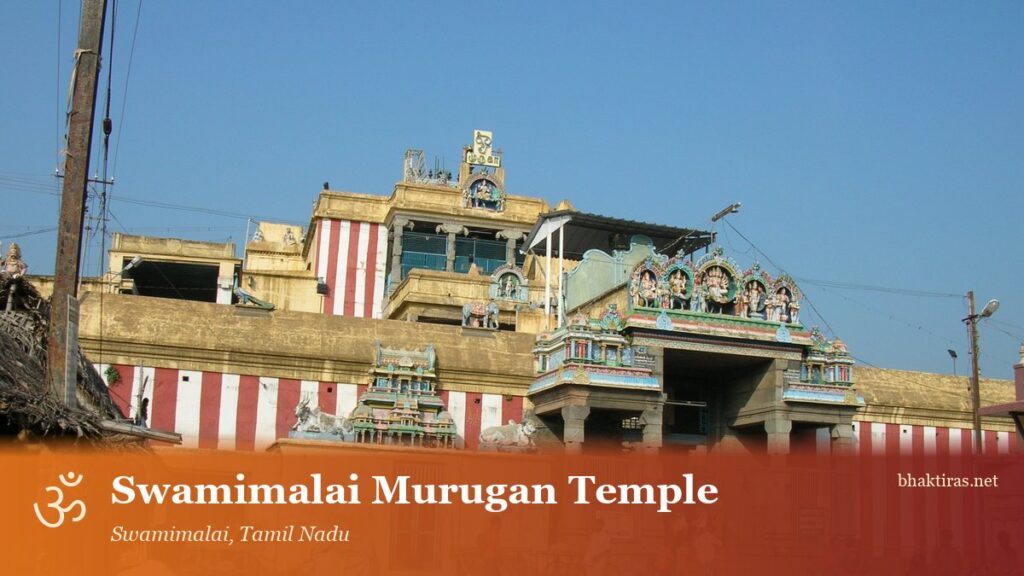
Swamimalai, near Kumbakonam, is the fourth of the six sacred abodes (Arupadai Veedu) of Lord Murugan — and the one where the son became the teacher of his father. Here Murugan, worshipped as Swaminatha, is said to have expounded the meaning of the sacred syllable Om to Shiva himself, and devotees climb sixty steps, one for each year of the Tamil cycle, to reach the hilltop shrine.
The son who taught his father
The temple’s great story is the Pranava Upadesa. When even Brahma could not explain the inner meaning of Om, the child Murugan imprisoned him and took over the work of creation; and when Shiva asked his son to explain the syllable, Murugan instructed him as a guru instructs a disciple. For teaching Om to his own father, the lord here is called Swaminatha — “teacher of Shiva” — and the hill, Swamimalai.
Sixty steps for sixty years
The shrine stands on a hill, partly built up by hand, reached by a flight of sixty steps. Each step is named for one of the sixty years of the Tamil calendar cycle, so that the climb itself becomes a passage through time toward the deity. The main sanctum at the summit enshrines Swaminatha with his consorts, looking out over the green delta of the Kaveri.
Among the six abodes of Murugan
Swamimalai is counted as the fourth of the Arupadai Veedu, the six “battle camps” or abodes of Murugan sung in Tamil devotion, alongside Thiruparankundram, Tiruchendur, Palani, Thiruthani and Pazhamudircholai. Pilgrims often make the circuit of all six, and Swamimalai’s place as the seat of divine teaching gives it a special draw for those seeking wisdom.
Festivals and the bronze town
Vaikasi Visakam, in May–June, celebrating Murugan’s star, is the temple’s great festival, along with the Skanda Sashti. The surrounding town of Swamimalai is famous as a centre of traditional bronze icon-making, where sculptors still cast images by the lost-wax method, so a visit joins living craft to ancient worship.
How to reach Swamimalai
- By road: Swamimalai is about 8 km from Kumbakonam in the Thanjavur district, well served by bus.
- By train: Kumbakonam Junction is the nearest major railhead; Swamimalai also has a small station.
- By air: Tiruchirapalli (Trichy) is the nearest airport, about 90 km away.
Frequently Asked Questions
Why is Murugan called Swaminatha at Swamimalai?
Swaminatha means “teacher of Shiva.” At Swamimalai, Murugan is said to have explained the meaning of the sacred syllable Om to his father Shiva, acting as the guru — which is why the lord and the hill bear this name.
What is the significance of the sixty steps?
The hilltop shrine is reached by sixty steps, each named for one of the sixty years of the Tamil calendar cycle, so the climb symbolises a passage through time toward the deity.
Which of the six abodes of Murugan is Swamimalai?
Swamimalai is the fourth of the Arupadai Veedu, the six sacred abodes of Murugan, the others being Thiruparankundram, Tiruchendur, Palani, Thiruthani and Pazhamudircholai.
What is the main festival at Swamimalai?
Vaikasi Visakam, in May–June, celebrating the star of Murugan, is the temple’s great festival, along with Skanda Sashti.
What is Swamimalai town known for besides the temple?
Swamimalai is a renowned centre of traditional bronze icon-making, where sculptors still cast deities by the ancient lost-wax method.
How do I reach Swamimalai?
Swamimalai is about 8 km from Kumbakonam in Thanjavur district. Kumbakonam Junction is the nearest major railway station, and Tiruchirapalli airport is about 90 km away.
॥ वेत्रिवेल् मुरुगनुक्कु अरोहरा ॥ • Bhaktiras.net Temple Guide
| Temple Name | Swamimalai Murugan Temple |
| Primary Deity | Murugan (Swaminatha) |
| Location | Swamimalai, Thanjavur |
| State | Tamil Nadu, India |
| Significance | 4th Arupadai Veedu of Murugan |
| Architecture | Pandya / Chola |
| Period | 8th–10th century |
| Steps | 60 (Tamil year cycle) |
| Key Festival | Vaikasi Visakam |
| River Nearby | Kaveri |
| Nearest Station | Kumbakonam |
| Entry | Free |
Related Temples
Explore more sacred temples connected by deity and region.
 MuruganArupadai Veedu — Six Abodes of Murugan📍 Tamil Nadu
 MuruganKumarakottam Murugan Temple, Kanchipuram📍 Tamil Nadu
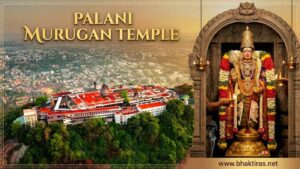 MuruganPalani Murugan Temple (Dhandayuthapani)📍 Tamil Nadu
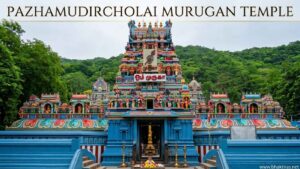 MuruganPazhamudircholai Murugan Temple📍 Tamil Nadu
 MuruganThiruparankundram Murugan Temple📍 Tamil Nadu
 MuruganThiruthani Murugan Temple📍 Tamil Nadu