
ॐ
Shirdi Sai Baba Temple (Samadhi Mandir)
Sai Baba • Shirdi, Maharashtra
॥ ॐ साईं राम ॥
The Samadhi Mandir at Shirdi enshrines the tomb of Sai Baba, the saint whose simple message, “Sabka Malik Ek” (one God for all), drew followers across faiths. He lived in this small Ahmednagar village from the mid-19th century until his mahasamadhi on 15 October 1918, and his resting place has since grown into one of India’s busiest pilgrim centres. Both Hindu and Muslim devotees come to bow before the marble tomb where he was laid to rest.
The saint of Shirdi
Little is recorded of Sai Baba’s birth or early life; he arrived in Shirdi as a young faqir and made the village his home for the rest of his days. He lived in a dilapidated mosque he called Dwarkamai, kept a sacred fire (dhuni) burning there, and met every visitor with the same plain counsel of patience, charity and faith.
His teaching cut across the religious lines of his time. He drew on both Hindu and Islamic practice, asked the rich to feed the poor, and turned no one away. The phrase most associated with him, “Sabka Malik Ek,” summed up a life spent insisting that the same God belongs to everyone.
The Samadhi Mandir
When Sai Baba passed away on Vijayadashami in 1918, his body was interred in a building that had been intended as a private wada. That structure became the Samadhi Mandir, and the white-marble tomb at its centre is the focus of every visit. In 1954 a life-size marble idol of Baba was installed directly behind the tomb, and the two are worshipped together.
The day at the mandir is shaped by four aartis — Kakad (dawn), Madhyana (noon), Dhoop (evening) and Shej (night) — sung before the samadhi. Queues for darshan can be long, especially on weekends and festival days, and the Sansthan operates an organised token and prasad system to manage the crowds.
Sacred spots around the shrine
The Samadhi Mandir does not stand alone. A short walk away is Dwarkamai, the mosque where Baba actually lived, where the dhuni he lit still burns and pilgrims collect its sacred ash (udi). Close by is the Chavadi, where he slept on alternate nights and which is still honoured with a Thursday palanquin procession.
Other sites within the complex include the Gurusthan, marking the neem tree under which Baba was first seen as a youth, and Lendi Baug, a garden he tended himself. Together these spots let visitors trace the everyday geography of his life rather than only his tomb.
- Dwarkamai — the mosque where Baba lived, with the ever-burning dhuni
- Chavadi — his alternate-night resting place, honoured each Thursday
- Gurusthan and Lendi Baug — the neem-tree shrine and Baba’s garden
Planning a visit
The shrine is managed by the Shri Saibaba Sansthan Trust, which runs darshan, prasad, accommodation and the large dining hall (prasadalaya). Free and paid darshan lines, online booking and aarti passes are all available, and the trust’s facilities make it possible to plan a visit in advance.
The biggest gatherings fall on Ram Navami, Guru Purnima and Vijayadashami (the anniversary of Baba’s mahasamadhi), when the village fills well beyond its normal capacity. Thursdays, associated with Baba, are also especially busy. Modest dress and a willingness to wait in line make for a smoother visit on these days.
Frequently Asked Questions
What is the Shirdi Sai Baba Temple?
It is the Samadhi Mandir of Sai Baba of Shirdi, built around the white-marble tomb where the saint was laid to rest after his mahasamadhi in 1918. A marble idol of Baba was added behind the tomb in 1954, and the two are worshipped together. The shrine sits in Shirdi village in Maharashtra’s Ahmednagar district.
Who was Sai Baba of Shirdi?
Sai Baba was a saint who lived in Shirdi from the mid-19th century until 1918 and is revered by both Hindus and Muslims. His best-known teaching, “Sabka Malik Ek,” means that one God belongs to all. Little is documented about his birth or origins, and he is honoured for his message of charity, patience and faith.
When did Sai Baba take mahasamadhi?
Sai Baba took mahasamadhi on 15 October 1918, the day of Vijayadashami. His body was interred in Shirdi in a building that became the Samadhi Mandir. The anniversary is observed each year as one of the shrine’s three major festivals.
What can pilgrims see near the Samadhi Mandir?
Close to the tomb are Dwarkamai, the mosque where Baba lived and where his dhuni fire still burns, and the Chavadi, where he slept on alternate nights. The Gurusthan neem-tree shrine and Lendi Baug garden are also within walking distance. These places follow the everyday path of Baba’s life in Shirdi.
Who manages the Shirdi shrine?
The shrine is run by the Shri Saibaba Sansthan Trust. It organises darshan queues, aarti passes, prasad, the large dining hall and pilgrim accommodation, with both free and paid options. Online booking is available for darshan and aarti.
What are the main festival days at Shirdi?
The three biggest days are Ram Navami, Guru Purnima and Vijayadashami, the anniversary of Baba’s mahasamadhi. Thursdays, associated with Baba, also draw larger-than-usual crowds. Visitors should expect long darshan queues at these times.
॥ श्री साईं नाथाय नमः ॥ • Bhaktiras.net Temple Guide
| Primary Deity | Sai Baba of Shirdi |
| Location | Shirdi, Ahmednagar district |
| State | Maharashtra |
| Type | Samadhi shrine (saint’s tomb) |
| Mahasamadhi | 15 October 1918 |
| Idol installed | 1954 (marble) |
| Managed by | Shri Saibaba Sansthan Trust |
| Major festivals | Ram Navami, Guru Purnima, Vijayadashami |
Related Temples
Explore more sacred temples connected by deity and region.
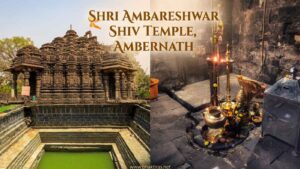 ShivaAmbarnath Shiv Temple (Ambreshwar)📍 Maharashtra
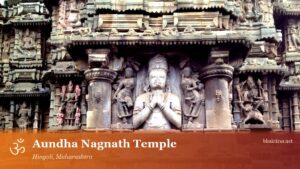 ShivaAundha Nagnath Temple📍 Maharashtra
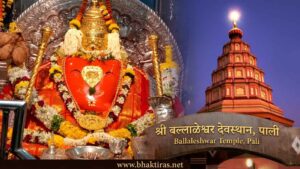 GaneshaBallaleshwar Temple, Pali (3rd Ashtavinayak)📍 Maharashtra
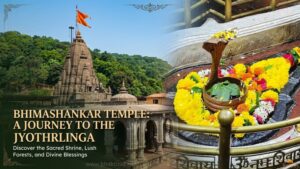 ShivaBhimashankar Temple📍 Maharashtra
 GaneshaChintamani Temple, Theur (5th Ashtavinayak)📍 Maharashtra
 GaneshaDagdusheth Halwai Ganpati Temple, Pune📍 Maharashtra