ॐ
Khajuraho Temples — Complete Guide
Shiva • Khajuraho, Madhya Pradesh
॥ ॐ नमः शिवाय ॥
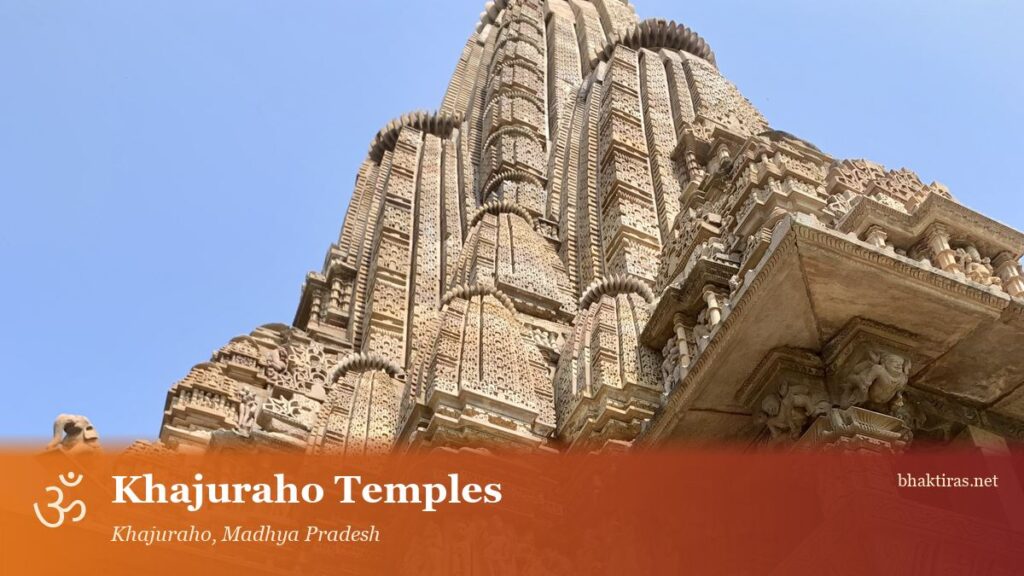
The Khajuraho group of monuments in Madhya Pradesh gathers some of the finest temple sculpture in India, raised by the Chandela dynasty between about 950 and 1050. This guide walks through the three groups of surviving temples, the deities they honour and the carved walls that have made Khajuraho a UNESCO World Heritage Site.
A Chandela achievement
Over roughly a century the Chandela rulers built around 85 temples on the plateau at Khajuraho, of which about 25 survive in good condition today. The work spanned several reigns and reflects a confident, prosperous court that drew sculptors and architects to a single sustained programme.
After the Chandela power waned, the remote location helped the surviving temples escape the worst of later destruction. They lay largely forgotten in forest until British surveyors drew attention to them in the 19th century, and the cluster was inscribed by UNESCO in 1986.
Three groups, three traditions
The temples fall into Western, Eastern and Southern groups. The Western group is the largest and best preserved, holding the major Shiva and Vishnu shrines and most of the celebrated sculpture. The Eastern group mixes Hindu temples with a set of Jain temples honouring the Tirthankaras, while the Southern group lies a little further out.
Across the groups the dedications span Shiva, Vishnu and the Jain faith, so a full visit moves between Shaiva, Vaishnava and Jain worship within a short distance. This mix on one site is part of what makes Khajuraho unusual.
Nagara towers and carved walls
The temples are built in the North Indian Nagara style, set on high platforms with a rising sequence of halls leading to the sanctum. Above the sanctum the shikhara climbs in clustered miniature peaks, echoing the form of a mountain.
The outer walls carry tiers of sculpture — gods, attendants, musicians, dancers and the much-discussed mithuna couples that have given Khajuraho its popular fame. Read as a whole, the carving presents an entire world of court and divine life wrapped around the shrine.
Key temples to see
For a first visit it helps to focus on a handful of the most rewarding temples rather than trying to absorb the whole field at once. The following make a strong route through the site:
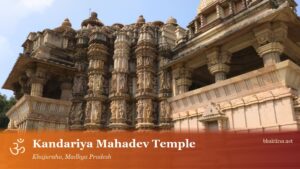
- Kandariya Mahadev — the tallest and most richly carved Shiva temple, the high point of the Western group
- Lakshmana Temple — an early, complete Vishnu temple with a full sculpted platform
- Vishvanatha Temple — a Shiva temple paired with a fine Nandi pavilion
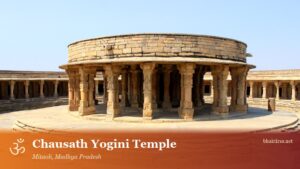
- Chausath Yogini — the oldest surviving temple here, in austere granite
- Parsvanath Temple — the largest of the Jain temples in the Eastern group
Planning your visit
Khajuraho has its own airport and railway station, making it easier to reach than its remote past suggests. Mornings and late afternoons give the softest light on the sandstone and the most comfortable temperatures for walking the open platforms.
An annual dance festival held against the temples draws performers and audiences each year, and a sound-and-light show recounts the Chandela story after dark. Allow at least a full day to take in the Western group properly before moving to the Eastern and Southern temples.
Frequently Asked Questions
What are the Khajuraho temples famous for?
The Khajuraho temples are famous for their Nagara-style architecture and abundant sculpture, including the well-known mithuna panels. Built by the Chandela dynasty between about 950 and 1050, the surviving group is a UNESCO World Heritage Site in Madhya Pradesh.
How many Khajuraho temples survive?
Of an original 85 or so temples, about 25 survive today. They are divided into the Western, Eastern and Southern groups and are dedicated to Shiva, Vishnu and the Jain Tirthankaras.
Who built the Khajuraho temples?
The temples were built by the Chandela dynasty between roughly 950 and 1050. The work spanned several reigns of a prosperous court that sustained a long programme of temple building on the Khajuraho plateau.
Which is the most important temple at Khajuraho?
The Kandariya Mahadev temple is the tallest and most richly carved, and is usually seen as the high point of the Western group. Dedicated to Shiva, it shows the Khajuraho style at its most developed.
Are the Khajuraho temples only Hindu?
No. While most are Hindu temples dedicated to Shiva and Vishnu, the Eastern group also includes Jain temples honouring the Tirthankaras. A full visit moves between Shaiva, Vaishnava and Jain shrines on the same site.
When were the Khajuraho temples made a UNESCO site?
The Khajuraho Group of Monuments was inscribed as a UNESCO World Heritage Site in 1986. The listing recognises the architecture and sculpture of the surviving Chandela-era temples.
॥ हर हर महादेव ॥ • Bhaktiras.net Temple Guide
| Built | c. 950–1050 CE |
| Builders | Chandela dynasty |
| Original temples | About 85 |
| Surviving temples | About 25 |
| Groups | Western, Eastern, Southern |
| Dedications | Shiva, Vishnu, Jain Tirthankaras |
| Architecture | Nagara style |
| UNESCO status | World Heritage Site since 1986 |
| Location | Khajuraho, Madhya Pradesh |
Related Temples
Explore more sacred temples connected by deity and region.