ॐ
Bull Temple, Basavanagudi
Nandi (Bull of Shiva) · Basavanagudi · Bengaluru
॥ ॐ नमः शिवाय ॥
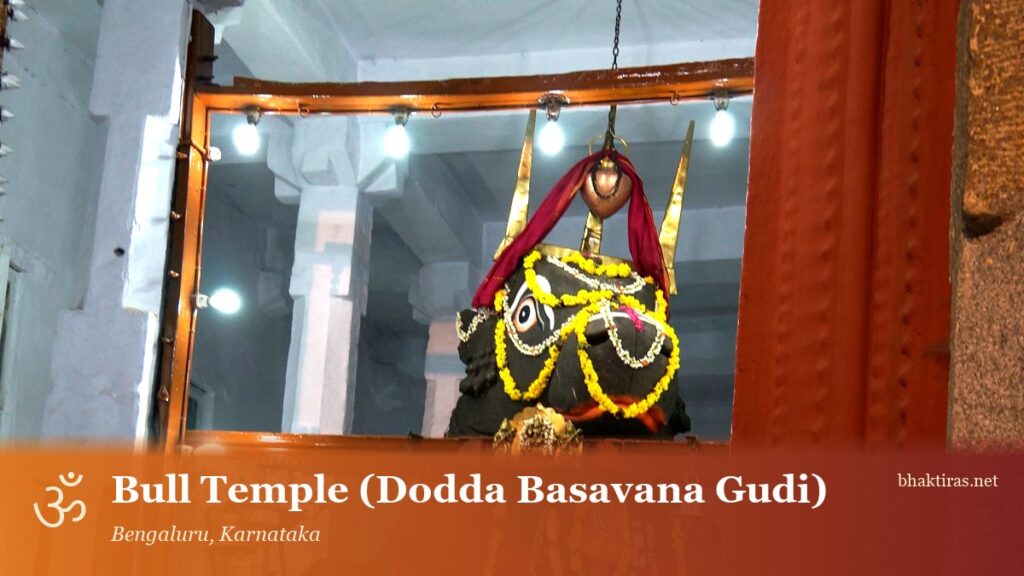
The Dodda Basavana Gudi in Basavanagudi shelters one of the largest images of Nandi, the bull who carries Shiva, carved whole from a single block of grey granite. The shrine gives its Bengaluru neighbourhood its name — Basavanagudi means ‘the temple of the bull’. Pilgrims circle the dark, garlanded figure that has been polished smooth by centuries of touch, and the surrounding streets fill each winter for the groundnut fair that grew up around the hill.
A monolithic Nandi above the old town
The presiding figure here is not Shiva himself but his vehicle and gatekeeper, Nandi, sculpted from one continuous mass of granite and rising several metres inside a modest stone hall. Worshippers approach the seated bull head-on, where its horns and bell are dressed in fresh garlands and a coat of oil that has darkened the rock over generations. The scale of the carving — among the biggest Nandi images anywhere — turns a simple act of darshan into something quietly overwhelming.
Local memory dates the work to the founding era of Bengaluru, the early sixteenth century, when the chieftain Kempe Gowda laid out the city and its protective shrines. The temple sits on a low rise once known as Bugle Rock, and the bull faces a small Shiva linga shrine nearby, keeping the traditional alignment of Nandi gazing eternally toward his lord.
Kempe Gowda and the naming of Basavanagudi
Bengaluru’s founder is woven into the temple’s story: the shrine is counted among the markers Kempe Gowda set around his new settlement, and the whole locality took its identity from the bull enshrined here. ‘Basava’ is the Kannada word for bull, and Basavanagudi remains one of the oldest and most characterful quarters of the city, full of agraharas, eateries and avenue trees.
Because the deity is a stone bull rather than a metal utsava idol, the temple keeps a plain, granitic dignity — no grand processional gopuram, just the rock-cut hall, the great figure, and the steady traffic of devotees who climb the few steps from the road to offer flowers and butter.
Kadalekai Parishe, the groundnut fair
Once a year, usually in late November or December, the lanes around the temple host the Kadalekai Parishe, a groundnut fair tied by custom to the harvest and to the bull’s appetite for the farmers’ crop. Cartloads of fresh peanuts are heaped along the streets, and the gathering draws growers from the surrounding countryside along with city crowds who come as much for the festival air as for the temple.
For the rest of the year the shrine keeps a calmer rhythm — morning and evening worship, butter-smeared offerings, and a slow circle of visitors. The combination of a single colossal carving and a living neighbourhood fair gives the Bull Temple a flavour distinct from Bengaluru’s newer landmarks.
How to reach Bull Temple, Basavanagudi
- By road: The temple sits in Basavanagudi in south Bengaluru, well served by city buses and easily reached by taxi or auto from any part of the city; Bull Temple Road runs right past it.
- By train: Bengaluru City (KSR) and Yeshwantpur are the main railway stations, both within a short drive; the Lalbagh and National College metro stations on the green line are the nearest rail links.
- By air: Kempegowda International Airport is around 35–40 km north of the city, connected to Basavanagudi by airport buses, app-cabs and the metro feeder network.
Frequently Asked Questions
Which deity is worshipped at the Bull Temple?
The shrine enshrines Nandi, the sacred bull who serves as the mount and gatekeeper of Lord Shiva. The presiding image is a giant granite Nandi rather than a Shiva linga, and a small Shiva shrine stands nearby in the direction the bull faces.
Why is the temple called Dodda Basavana Gudi?
‘Dodda Basavana Gudi’ means ‘the temple of the big bull’ in Kannada — ‘dodda’ is big and ‘basava’ is bull. The huge monolithic Nandi gives the temple, and the whole Basavanagudi neighbourhood, their names.
How old is the Bull Temple in Bengaluru?
Tradition links the temple to the founding period of Bengaluru in the early sixteenth century, during the time of the city’s founder Kempe Gowda. The great Nandi is generally said to have been carved around then.
What is the Kadalekai Parishe?
The Kadalekai Parishe is an annual groundnut fair held in the streets around the temple, usually in late November or December. Farmers bring cartloads of peanuts to sell, and large crowds gather for the festival.
Is the Bull Temple in the same area as Bugle Rock?
Yes. The temple sits on a low granite rise next to Bugle Rock Park in Basavanagudi, one of the oldest residential quarters of Bengaluru, making it easy to combine both in one visit.
Is there an entry fee at the Bull Temple?
Entry for darshan is generally free, as at most Hindu temples. Visitors may make voluntary offerings of flowers, butter or donations, and the temple is open during regular morning and evening worship hours.
॥ हर हर महादेव ॥ • Bhaktiras.net Temple Guide
| Primary Deity | Nandi (the bull of Shiva) |
| Location | Basavanagudi, Bengaluru, Karnataka |
| Built | Early 16th century (Kempe Gowda era) |
| Image | Monolithic granite Nandi, among the largest in the world |
| Annual Fair | Kadalekai Parishe (groundnut fair) |
| Founder Tradition | Kempe Gowda, founder of Bengaluru |
Related Temples
Explore more sacred temples connected by deity and region.