ॐ
Mahabodhi Temple, Bodh Gaya
Buddha • Bodh Gaya, Bihar
॥ बुद्धं शरणं गच्छामि ॥
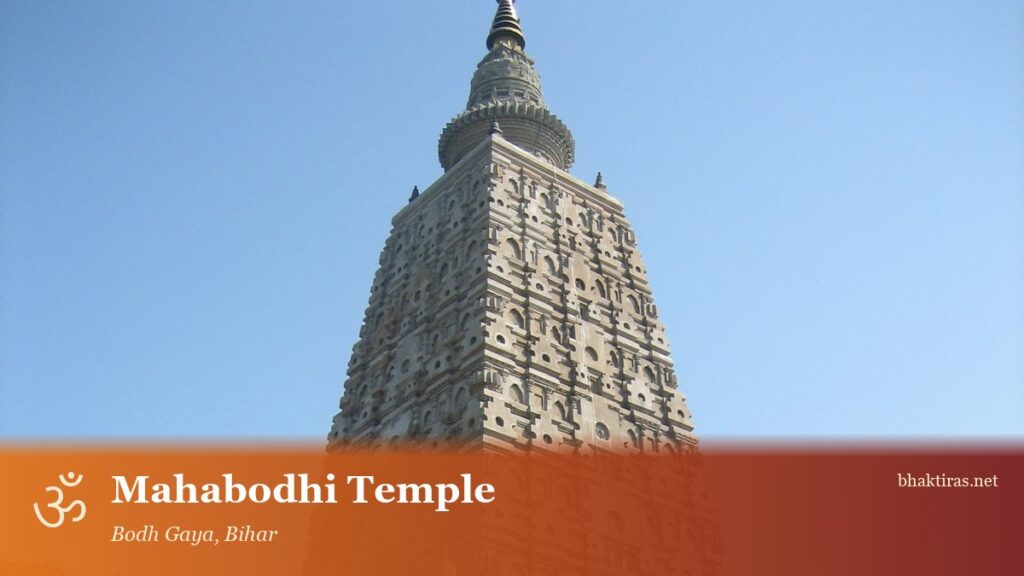
The Mahabodhi Temple at Bodh Gaya marks the exact spot where Siddhartha Gautama sat in meditation and awoke to become the Buddha. Its tall brick tower rises beside a descendant of the very Bodhi tree under which that awakening is said to have happened, drawing pilgrims from across the Buddhist world and from Hindu tradition, where the Buddha is honoured as an avatar of Vishnu.
Where the Buddha awoke
Bodh Gaya sits on the bank of the Niranjana river in Bihar, and the Mahabodhi complex grows outward from a single point: the seat beneath the Bodhi tree where Prince Siddhartha resolved not to rise until he understood the cause of suffering. The enlightenment he reached there gave the place its name — Bodh Gaya, the Gaya of awakening.
Around that seat the wider precinct gathers stupas, votive shrines and meditating pilgrims, but everything points back to the diamond throne and the tree behind the main tower. Walking the inner path, visitors trace the seven sites where tradition says the Buddha spent the weeks immediately after his awakening.
A temple built across centuries
Emperor Ashoka first honoured the spot in the 3rd century BCE, raising a shrine and a stone diamond throne to mark it. The grand brick tower seen today largely belongs to the Gupta period of the 5th and 6th centuries, with repairs and rebuildings continuing over the long stretches when the site fell quiet and was later recovered.
The result is a soaring straight-sided spire faced with tiers of niches, an early and influential example of monumental Indian brick architecture. Restoration work in the 19th century brought the structure back into worship, and in 2002 the temple was inscribed as a UNESCO World Heritage Site.
The Bodhi tree and the Vajrasana
Behind the tower grows a pipal tree held to descend from the original Bodhi tree, tended through the centuries from cuttings carried as far as Sri Lanka and back. Beneath it rests the Vajrasana, the sandstone diamond throne placed by Ashoka to fix the seat of enlightenment in stone.
Pilgrims circle the tree, leave offerings of gold leaf and prayer flags, and sit in silence facing the throne. The combination of living tree and ancient seat makes this the single holiest place in Buddhism, the goal of a lifetime’s journey for many.
A shared reverence
While Bodh Gaya is the heart of the Buddhist world, the figure at its centre is also part of Hindu devotion. Many Hindu texts count the Buddha among the avatars of Vishnu, and Hindu pilgrims visit the temple with respect alongside Buddhist monks from Tibet, Thailand, Myanmar, Sri Lanka and beyond.
The surrounding town reflects this, with monasteries built in the styles of many nations clustered near the temple. For travellers it is both a place of active worship and a quiet lesson in how one teacher came to be revered across faiths.
Frequently Asked Questions
What is the Mahabodhi Temple known for?
The Mahabodhi Temple marks the place where Siddhartha Gautama attained enlightenment and became the Buddha. It is the holiest site in Buddhism and a UNESCO World Heritage Site, built around the Bodhi tree and the diamond throne at Bodh Gaya in Bihar.
Who built the Mahabodhi Temple?
Emperor Ashoka first marked the spot with a shrine and a stone throne in the 3rd century BCE. The present tall brick temple largely dates to the Gupta period of the 5th and 6th centuries, with later repairs and 19th-century restoration.
Is the Bodhi tree at Bodh Gaya the original one?
The tree growing behind the temple is held to be a descendant of the original Bodhi tree. Over the centuries it was regrown from cuttings, including saplings taken to Sri Lanka and brought back, so it continues the line of the original.
Why do Hindus also revere the Mahabodhi Temple?
Hindu tradition honours the Buddha as an avatar of Vishnu, so Hindu pilgrims visit the temple with reverence. Bodh Gaya is therefore a place respected across both faiths, though it remains first and foremost the holiest site of Buddhism.
Is the Mahabodhi Temple a UNESCO World Heritage Site?
Yes. The Mahabodhi Temple Complex at Bodh Gaya was inscribed as a UNESCO World Heritage Site in 2002. It is recognised for marking the place of the Buddha’s enlightenment and for its early monumental brick architecture.
What is the Vajrasana at Bodh Gaya?
The Vajrasana, or diamond throne, is the sandstone seat placed by Emperor Ashoka beneath the Bodhi tree. It fixes in stone the spot where the Buddha is said to have sat during his enlightenment, and pilgrims revere it alongside the tree.
॥ नमो बुद्धाय ॥ • Bhaktiras.net Temple Guide
| Significance | Place of the Buddha’s enlightenment |
| Deity | Buddha (avatar of Vishnu in Hindu tradition) |
| First marked | 3rd century BCE by Emperor Ashoka |
| Present temple | Gupta period, 5th–6th century |
| Sacred tree | Descendant of the original Bodhi tree |
| Sacred seat | Vajrasana (diamond throne) |
| UNESCO status | World Heritage Site since 2002 |
| Location | Bodh Gaya, Bihar |
Related Temples
Explore more sacred temples connected by deity and region.