ॐ
Rudranath Temple
Shiva · Panch Kedar (4th) · Uttarakhand
॥ ॐ नमः शिवाय ॥
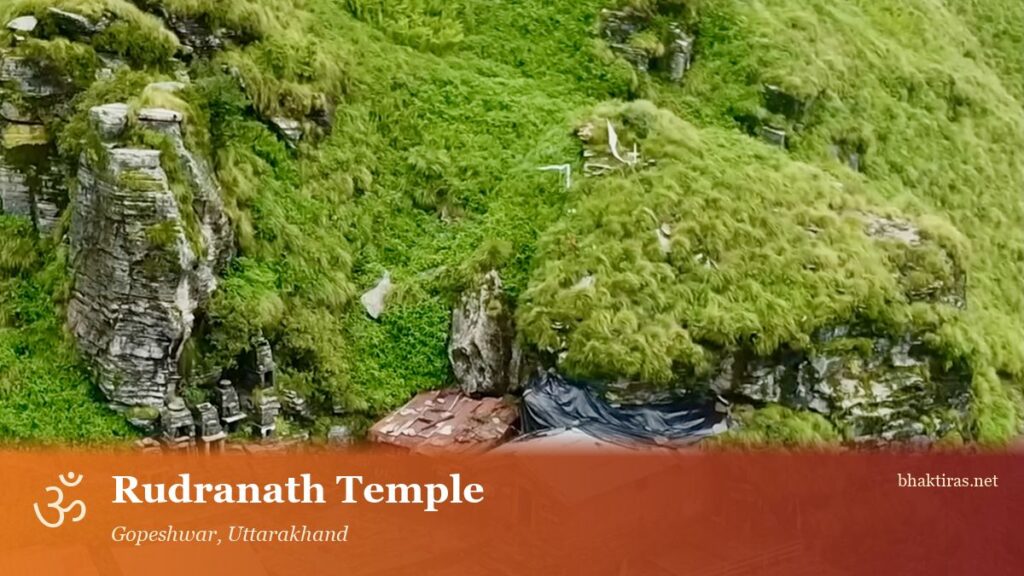
Rudranath is the fourth shrine of the Panch Kedar, where the face of Shiva is worshipped as Neelkanth Mahadev inside a natural rock cleft in the high Garhwal. It is reckoned the hardest of the five to reach, won only by a long trek through rhododendron forest and open bugyal. From its meadow the great summits of Nanda Devi and Trishul fill the skyline, and in winter the deity’s worship withdraws to Gopeshwar.
The face of Shiva in living rock
At Rudranath the face (mukha) of Shiva is venerated, the fourth portion of the bull-form to surface in the Panch Kedar legend. Unlike a built sanctum, the deity here resides in a natural rock shrine, worshipped as Neelkanth Mahadev — the blue-throated lord who swallowed the world’s poison.
The setting is deliberately wild: a stone face within a cleft, fronted by a small forecourt and a sacred pond, with no grand tower or gateway. For many pilgrims that rawness, more cave than cathedral, is exactly the appeal of the fourth Kedar.
The hardest Panch Kedar trek
Reaching Rudranath demands one of the toughest walks in Garhwal, commonly begun from Sagar village near Gopeshwar. The trail runs for many kilometres through dense oak and rhododendron forest, then onto high meadows, with sharp ascents and descents that test stamina over one or two long days.
The reward at the meadow is a Himalayan horizon led by Nanda Devi, Trishul and Hathi Parvat. Because the route is remote with few facilities, walkers come prepared for cold, mist and sudden weather.
Seasonal access and the Gopeshwar seat
Rudranath keeps the seasonal rhythm of the Panch Kedar, opening for the warmer months and closing before the deep snows. During winter the deity’s worship moves to Gopeshwar, where the shrine’s winter seat is kept.
The exposed, high-altitude approach means the practical window is short, and pilgrims plan around the committee’s announced opening and closing dates set by the Hindu calendar.
How to reach Rudranath Temple
- By road: Drive to Gopeshwar and on to Sagar village, the usual trek start, via Chamoli on the Rishikesh–Badrinath road.
- By train: Rishikesh and Haridwar are the nearest railheads, connected to Delhi, with onward road transport to Gopeshwar and Sagar.
- By air: Jolly Grant Airport, Dehradun, is the closest airport; from there a long mountain drive reaches Sagar before the forest-and-meadow trek begins.
Frequently Asked Questions
Which part of Shiva is worshipped at Rudranath?
The face (mukha) of Shiva is worshipped here as Neelkanth Mahadev, set within a natural rock shrine rather than a built sanctum.
Why is Rudranath considered the hardest Panch Kedar?
Its trek is long and remote, running for many kilometres through forest and high meadow with steep ascents and few facilities, making it the toughest of the five to reach.
Where does the trek to Rudranath begin?
It is most commonly begun from Sagar village near Gopeshwar in the Chamoli district.
What views does the shrine command?
From its meadow the temple looks out on major Himalayan peaks including Nanda Devi, Trishul and Hathi Parvat.
Where is winter worship held?
When Rudranath closes for winter, the deity is worshipped at Gopeshwar until the high shrine reopens.
What is its Panch Kedar order?
Rudranath is the fourth of the five Panch Kedar shrines, after Kedarnath, Madhyamaheshwar and Tungnath.
॥ हर हर महादेव ॥ • Bhaktiras.net Temple Guide
| Panch Kedar position | Fourth |
| Body part worshipped | Face |
| Form | Neelkanth Mahadev |
| Shrine type | Natural rock |
| Trek start | Sagar near Gopeshwar |
| Winter seat | Gopeshwar |
Related Temples
Explore more sacred temples connected by deity and region.