ॐ
Galtaji Temple, Jaipur
Surya & Sacred Kunds · The Monkey Temple · Jaipur
॥ ॐ सूर्याय नमः ॥
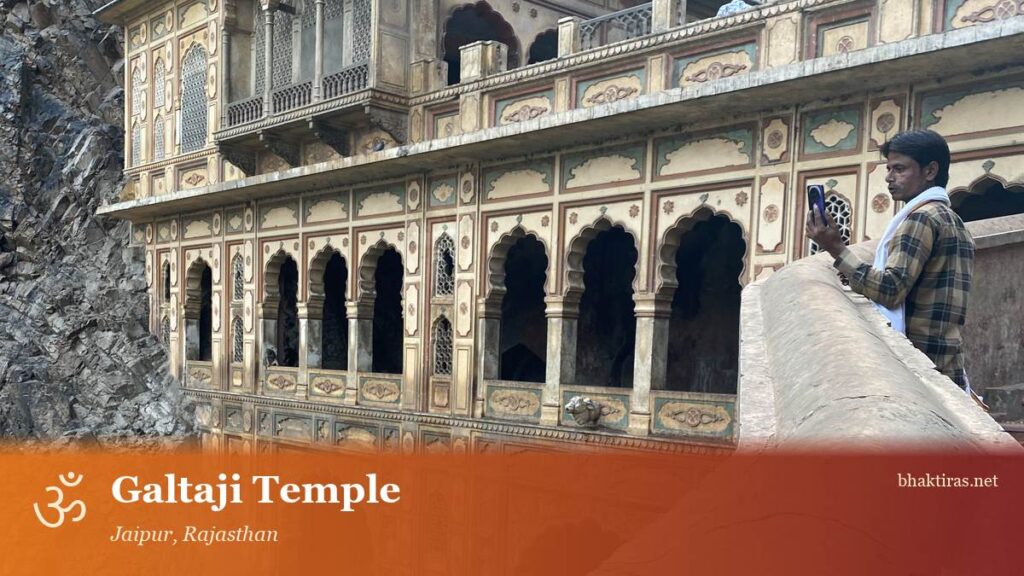
In a rocky gorge in the hills east of Jaipur, Galtaji gathers spring-fed pools, pink-stone pavilions and a hilltop sun shrine into one striking pilgrimage. Water flows here from a carved cow’s-head spout into sacred tanks known as kunds, where pilgrims bathe before climbing to the Surya temple above. Troops of monkeys move freely through the gorge, giving the site its popular English name, the Monkey Temple.
The sacred kunds and the cow’s-head spout
The heart of Galtaji is its series of natural, spring-fed tanks. Water is channelled into them through a carved spout shaped like a cow’s head — the Gaumukh — a feature that gives the pools their sanctity. Pilgrims bathe in these kunds as an act of purification, drawn by the belief that the spring never runs dry.
Pink sandstone pavilions, painted halls and frescoes surround the water, the work of the same building tradition that shaped Jaipur’s old city.
Sage Galav and the hilltop sun
The site is linked to the sage Galav, or Galava Rishi, who is said to have performed long austerities in the gorge — a story that gives Galtaji its name. Above the gorge stands a temple to Surya, the Sun god, set high so that it catches the first light of the day.
This combination of a riverside-style bathing complex below and a sun shrine above makes Galtaji unusual among Rajasthan’s temples, weaving together water worship and reverence for the sun.
Monkeys, Hanuman and the gorge
Large troops of monkeys live throughout the gorge, and their constant presence has earned Galtaji its nickname as the Monkey Temple among visitors. A popular Hanuman temple within the complex reinforces the association, drawing devotees who come to offer prayers to the monkey-god.
The narrow, stepped path between the pavilions, the open sky above the kunds, and the animals moving across the rocks give the gorge an atmosphere quite distinct from the formal temples of the city plain.
How to reach Galtaji Temple
- By road: Galtaji lies in the hills just east of Jaipur, a short drive from the city centre by taxi or auto-rickshaw, with a walk up the gorge for the final stretch.
- By train: Jaipur Junction is the main railway station, well connected to Delhi and other cities, with Galtaji reached onward by road.
- By air: Jaipur International Airport serves the city, from where Galtaji is about a half-hour drive.
Frequently Asked Questions
Why is Galtaji called the Monkey Temple?
Large troops of monkeys live throughout the gorge, and a popular Hanuman temple within the complex has given the site its nickname, the Monkey Temple.
What are the kunds at Galtaji?
They are natural, spring-fed bathing tanks fed by water flowing from a carved cow’s-head spout; pilgrims bathe in them as an act of purification.
Which deity is worshipped at the hilltop temple?
A temple to Surya, the Sun god, stands above the gorge, set high to catch the first light of day.
Who is the sage associated with Galtaji?
The site is linked to the sage Galav, or Galava Rishi, said to have performed austerities in the gorge — the source of the name Galtaji.
Where is Galtaji located?
It lies in a rocky gorge in the hills just east of Jaipur in Rajasthan, a short drive from the city.
What can visitors see at the site?
The complex includes the sacred kunds, the cow’s-head spout, pink-stone pavilions and frescoes, a Hanuman temple, and the hilltop Surya shrine.
॥ जय सूर्य देव ॥ • Bhaktiras.net Temple Guide
| Primary Deity | Surya (Sun god) |
| Also Worshipped | Hanuman |
| Feature | Spring-fed sacred kunds |
| Sage | Galav (Galava Rishi) |
| Popular Name | Monkey Temple |
| Setting | Rocky gorge east of Jaipur |
Related Temples
Explore more sacred temples connected by deity and region.