ॐ
Sas Bahu Temple, Gwalior
Vishnu (Sahastrabahu) • Gwalior Fort, Madhya Pradesh
॥ ॐ नमो भगवते वासुदेवाय ॥
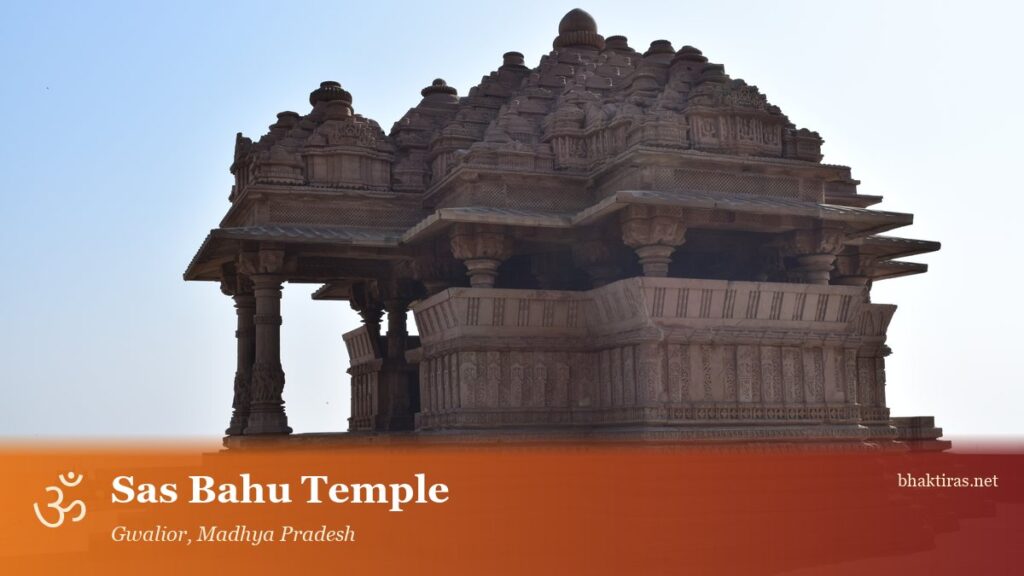
The Sas Bahu temples stand inside Gwalior Fort, a pair of eleventh-century shrines to Vishnu built around 1093 under the Kachchhapaghata dynasty. The odd name is a worn form of Sahastrabahu, the thousand-armed Vishnu, and the two halls are admired for the dense, deeply cut carving that still covers their pillared interiors.
A pair of temples in Gwalior Fort
High on the sandstone plateau of Gwalior Fort, the Sas Bahu temples sit side by side, a larger and a smaller structure raised close together. Both were dedicated to Vishnu and form one of the fort’s major monuments alongside its palaces and gateways.
The name Sas-Bahu, often read as mother-in-law and daughter-in-law, is in fact a corruption of Sahastrabahu, a title of Vishnu meaning the thousand-armed. Over centuries the longer name wore down into the familiar pairing used today.
Built around 1093
Inscriptional evidence places the temples in the late eleventh century, around 1093, under the Kachchhapaghata rulers who held Gwalior at the time. They belong to the broader north Indian temple tradition of that era, with tiered halls and richly worked surfaces.
The larger temple was the principal shrine, while the smaller one beside it repeats the design on a reduced scale. Together they show how a major and a subsidiary shrine could be planned as a matched group.
Carving and lost roofs
What draws most visitors is the carving: pillars, brackets and ceilings worked in deep relief, with bands of figures, foliage and geometric ornament cut so far into the stone that they cast strong shadows. The interiors reward slow looking.
The superstructures, or shikharas, and the roofs of the mandapas have not survived, so the halls now stand open above. Even without their towers, the surviving pillared spaces give a clear sense of the original ambition.
- Larger and smaller temples side by side
- Deeply undercut pillar and ceiling carving
- Mandapa roofs and towers now lost
A protected fort landmark
The Sas Bahu temples are protected by the Archaeological Survey of India and are counted among the key sights within Gwalior Fort. They sit along the route that visitors take across the hilltop complex.
From their position the temples look out over the city below, and they are usually seen together with the fort’s other monuments. Their condition reflects both age and the loss of upper structures, yet the carved halls remain striking.
Frequently Asked Questions
Why is it called the Sas Bahu temple?
The name is a worn-down form of Sahastrabahu, a title of Vishnu meaning the thousand-armed. Over time the longer word changed into Sas-Bahu, popularly read as mother-in-law and daughter-in-law.
Which deity is the Sas Bahu temple dedicated to?
The temples are dedicated to Vishnu. The name itself derives from Sahastrabahu, one of Vishnu’s titles.
When were the Sas Bahu temples built?
They were built in the late eleventh century, around 1093, under the Kachchhapaghata dynasty. They stand inside Gwalior Fort in Madhya Pradesh.
Are there two Sas Bahu temples?
Yes, there are two temples, a larger and a smaller one, standing side by side. Both are dedicated to Vishnu and share a similar design.
What happened to the temple roofs?
The towers and the roofs of the mandapas have not survived, so the halls now stand open above. The carved pillared interiors, however, remain intact.
Where are the Sas Bahu temples located?
The temples are inside Gwalior Fort in Madhya Pradesh. They are protected by the Archaeological Survey of India and are among the fort’s notable monuments.
॥ जय श्रीमन्नारायण ॥ • Bhaktiras.net Temple Guide
| Primary Deity | Vishnu (Sahastrabahu) |
| Established | c. 1093 |
| Dynasty | Kachchhapaghata |
| Structures | Two temples, larger and smaller |
| Location | Gwalior Fort |
| Protected By | Archaeological Survey of India |
| Known For | Deeply undercut carving |
| State | Madhya Pradesh |
Related Temples
Explore more sacred temples connected by deity and region.