ॐ
Lakshman Temple, Laxman Jhula (Rishikesh)
Lakshmana · Laxman Jhula · Uttarakhand
॥ श्री राम जय राम जय जय राम ॥
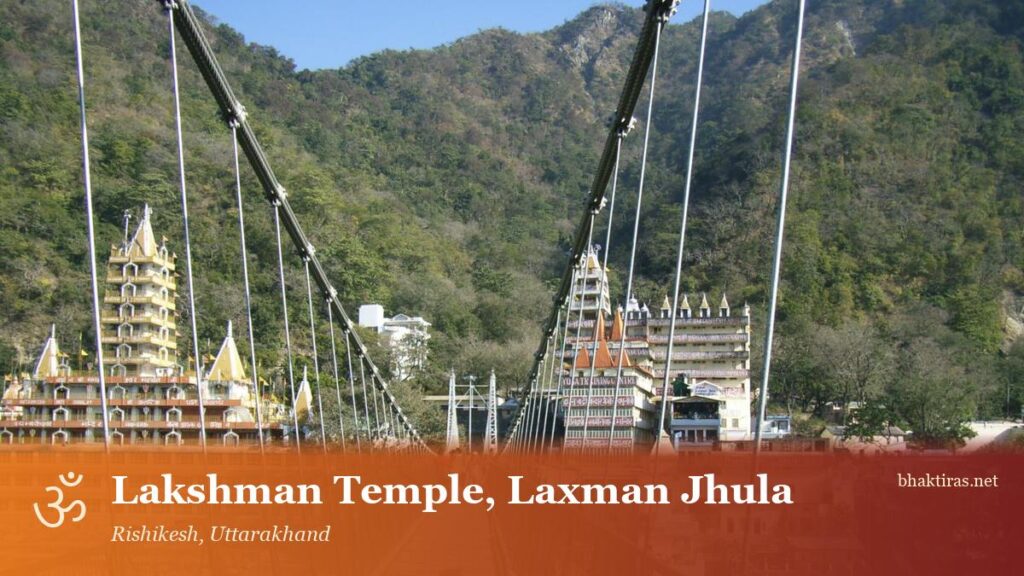
The Lakshman temple stands beside the famous Laxman Jhula suspension bridge at Rishikesh, on the bank of the Ganga where the river leaves the hills for the plains. Tradition holds that Lakshmana, brother of Rama, crossed the Ganga here on a bridge of jute rope — the memory that gives both the bridge and the shrine their name.
The shrine by the bridge
The temple sits at the eastern end of Laxman Jhula, where the iron footbridge spans a fast green stretch of the Ganga. It marks the spot linked in local tradition to Lakshmana’s crossing of the river, and pilgrims pause here on their way over the bridge to the riverside lanes beyond.
Close by rises the tall Tera Manzil, or Trayambakeshwar temple, a thirteen-storey building of many small shrines that has become one of the most recognisable landmarks of the Rishikesh riverfront.
Lakshmana and the rope bridge
The name Laxman Jhula — Lakshmana’s swing or hanging bridge — comes from the belief that Lakshmana forded the Ganga at this point on a span of jute rope. A succession of bridges has stood here in modern times, the suspension footbridge becoming a defining image of the town.
The small Lakshman temple keeps this association alive at the riverside, a quiet counterpoint to the movement of pilgrims, sadhus and travellers crossing above the water.
On the Rishikesh riverfront
Laxman Jhula is one of the gateways to Rishikesh, the town set where the Ganga meets the foothills and a long-established centre of yoga, meditation and ashram life. The lanes around the bridge are lined with temples, ashrams, eating houses and shops, and the evening Ganga aarti draws crowds to the ghats downstream.
For pilgrims the shrine forms part of a wider riverside circuit — the bridges, the ghats, the ashrams and the temples that together make up the sacred geography of Rishikesh.
How to reach Lakshman Temple
- By road: Laxman Jhula is reached by road from Rishikesh town; vehicles park near the bridge and the temple is a short walk across or beside the span. Haridwar is about 25 km away.
- By train: the nearest railheads are Rishikesh and the larger Haridwar Junction (around 25 km), both well connected to Delhi and Dehradun, with local transport on to Laxman Jhula.
- By air: the nearest airport is Jolly Grant (Dehradun), roughly 35 km away, with taxis and buses onward to Rishikesh and the bridge.
Frequently Asked Questions
What is the Lakshman temple at Laxman Jhula?
It is a riverside shrine to Lakshmana, brother of Rama, beside the Laxman Jhula suspension bridge over the Ganga at Rishikesh, marking the place linked to his crossing of the river.
Why is it called Laxman Jhula?
The name means Lakshmana’s hanging bridge or swing, from the tradition that Lakshmana crossed the Ganga here on a bridge of jute rope.
What is the Tera Manzil temple nearby?
Tera Manzil, also called Trayambakeshwar, is a tall thirteen-storey temple near Laxman Jhula with many small shrines, and one of the best-known landmarks of the Rishikesh riverfront.
Is the Ganga aarti held near Laxman Jhula?
Yes. The evening Ganga aarti is a central ritual of the Rishikesh riverfront, performed at the ghats with lamps, bells and chanting that draw many visitors.
Which festival is special at the temple?
Ram Navami, marking the birth of Rama, is observed with particular devotion at the Rama-linked shrines of Rishikesh, including the Lakshman temple.
Where is Laxman Jhula located?
Laxman Jhula is at Rishikesh in the Tehri Garhwal area of Uttarakhand, on the Ganga where the river emerges from the foothills.
॥ जय सिया राम ॥ • Bhaktiras.net Temple Guide
| Deity | Lakshmana |
| River | Ganga |
| Landmark | Laxman Jhula bridge |
| Nearby | Tera Manzil temple |
| Town | Rishikesh |
| Daily ritual | Ganga aarti |
Related Temples
Explore more sacred temples connected by deity and region.